





There’s a quiet fear people don’t talk about when they’re thinking about getting sober, but haven’t made the leap yet:
“What if detox breaks me down emotionally before I’m ready?”
If you’re someone who’s become curious about your relationship to substances—but not in crisis—you might be asking deeper questions. Especially if you’ve lived through trauma that still lingers in your body, your memories, or your relationships.
You’re not looking for a dramatic life overhaul. You’re looking for something steady. Safe. Maybe even quiet.
At Team Recovery, we understand that early recovery isn’t just about quitting. It’s about how you quit—and who’s there when things start to come up. If you’re sober curious and trauma-aware, here’s how to think about medical detox program services in a way that won’t push you past your edge.
“Isn’t Detox Just About the Body? What If My Mind Isn’t Ready?”
Great question. A lot of people assume detox is just about physical withdrawal: getting the substance out, stabilizing the vitals, and calling it a success.
But for trauma survivors—or anyone who’s relied on substances to soften the sharp edges of life—detox can stir up far more than just cravings.
When you remove the buffer that helped you sleep, avoid, or feel safe in social situations… what’s left? For many people, it’s grief. Or confusion. Or memories that start to surface without warning.
That’s why trauma-aware detox isn’t just medical. It’s relational.
We don’t just monitor vitals—we watch for overwhelm. We don’t just hand you a schedule—we check in when silence feels louder than words. We’re not here to rush your healing. We’re here to witness it, support it, and protect your pace.
“What If I Freeze or Shut Down During Detox?”
Then we slow down with you. Simple as that.
Freezing, numbing out, or becoming suddenly “quiet” isn’t a red flag—it’s a survival instinct. It’s what your nervous system learned to do when things got too much, too fast.
Unfortunately, not every detox program recognizes this. Some interpret silence as resistance, or push too hard too soon. At Team Recovery, we’re trained to recognize freeze responses and treat them with care—not control.
We’ll never force you to open up. Instead, we create an environment where your system can unthaw in its own time. That might look like quiet presence, options for solo activities, gentle body regulation tools, or staff who simply sit with you—no performance required.
“Do I Have to Talk About My Past Right Away?”
Absolutely not.
You don’t owe anyone your story on Day One. Or even Day Five.
There’s a myth that healing starts with full disclosure. That’s simply not true for everyone—especially if you’ve spent years keeping things locked away just to survive. Sometimes healing starts with a felt sense of safety—a hot meal, a calm nurse, a night of sleep without fear.
Our team is trained to follow your lead. Some clients begin processing deeper trauma weeks or months after detox—when they’ve built the emotional scaffolding to stay upright while talking about it.
We’re not in a rush. And we don’t ask your nervous system to go faster than it can.
“What If I Regret Starting?”
Regret is a complicated feeling. But it doesn’t always mean you made the wrong decision.
Here’s what many of our clients report:
- Day 1: “This isn’t so bad.”
- Day 2: “I want to leave. This feels too much.”
- Day 3: “I’m calmer, but I don’t trust it.”
- Day 4: “I slept. I didn’t know how tired I was.”
- Day 5: “I’m glad I stayed.”
Starting detox doesn’t mean you’re locked in forever. It just means you gave yourself a window of safety to decide what’s next. Even if you feel shaky, even if you’re unsure—you started. That matters.
And if you do feel regret creeping in? Tell us. We won’t guilt you or try to talk you out of your feelings. We’ll sit with them, name them, and remind you that this discomfort? It won’t last forever.
“How Will I Know If It’s Working?”
There’s no single “aha” moment that says, This is it. You’re healing.
Detox healing often shows up in the quiet shifts:
- You’re not constantly scanning the room.
- Your appetite returns—even just a little.
- You cry and feel relief instead of panic.
- You stop apologizing for existing.
If you’ve used substances to cope with chronic tension, grief, or social discomfort, early detox might feel boring or empty at first. That’s okay.
Stillness isn’t emptiness. It’s your brain finally realizing: I’m not in danger.
Why Trauma-Aware Detox Is Different
Too many programs focus only on the substance. But for people with complex trauma, the substance was just the symptom.
Real healing starts when you’re treated as a whole person. Not just a diagnosis. Not just a risk factor. But someone who adapted the best they could… and is now choosing a different path.
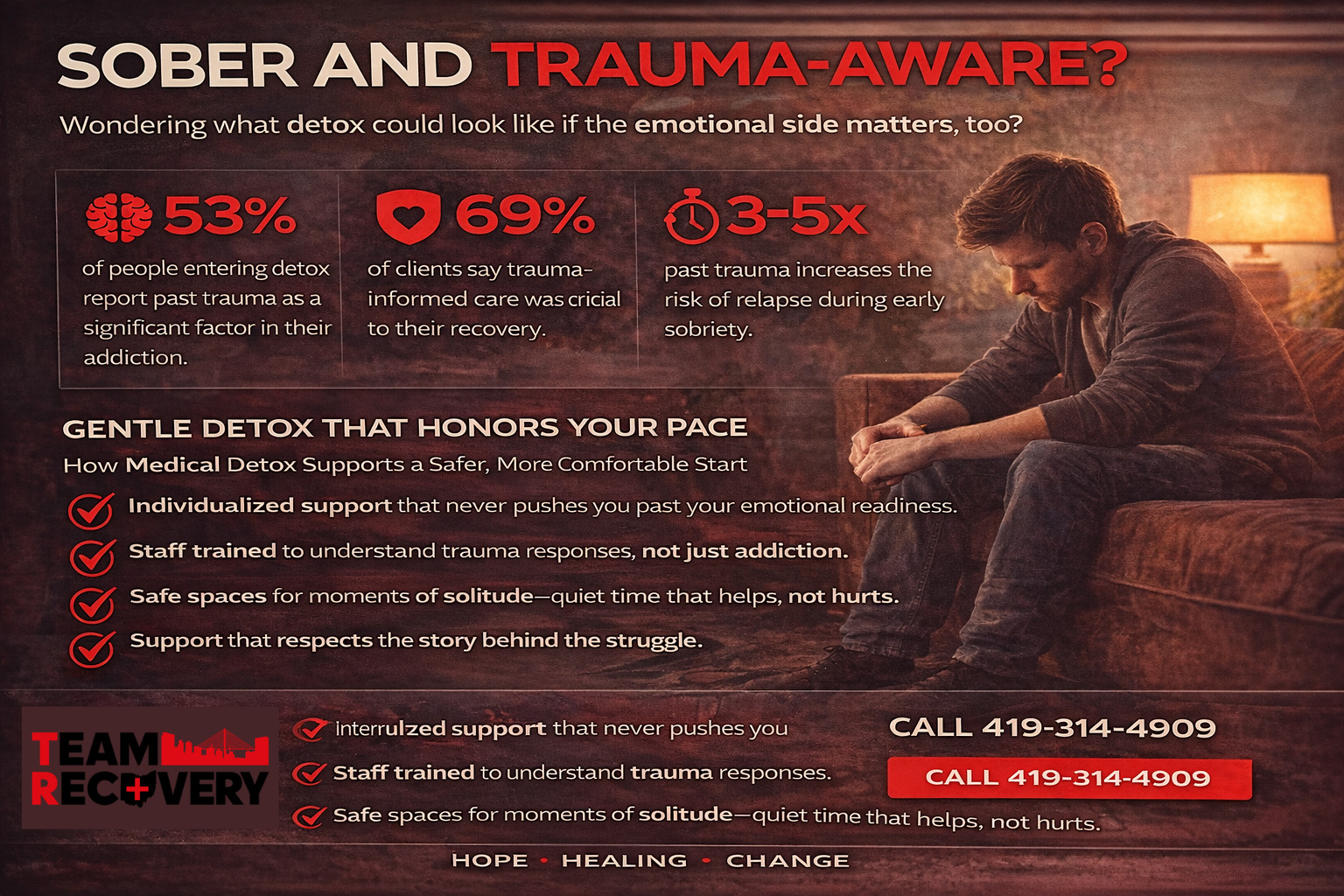
Here’s what trauma-aware detox at Team Recovery includes:
- 24/7 medical monitoring that respects your body’s boundaries
- Staff trained in trauma response, not just addiction symptoms
- Flexible structure with options for solitude, quiet, or connection
- Emotional safety prioritized alongside physical stability
- A plan for what comes after detox—based on your needs, not ours
You don’t have to figure it all out right now. You just have to get through this first part—and let us walk with you through it.
Real Words from Real People
“I didn’t think I’d make it past the second day. But nobody pushed me. They just kept showing up. That’s what helped.”
– Alumni, Detox Program, 2023
“I used to be afraid of feeling anything. Now I know it won’t kill me.”
– Former Client, Trauma-Sensitive Care Track
FAQ: Navigating Detox with Complex Trauma
Will I be forced to share about my trauma?
No. Sharing is always optional. If and when you choose to talk about past experiences, it will be with staff you trust and at your own pace.
What if I panic or have a flashback?
Our staff is trained to recognize trauma responses and respond without judgment. We’ll help you ground, regulate, and return to safety—never shame, pressure, or pathologize your reaction.
Do I need a formal trauma diagnosis to receive trauma-informed care?
Absolutely not. Many clients have experienced trauma but haven’t been diagnosed with PTSD or C-PTSD. If you feel that past experiences affect your emotional safety, that’s reason enough for us to take extra care.
Can I have alone time during detox?
Yes. We balance structure with flexibility. If you need moments of quiet, solo meals, or space to regroup—that’s honored, not questioned.
What happens after detox?
We’ll work with you to map out next steps that support your emotional and physical recovery—whether that’s live-in treatment, outpatient care, or trauma-focused therapy.
You Don’t Have to Go Through This Alone
Maybe you’ve been thinking about cutting back. Maybe you’ve even tried.
But something keeps nagging at you: What if I could feel better—without white-knuckling through it alone?
If you’re ready to try something more supported, more respectful of your pace, and more trauma-informed, Team Recovery is here to help.
📞 Call 419-314-4909 or visit our medical detox program services page to take the next step—quietly, steadily, and on your terms.

