





I used to say treatment didn’t work for me.
Not quietly. Not with doubt. I said it like a conclusion—like I had already tested it and moved on.
And if you’re here, looking at something like live-in treatment support, there’s a good chance you’ve said some version of that too:
“I’ve already tried that. It didn’t work.”
I’m not here to argue with you.
Because honestly? There was a time I would’ve clicked off anything that tried to convince me otherwise.
But I do want to show you something I couldn’t see back then.
I went in hoping something would change me—without me changing much
The first time, I didn’t think of it this way.
But looking back, I can see it clearly.
I walked in hoping something external would shift enough to make everything easier:
- That I’d feel different
- Think differently
- Want different things
Without really understanding that I was still holding onto a lot of the same patterns.
I followed the schedule. I showed up. I did the surface-level work.
But underneath?
I was still negotiating with myself.
Still leaving the door open for going back.
And that matters more than people realize.
I didn’t trust it—so I kept one foot out the entire time
No one talks about this part enough.
You can physically be somewhere… and mentally be halfway out the door.
That was me.
I listened—but filtered everything.
I participated—but kept distance.
I agreed—but didn’t internalize.
Because I didn’t fully trust it.
And when you don’t trust something, you don’t let it change you.
You evaluate it.
And evaluation keeps you safe—but it also keeps you stuck.
I was constantly comparing instead of actually listening
This one hit me later.
I spent so much time thinking:
- “I’m not like that person”
- “My situation is different”
- “I don’t need this part”
That I missed what was actually being said.
Because I wasn’t listening to understand—I was listening to sort.
To separate myself.
And that separation made it easier to walk away and say:
“That didn’t apply to me.”
But what I missed was this:
You don’t have to relate to everything for something to matter.
Sometimes the one thing you resist the most is the thing that would’ve helped the most.
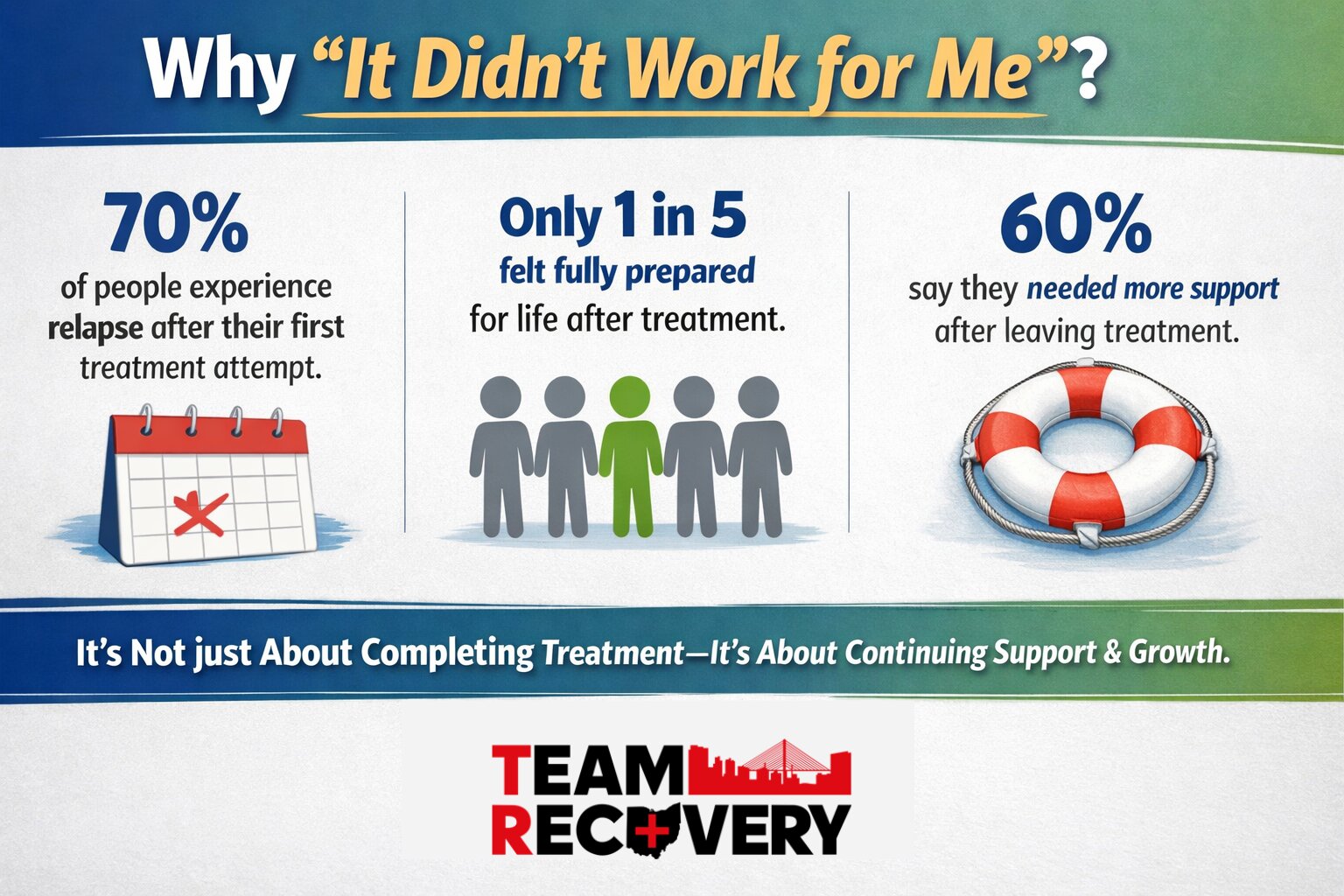
I thought completing it meant I absorbed it
On paper, I did everything.
I stayed. I finished. I checked the boxes.
So when things didn’t magically change afterward, I felt justified in saying:
“See? I did it. It didn’t work.”
But completion isn’t the same as integration.
You can go through something without letting it go through you.
And that’s the difference I didn’t understand yet.
I left with awareness—but not enough support to use it
This part was confusing.
Because I didn’t leave the same.
I actually understood more than I had before:
- I could see my patterns
- I could recognize my triggers
- I could name what was happening
But I didn’t know how to live differently yet.
And instead of recognizing that as part of the process, I took it as failure.
Because I thought awareness should equal change.
But awareness without continued support?
It often just leads you back to what’s familiar.
I expected it to “stick” without continuing anything after
This was one of my biggest blind spots.
I treated it like a one-time reset.
Like something that would carry me forward indefinitely.
But I didn’t build anything after it.
No structure.
No consistency.
No real follow-through.
So when old patterns came back, I blamed the experience.
Instead of looking at what I didn’t continue.
The second time wasn’t hopeful—it was honest
I didn’t come back with optimism.
I came back with a different kind of clarity.
Not dramatic. Not emotional.
Just… real.
“Whatever I was doing before isn’t working.”
That was it.
And for the first time, I wasn’t trying to control the outcome.
I wasn’t trying to outthink it.
I wasn’t trying to prove anything.
I was just more open to actually experiencing it.
I stopped trying to be the exception
The first time, I saw myself as the exception.
The person who didn’t quite fit.
The one whose situation was more complex.
The one who needed a different path.
The second time?
I stopped needing to be different.
And that changed everything.
Because instead of filtering everything through:
“Does this apply to me?”
I started asking:
“Where might this be true for me—even a little?”
That question opened doors I didn’t even realize I had closed.
I let things land—even when I didn’t like them
There were moments the second time that were uncomfortable.
Not physically—but mentally.
Moments where something hit a little too close.
Before, I would’ve pushed that away.
Dismissed it. Rationalized it. Moved on.
This time, I stayed with it.
And that’s where things actually started to shift.
Not in big, dramatic ways.
But in small, honest ones.
I realized it was never meant to do the work for me
This is the part I wish someone had told me—but I might not have heard it anyway.
Nothing is going to fix you for you.
Not this. Not anything.
What it can do is give you:
- Space
- Structure
- Support
- Perspective
But the actual change?
That happens in how you use those things.
And once I understood that, I stopped expecting the wrong outcome.
If you’re thinking, “It didn’t work for me either”
You might be right.
Maybe the timing was off.
Maybe you weren’t ready.
Maybe something didn’t land the way it needed to.
All of that is valid.
But there’s also another possibility:
That something did happen.
Something you couldn’t fully use yet.
Something that didn’t stick—not because it failed, but because you didn’t have what you needed to carry it forward.
And that doesn’t mean it’s over.
You’re not starting over—you’re starting differently
This is important.
If you’ve done this before, you’re not going back to the beginning.
You’re coming in with:
- Awareness
- Experience
- Insight into your own patterns
You already know where you tend to pull back.
You already know what you resist.
You already know the thoughts that show up.
That’s not failure.
That’s information.
And this time, you can use it.
A quieter, more honest starting point
The second time didn’t feel like a big leap.
It felt like a quieter decision.
Less about hope.
Less about fear.
More about honesty.
“I don’t want to keep doing this the same way.”
And that was enough.
FAQs for People Who Think “It Didn’t Work”
What if I already gave it a real shot?
You probably did. This isn’t about dismissing your effort. It’s about looking at what was happening underneath that effort—and whether anything might land differently now.
How do I know this time would be different?
It’s often not the setting that changes—it’s your level of openness, honesty, and willingness to engage differently. Even small shifts there can change the experience.
What if I still don’t fully believe in it?
You don’t have to. You can show up skeptical. What matters is staying open enough to let something reach you, even if you question it.
Is it normal to feel resistant?
Yes. Resistance is part of the process for a lot of people—especially those who’ve tried before. The goal isn’t to eliminate it, just not let it run the whole experience.
What if I fail again?
Most people define “failure” too narrowly. Learning more about your patterns, even if things don’t go perfectly, is still movement forward—not backward.
Do I have to do everything differently this time?
Not everything. Just one thing matters: noticing where you usually check out—and choosing, even briefly, to stay engaged instead.
There’s a difference between something not working…
and not being in a place to receive what it offered.
I didn’t understand that the first time.
Maybe you’re starting to now.
Call 419-314-4909 or visit our live-in treatment support to learn more about our residential treatment program services in Toledo, Ohio.

