





I didn’t think I’d make it through Day 2.
Not because I didn’t want to—but because my body and mind were screaming in ways I didn’t know they could. If you’re looking up what alcohol withdrawal actually feels like, you’re probably scared. That’s okay. There’s nothing wrong with wanting to know what you’re walking into. There’s courage in asking. And if you’re searching for alcohol detox near me, you’re already doing the hardest part—considering change.
Team Recovery’s alcohol detox program in Toledo is built for this very moment. You don’t have to do this alone.
It Doesn’t Feel Like a Hangover—It Feels Like Your Body’s Panicking
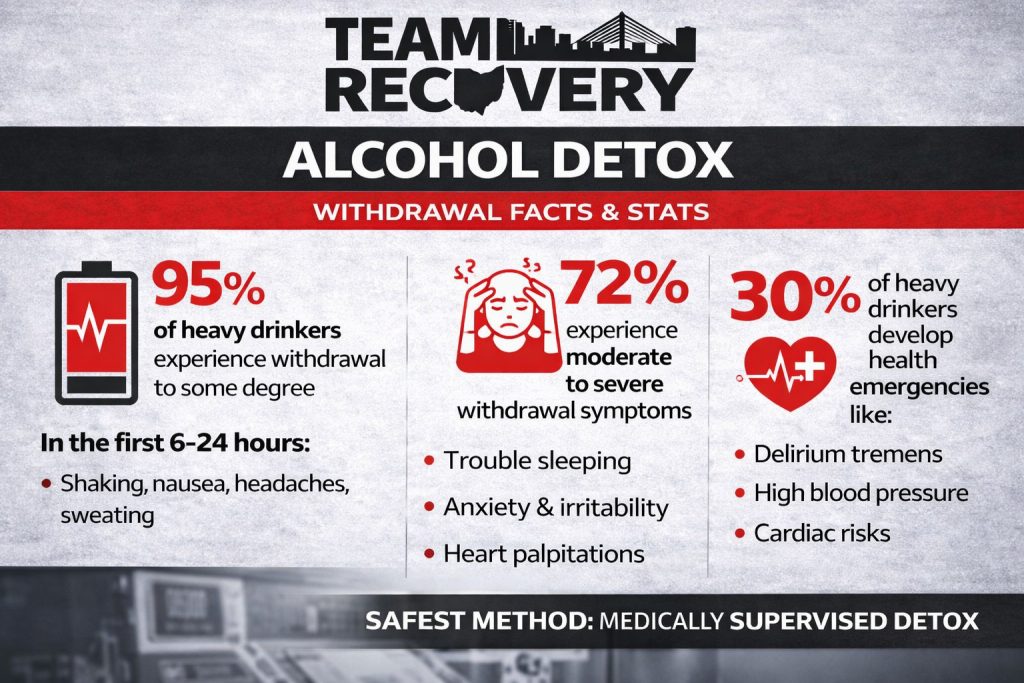
The first 24 hours off alcohol can be confusing. You might feel sick, shaky, restless. Your stomach might turn, your hands might tremble, and your head might pound.
But here’s the difference: this isn’t just a bad hangover. Your body is adjusting to life without a substance it’s gotten used to relying on. That panic feeling? It’s chemical, not personal. It doesn’t mean you’re weak. It means your brain is trying to rewire itself.
For some people, withdrawal shows up as:
- Intense sweating
- Headaches
- Shaking or tremors
- Nausea or vomiting
- High blood pressure
- Racing heartbeat
These symptoms are common and temporary—but they’re also a strong reason why detox should happen under medical supervision.
Sleep Might Disappear—But You’re Not Alone in the Dark
Night can feel endless in withdrawal. You may lie awake for hours, trapped between exhaustion and restlessness. For me, those early nights were brutal—not because of pain, but because of fear. The dark made every emotion louder.
This is why detox centers don’t just offer meds—they offer comfort. A calm nurse to check in. A quiet space to cry, if you need it. A meal you didn’t have to cook. A light left on.
You don’t have to earn this support. It’s okay to ask for a soft place to land while your body resets.
The Emotional Part Might Surprise You
Withdrawal isn’t just about the physical symptoms. The mental stuff can hit just as hard:
- Sudden anxiety or panic attacks
- Mood swings or crying spells
- Vivid nightmares or disturbing thoughts
- Cravings that feel impossible to ignore
The truth is, alcohol dulls more than pain—it numbs fear, anger, sadness, and even joy. So when you stop drinking, those emotions don’t just disappear. They rush back in.
That doesn’t mean something’s wrong with you. It means your brain is trying to catch up.
It Can Get Dangerous—But It Doesn’t Have to Be
Some people can detox at home with minimal symptoms. Others can’t. There’s no shame in that.
If you’ve been drinking heavily for a long time, alcohol withdrawal can cause serious medical complications, including:
- Delirium tremens (DTs) – confusion, hallucinations, even seizures
- Severe dehydration – due to vomiting or sweating
- Cardiac risks – irregular heartbeat, high blood pressure
This is why the safest option is always a supervised detox center—especially one close to home, like our alcohol detox program in Toledo.
You don’t have to wait for things to get worse before asking for help.
Day 3 Is the Hardest—But Also a Turning Point
For many, symptoms peak between 48 and 72 hours after the last drink. This is the hump most people fear. For me, Day 3 felt like walking through a thunderstorm barefoot—vulnerable and exposed.
But something shifted after that. I still felt raw, but the panic eased. I could eat a little. I slept for more than an hour. I felt—just barely—like myself again.
Most people don’t need more than 5–7 days in detox. It’s short. But it’s life-changing. Getting through those few days safely gives you a clear head to decide what’s next.
What Help Feels Like (Spoiler: It’s Not What You Think)
I thought asking for detox would feel like failure. Like giving up.
Instead, it felt like exhaling for the first time in years.
No one looked at me like I was broken. No one shamed me. The staff treated me like someone worth saving—and that changed everything. They didn’t promise me it would be easy. But they made it feel possible.
If you’re looking up alcohol detox near me, don’t settle for fear or guesswork. You deserve a place where you’re cared for—not punished.
You Don’t Have to Be “Ready” to Take the First Step
One of the biggest lies I believed was that I had to be completely ready to stop drinking before reaching out. But readiness isn’t a magic moment. It’s a door you can walk through even if your hands are shaking.
Detox isn’t about having your whole future figured out. It’s about getting through the next 72 hours safely, with people who understand what you’re going through.
Team Recovery in Toledo gets it. And if you’re even a little bit curious about what help could look like—they’re ready to talk.
Alcohol Detox FAQ
How long does alcohol detox last?
Most detox programs last 3 to 7 days, depending on the severity of your symptoms, medical history, and how much and how long you’ve been drinking.
Can I detox at home?
In some mild cases, home detox is possible—but it’s risky. Alcohol withdrawal can be unpredictable, and symptoms like seizures or hallucinations can be life-threatening. Supervised medical detox is the safest option.
Will I be given medication?
Yes—medical detox often includes medications that ease withdrawal symptoms and prevent complications. These may include anti-anxiety medications, sleep aids, or medications that stabilize blood pressure.
What happens after detox?
Detox is just the beginning. Afterward, you may continue treatment in outpatient, inpatient, or sober living settings. The goal is to support your physical and emotional recovery as your body rebalances.
What if I’m not sure I’m ready to stop drinking?
That’s okay. Detox isn’t a commitment to never drink again. It’s a safe place to pause and let your body stabilize—so you can make decisions with a clearer mind.
📍 If you’re looking for alcohol detox near me and you’re in the Toledo area, Team Recovery is here to help. Learn more about our safe, compassionate detox services.
📞 Call (419) 314 4909 or visit to learn more about our alcohol detox near me services in Toledo. You don’t have to do this alone—and you don’t have to be perfect to begin.

