





I didn’t relapse in a blaze of chaos.
It was subtle. Quiet. A slow drift.
I had over 90 days. I had routines. I had people who trusted me again. And then one week I skipped a meeting because I was “busy.” The next week I stopped answering texts. I told myself I was fine.
I wasn’t fine.
And the day I realized I needed detox again wasn’t the day I used. It was the day I admitted I couldn’t safely stop on my own.
That hit harder than the relapse itself.
The Shame Was Louder Than the Cravings
If you’ve had real time sober, you know this feeling.
You don’t just lose clean days — you feel like you’ve lost credibility. With your family. With your friends. With your treatment team. With yourself.
I kept thinking:
They’re going to look at me like I didn’t learn anything.
They’ll think I wasn’t serious.
I should know better by now.
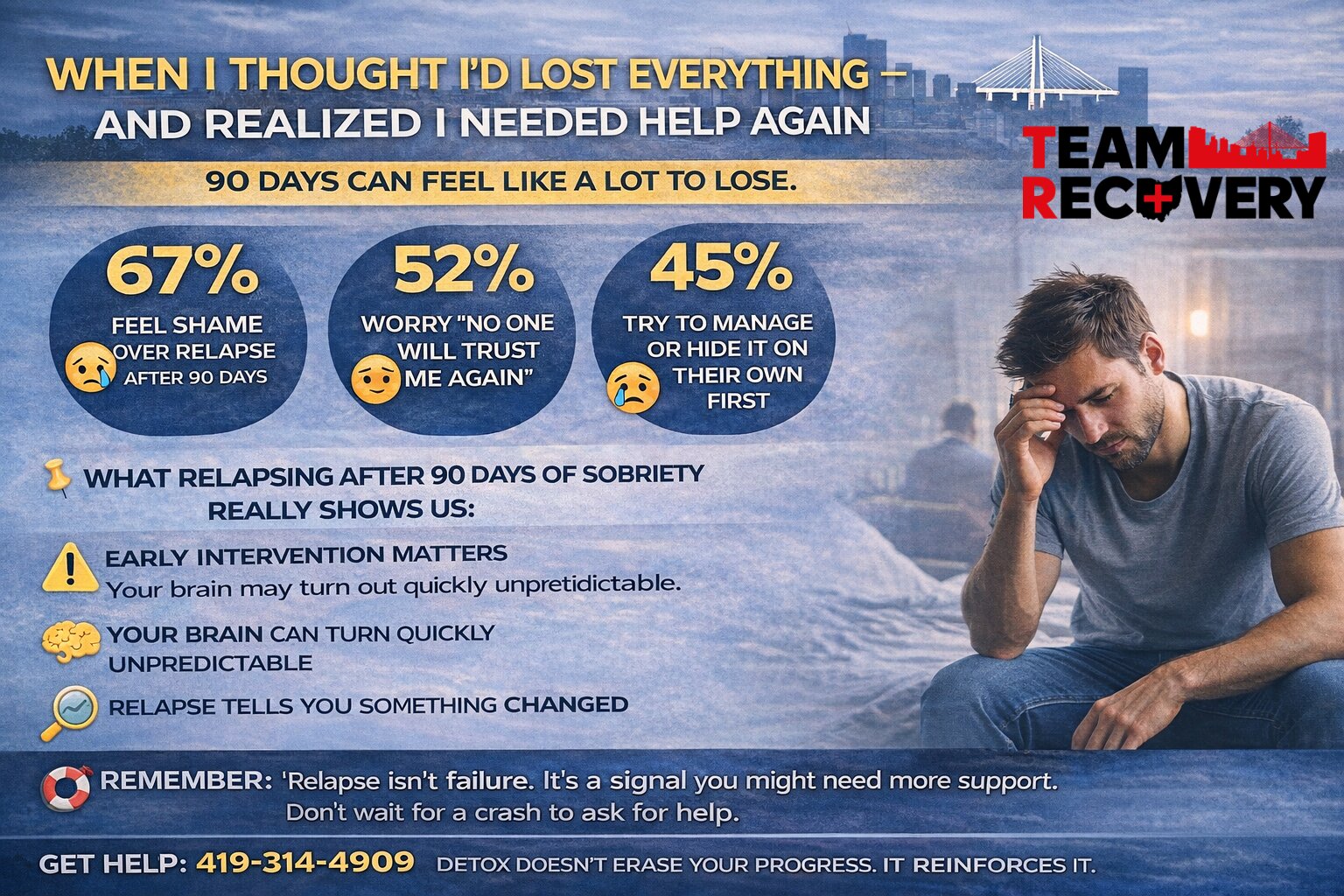
Relapse after 90 days doesn’t feel like a mistake. It feels like a betrayal.
But here’s what I understand now: shame exaggerates the story.
Relapse is information. It tells you something changed — stress, isolation, overconfidence, unprocessed emotion. It doesn’t erase growth. It exposes vulnerability.
There’s a difference.
I Tried to “Manage It” Before Asking for Help
This part is important.
I didn’t immediately say, “Okay, I need detox.”
I tried to control it first.
I told myself:
- I’ll taper.
- I’ll just use on weekends.
- I’ll keep it hidden until I stabilize.
- I won’t let it get physical again.
But addiction doesn’t negotiate.
Within days, my body started responding differently. Sleep got weird. Anxiety spiked. My hands shook in the morning. I felt that familiar tightness in my chest — the one that says dependence is forming again.
That scared me.
Because I’ve tried to white-knuckle withdrawal before. It’s miserable at best and dangerous at worst.
That’s when I started looking at a medical detox program again — not because I was “back at square one,” but because I recognized the early signs.
And recognizing them early? That’s growth.
Going Back Felt Humiliating — Until It Didn’t
Walking back into detox the second time felt different.
The first time, I was desperate and scared.
The second time, I was humbled — but aware.
I knew what questions to ask.
I knew what withdrawal would feel like.
I knew the emotional crash that might follow.
I wasn’t a beginner. I was someone interrupting the spiral sooner.
There’s a huge difference between:
- Spiraling for months out of pride
- Or stepping in early because you’ve learned your limits
Relapse doesn’t mean treatment didn’t work.
Sometimes it means you stopped using the tools. Or you outgrew your current support level. Or life hit harder than expected.
Going back isn’t regression. It’s recalibration.
The Fear of “Starting Over” Is a Lie
Here’s the spicy truth: nothing about recovery is erased.
You don’t lose the insight you gained.
You don’t lose the coping skills you practiced.
You don’t lose the self-awareness that helped you get 90 days.
Yes, the calendar resets.
But you are not the same person you were before your first detox.
Think of it like physical training. If someone trains for three months and then stops for a few weeks, their muscles don’t disappear. They might weaken — but the foundation is still there.
Recovery is the same.
When I went back into a medical detox program, I wasn’t learning what withdrawal was. I was reinforcing what I already knew: I can’t safely do this alone.
That’s not weakness. That’s pattern recognition.
What Relapse Actually Taught Me
The second time around, I paid closer attention.
I noticed:
- How isolation crept in before the relapse.
- How I downplayed stress instead of talking about it.
- How quickly my brain returned to old rationalizations.
- How fast physical symptoms returned compared to before.
That last one surprised me.
If you’ve relapsed after a period of sobriety, your body can respond differently. Tolerance shifts. Risk increases. What “worked” before can become unpredictable.
That’s one reason medically supervised withdrawal can matter so much. Not because you failed — but because physiology doesn’t care about your pride.
The Quiet Moment That Changed Everything
The decision didn’t happen in public.
No dramatic intervention.
No crisis call.
It was just me, sitting on my bed, realizing I didn’t want this relapse to turn into another lost year.
That was it.
I didn’t feel strong. I felt tired.
But I picked up the phone anyway.
If you’re in that quiet moment right now — the one where you’re staring at your reflection thinking, I can’t believe I’m here again — listen to me:
Going back for help is not dramatic.
It’s not embarrassing.
It’s not proof you’re incapable.
It’s proof you care enough to stop the slide early.
You’re Allowed to Interrupt the Spiral
There’s this weird belief in recovery culture that relapse has to be catastrophic before you “deserve” help again.
That’s nonsense.
You don’t have to wait until:
- You lose your job.
- Your partner finds out.
- You end up in the ER.
- Everything collapses.
If your body is dependent again — even after 90 days clean — that’s reason enough.
A medical detox program exists to stabilize you safely so you can figure out what comes next. Not to shame you. Not to label you. Not to lecture you.
Just to steady the ground beneath your feet.
FAQs: Relapsing After 90 Days and Considering Detox Again
Does needing detox again mean treatment didn’t work?
No. It means something changed — stress, environment, support, mental health, trauma triggers — and the system you had in place wasn’t enough this time. Recovery often requires adjustments. Needing detox again doesn’t erase the progress you made.
Is relapse common after 90 days?
Yes. Early recovery is a vulnerable period. Many people experience relapse within the first year. That doesn’t minimize it — but it does normalize it. What matters most is how quickly you respond to it.
When should I consider medically supervised detox again?
You may need structured support if:
- You’re experiencing withdrawal symptoms.
- You feel physically dependent again.
- You’ve tried to stop on your own and couldn’t.
- Your substance use escalated quickly after relapse.
- You’re afraid of withdrawal complications.
If your body is reacting strongly, safety matters.
Will people judge me for coming back?
The right treatment team won’t. Professionals in detox settings understand relapse is part of many recovery journeys. You’re not the first person to return — and you won’t be the last. Most teams are far more focused on stabilizing you than judging you.
Is detox enough, or will I need more treatment again?
Detox stabilizes your body. What comes after depends on your situation. Some people step back into outpatient care. Some return to live-in treatment. Some adjust therapy or medication. The key isn’t “doing it perfectly.” It’s building support that matches your current needs.
What if I’m scared I can’t do this again?
That fear is normal. Doing this again doesn’t mean repeating the same exact steps. It means building on what you already learned. You don’t have to feel confident to take action. Sometimes you just have to be willing.
What if I wait and try to fix it myself?
You can try. Many of us did.
But if withdrawal worsens, if cravings intensify, if secrecy grows — waiting can increase risk. Intervening early often leads to shorter, safer stabilization.
Final Word — From Someone Who’s Been There
Relapse after 90 days can feel like you’ve shattered something fragile.
But recovery isn’t glass. It’s muscle. It rebuilds.
Needing a medical detox program again doesn’t make you incapable. It makes you aware enough to respond.
If you’re standing at that edge — unsure whether to call, unsure whether you “deserve” help again — don’t let shame decide for you.
Call 419-314-4909 or visit our medical detox program to learn more about our Medical Detox Program services in Toledo, Ohio.

