





You might not be afraid of stopping.
You might be afraid of who you’ll be if you do.
As a clinician, I’ve sat with actors, welders, nurses, musicians, parents, and entrepreneurs who all carried the same quiet fear: If I get sober, will I still be me?
Not the “polished” version. Not the “healthy” version.
But the version that laughs loud. Feels deeply. Creates boldly. Connects easily.
If you’re wondering what stepping into a residential treatment program might take away from you, I want to approach that fear gently. It makes sense. And it deserves more than a quick reassurance.
The Fear Isn’t Silly — It’s Personal
Substances often become intertwined with identity.
Maybe alcohol helped you:
- Speak up in rooms where you normally shrink
- Access emotion when you feel blocked
- Write, play, perform, or connect more freely
- Quiet anxiety enough to feel social
If that’s true, then sobriety can feel like loss.
It’s not just “giving something up.”
It can feel like dismantling the version of yourself that worked.
So when someone suggests live-in treatment or round-the-clock support, your mind may translate that into:
They’re going to sand down my edges.
They’re going to make me beige.
They’re going to take away what makes me interesting.
That fear isn’t about ego. It’s about survival. Identity is how we move through the world.
Substances Feel Like They Unlock You
There’s a reason the fear is strong.
Substances can:
- Lower inhibition
- Dull self-criticism
- Intensify sensation
- Create temporary confidence
For creative or socially expressive people, that can feel like magic.
But here’s what I gently observe over time: what begins as unlocking often becomes narrowing.
The emotional range that once expanded can shrink.
The spontaneity can turn into unpredictability.
The confidence can depend entirely on the next drink or use.
Instead of expanding you, the substance slowly starts deciding when and how you get to show up.
That’s not freedom. It’s dependency disguised as enhancement.
You Were Always There
The humor was yours.
The intensity was yours.
The imagination was yours.
Substances don’t create personality. They modify access to it.
In structured, supportive care, people are often surprised by what returns:
- Natural humor that doesn’t require a buzz
- Emotional depth that feels steady instead of chaotic
- Creativity that builds instead of crashes
One client once said to me, “I thought I was losing my spark. I didn’t realize I was losing my stability.”
The spark didn’t disappear in recovery. It became sustainable.
The Difference Between Numb and Regulated
Many people confuse numbness with calm.
Numb says: I don’t feel much of anything.
Regulated says: I can feel things without being overwhelmed.
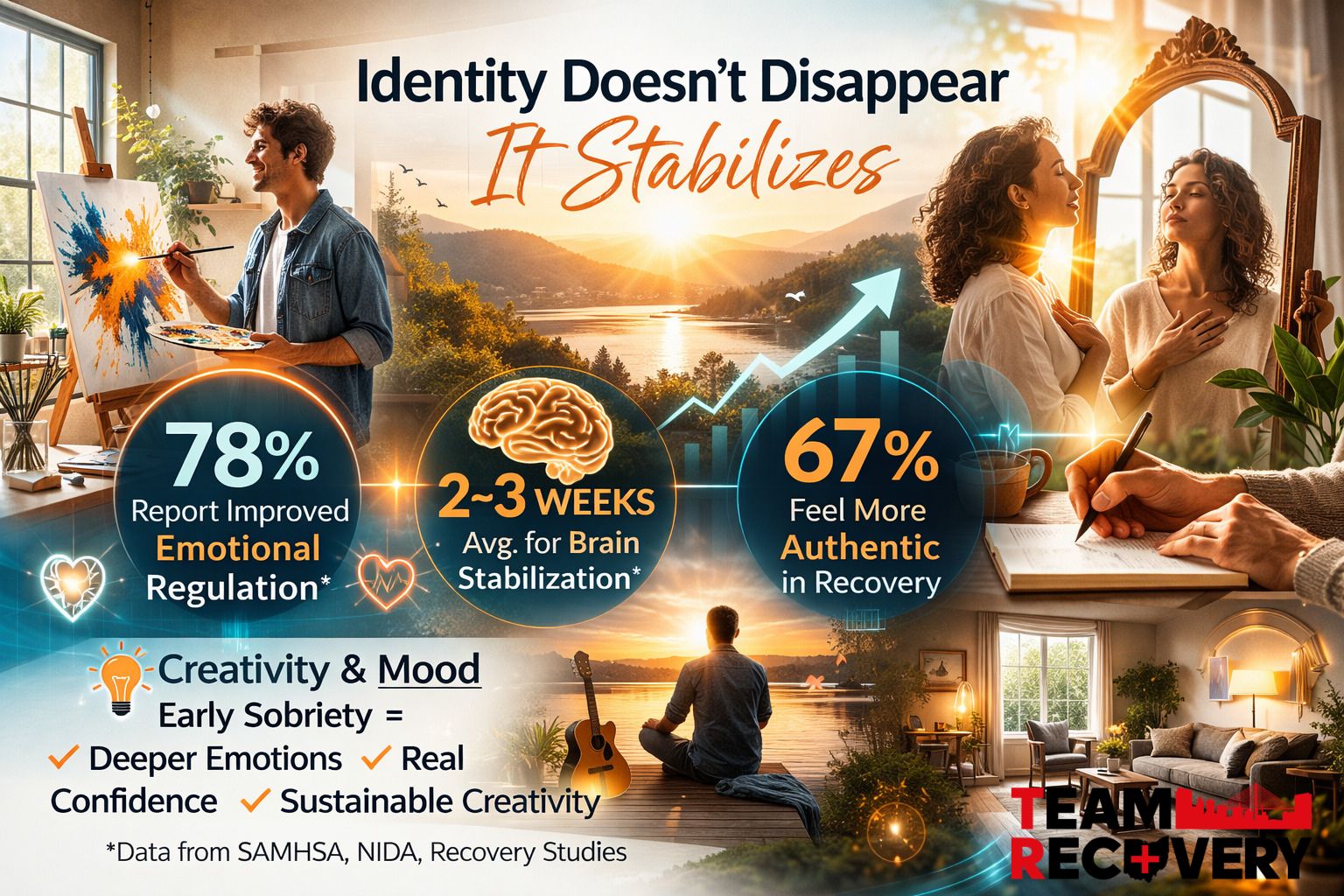
A well-run residential treatment program does not aim to flatten you. It aims to help your nervous system stabilize.
That stabilization can feel strange at first.
When you’ve lived in emotional extremes—high highs, sharp lows—baseline can feel dull. But baseline is not the end state. It’s the foundation.
From stability, creativity and connection often deepen—not vanish.
Early Sobriety Can Feel Awkward (And That’s Normal)
Let’s be honest about something.
The first stretch without substances can feel:
- Socially uncomfortable
- Emotionally raw
- Quieter than you’re used to
That doesn’t mean your personality is gone. It means your brain and body are recalibrating.
Think of it like adjusting to natural light after being in a strobe-lit room. At first, everything seems less intense. But over time, your eyes adjust—and you start seeing more clearly.
Many people rediscover parts of themselves they hadn’t accessed in years:
- Interests that weren’t tied to drinking or using
- Relationships that feel more honest
- Emotional expression without shame
It’s not transformation into someone new.
It’s reconnection.
You’re Allowed to Mourn What It Gave You
This part matters.
Substances gave you something.
Relief.
Confidence.
Escape.
Belonging.
Recovery doesn’t require pretending those benefits weren’t real. It simply invites you to look at the full picture.
- Is the relief now followed by regret?
- Is the confidence dependent on a substance?
- Is the escape creating bigger consequences?
When the costs start outweighing the benefits, support becomes less about losing yourself—and more about protecting what’s left.
What Actually Happens in Live-In Treatment
Without turning this into a clinical breakdown, here’s what I see most often:
People don’t emerge from live-in treatment as different personalities.
They emerge:
- Less reactive
- More self-aware
- More consistent
- More able to tolerate discomfort
That’s not identity loss.
That’s emotional strengthening.
The goal isn’t to change who you are. It’s to help you live without needing a chemical mediator between you and the world.
The Myth of “Becoming Boring”
This fear comes up constantly.
“What if I’m boring sober?”
In my experience, what people call “boring” is often just “not chaotic.”
Drama is stimulating. Chaos is stimulating. Unpredictability feels intense.
Stability feels quieter.
But quiet doesn’t equal dull.
It often means:
- You remember conversations.
- You wake up without shame.
- Your creativity has follow-through.
- Your relationships aren’t built around substance access.
That’s not boring. That’s sustainable.
You Don’t Have to Decide Forever
Here’s the gentle truth: you don’t have to decide who you’ll be ten years from now.
You only have to decide whether your current path is protecting the parts of you that matter most.
Exploring a residential treatment program isn’t a commitment to losing yourself.
It’s a commitment to finding out who you are without substances shaping every experience.
Curiosity is enough for now.
Frequently Asked Questions
Will treatment change my personality?
No ethical program is designed to erase personality. The goal is stabilization, emotional regulation, and recovery from substance dependence. Many people report feeling more like themselves over time—just without the chaos.
What if I rely on substances for creativity?
It’s common to associate creativity with altered states. In reality, sustainable creativity comes from emotional access and cognitive clarity. Early recovery may feel different, but many people find their creative process becomes more consistent and productive.
Will I be medicated and feel numb?
Medication decisions are individualized. Not everyone requires medication, and when prescribed, the goal is symptom stabilization—not sedation. A good clinical team collaborates with you and adjusts as needed.
I’m social because of drinking. What happens without it?
You may feel awkward at first. That’s normal. Social skills don’t disappear—but they may need rebuilding without chemical support. With time, confidence becomes internal instead of substance-dependent.
What if I try treatment and it’s not for me?
Treatment isn’t about perfection. It’s about exploration and support. If something doesn’t feel aligned, you can discuss it. Recovery is collaborative—not a one-size-fits-all identity shift.
How do I know if I need more structured support?
You might consider deeper support if:
- You’ve tried to cut back and can’t sustain it
- Your use is impacting relationships or work
- You feel afraid of who you are without substances
- The emotional cost feels heavier than the relief
You don’t have to wait for a crisis to ask for help.
If you’re sitting with the fear that sobriety might erase you, I want to say this clearly:
You are not a personality propped up by a substance.
You are a whole person who adapted to survive.
If you’re curious about exploring recovery in a way that honors identity rather than suppressing it, you can learn more about our approach to live-in care through our residential services.
Call 419-314-4909 or visit our residential treatment program services to learn more about our residential treatment program services in Toledo, Ohio.

