





When your child is struggling with addiction or mental health, your mind races. You’re thinking about their safety. Their future. Their next step. And when someone mentions sober living, you might not even know what to feel—relief, worry, skepticism?
It’s okay to feel all of it.
At Team Recovery, we’ve walked with hundreds of families through this decision. And one thing we’ve learned? What people expect from sober living and what actually helps most are often two different things.
If you’re looking into sober living in Toledo, Ohio, here are the things that surprise most parents—but also bring the most relief.
It’s Not Just a Place to Stay—It’s a Bridge to Real Life
Some people imagine sober living as a soft landing or “just a house.” But real sober living—like the homes we operate in Toledo—is a bridge. It connects the structured, therapeutic world of treatment to the everyday world of jobs, rent, and relationships.
In early recovery, that bridge is crucial. A person coming out of residential treatment or detox isn’t always ready to jump back into their old environment. Too many triggers. Too little support.
That’s where sober living shines. It offers a middle ground where your loved one can:
- Reinforce healthy routines
- Build confidence and coping skills
- Make decisions without being alone in them
And all of it happens in a recovery-centered community where accountability doesn’t feel like surveillance—it feels like someone who actually cares.
Your Loved One Might Connect in Ways They Never Did Before
It’s common for families to feel nervous about group living. Will they get along with roommates? Will there be drama? Will they just isolate?
What surprises people is how much connection actually happens.
In our homes, residents aren’t just thrown together—they live with structure and intention. From weekly house meetings to shared responsibilities and supportive check-ins, we foster the kind of community where recovery doesn’t feel so lonely.
For many young adults, this is the first time they’ve had peers who:
- Understand the pull of addiction or mental health struggles
- Want to do better—and are actively trying
- Can laugh, be honest, and challenge each other in healthy ways
That peer connection can be a game-changer. It’s not forced. It’s not clinical. It’s real.
Structure Isn’t a Punishment—It’s a Relief
Families sometimes worry that sober living will feel too strict. But here’s what we hear from residents all the time:
“Having a curfew actually helped me feel safe.”
“Waking up at the same time every day made me feel like I had a life again.”
*”Knowing someone was going to check in on me stopped me from sliding.”
Structure provides consistency—and in recovery, that consistency can be the difference between moving forward and falling back.
At Team Recovery housing, we offer:
- Reasonable curfews
- Chores and community standards
- Recovery meeting requirements
- Random drug screening
- Support from house managers who genuinely care
These aren’t just rules. They’re a container for growth.
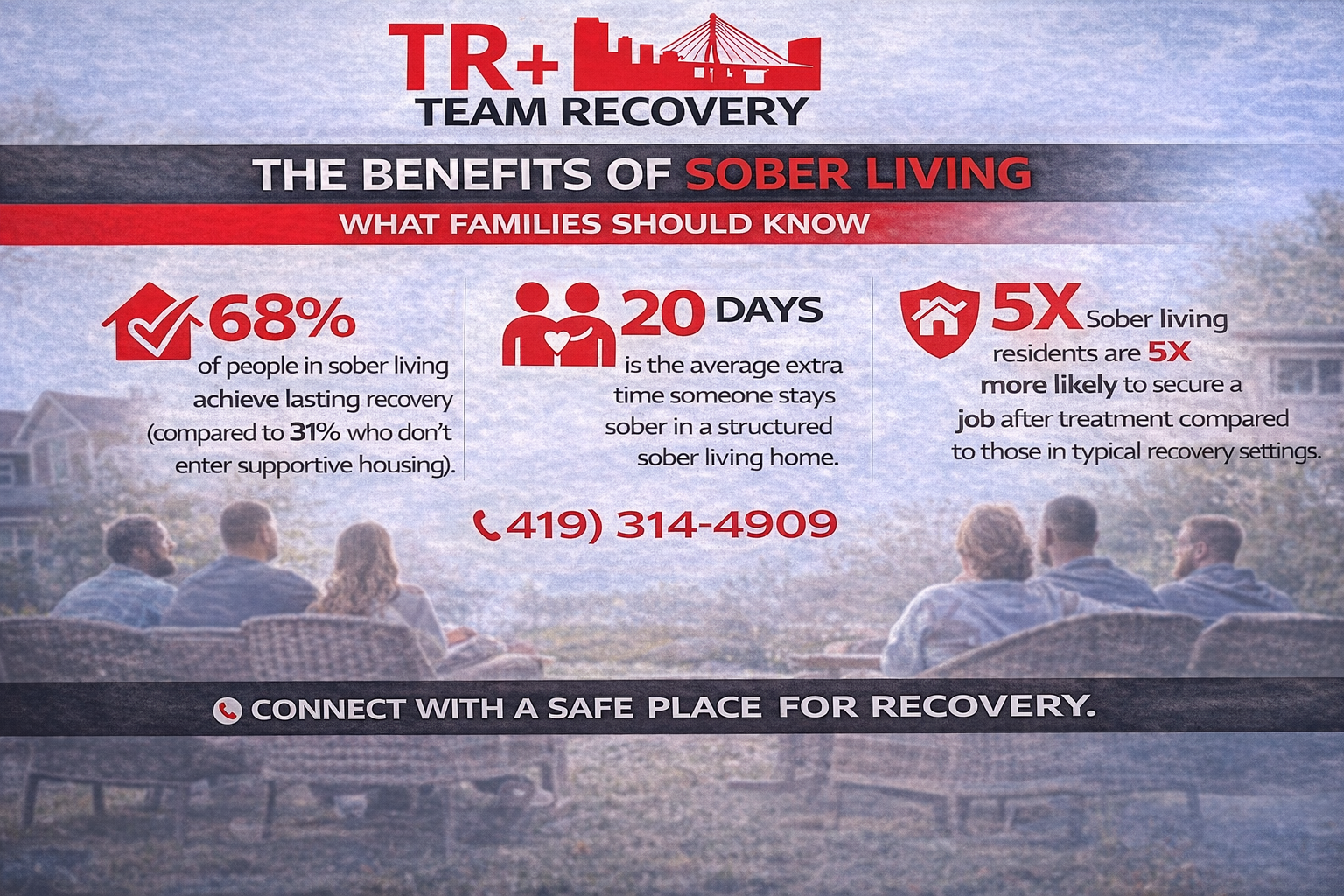
Sober Living Helps You, Too
Let’s be honest. You’re exhausted. You’ve been running on adrenaline, guilt, and fear. Wondering if your child is using again. Wondering if today will be the day you get that call.
You might not expect this, but sober living helps parents sleep again—literally and emotionally.
Knowing your loved one is in a structured, supportive environment where relapse doesn’t go unnoticed and they’re surrounded by people who get it? That kind of peace matters.
No, it doesn’t take away your concern. But it gives you space to breathe, reset, and start healing, too.
Sober Living Doesn’t Mean They’re “Fixed”—It Means They’re Supported
One of the hardest truths in this process is accepting that there’s no magic cure. No 30-day miracle. Recovery is not linear. It’s ongoing, often slow, and sometimes messy.
Sober living doesn’t promise perfection. What it does offer is protection during the most fragile phase of early recovery.
It helps prevent the whiplash of going from group therapy one day to living alone the next. It gives your child daily reminders of what recovery looks like, sounds like, feels like.
And when the harder days come—and they will—it gives them a place to land, not spiral.
What Sober Living in Toledo, Ohio Looks Like at Team Recovery
At Team Recovery, our sober living homes are built on compassion, consistency, and community. We’re proud to offer:
- Gender-specific housing
- Clean, comfortable living spaces
- Trained house managers on-site
- Access to outpatient treatment and peer support
- Ongoing connection to the larger Team Recovery family
We believe recovery isn’t just about not using—it’s about learning how to live again. And we’re honored to walk that path with every resident who comes through our doors.
If you’re considering sober living in Toledo, Ohio for your loved one, we’d be glad to talk through your questions, your fears, and your hopes.
Frequently Asked Questions About Sober Living
What’s the difference between sober living and inpatient treatment?
Inpatient treatment is intensive and clinical—typically involving 24/7 medical care, therapy, and structured programming. Sober living is a step-down level of care that provides a supportive home-like setting, often while residents attend outpatient services or work during the day.
Does insurance cover sober living?
Sober living is typically not covered by insurance because it’s considered a non-clinical support. However, it is often more affordable than inpatient programs, and we can walk you through options for payment or community support.
How long do people usually stay in sober living?
Length of stay varies by individual. Some stay 30–90 days, others longer. We recommend a minimum of 60–90 days for the strongest foundation, but we support each resident in finding the right timeline for their recovery needs.
What if my loved one relapses while in sober living?
Relapse can happen—and we respond with care, not punishment. Our team assesses each situation individually. In many cases, the resident can remain in the home with added support or be referred to a higher level of care if needed.
Can I visit or stay in touch with my child while they’re living there?
Yes. We encourage family involvement in a healthy and appropriate way. We’ll talk with you about communication guidelines and how to support your loved one’s recovery while maintaining healthy boundaries.
You’re Not Alone—And You Don’t Have to Figure This Out Alone
If you’re reading this, it means you care. It means you’re still showing up. And that matters more than you know.
Sober living won’t solve everything—but it can be a turning point. A place where your loved one begins to rebuild. A place where you get to breathe again.
📞 Call us at (419) 314 4909 or visit to learn more about how our sober living in Toledo, Ohio can help your family feel safe, supported, and hopeful again.

