





Smoking crack cocaine can damage far more than the brain and heart. In some cases, it can cause a serious and potentially life-threatening lung condition known as crack lung. Although many people have never heard the term, it is a well-documented medical syndrome involving acute injury to the lungs shortly after smoking crack cocaine.
If you’ve been searching for crack lung, you may be wondering whether symptoms like chest pain, coughing, or difficulty breathing are related to crack cocaine use. Because these symptoms can quickly become severe, they should never be ignored.
If crack cocaine use has become difficult to stop, learning more about cocaine addiction treatment can help you understand your options for recovery. At Team Recovery, we help individuals throughout Toledo and Northwest Ohio address cocaine addiction with compassionate, evidence-based care.
Understanding what crack lung is, why it happens, and when emergency medical care is needed can help protect your health—and may be the first step toward lasting recovery.
What Crack Lung Is
Crack lung is an acute form of lung injury that can occur after smoking crack cocaine.
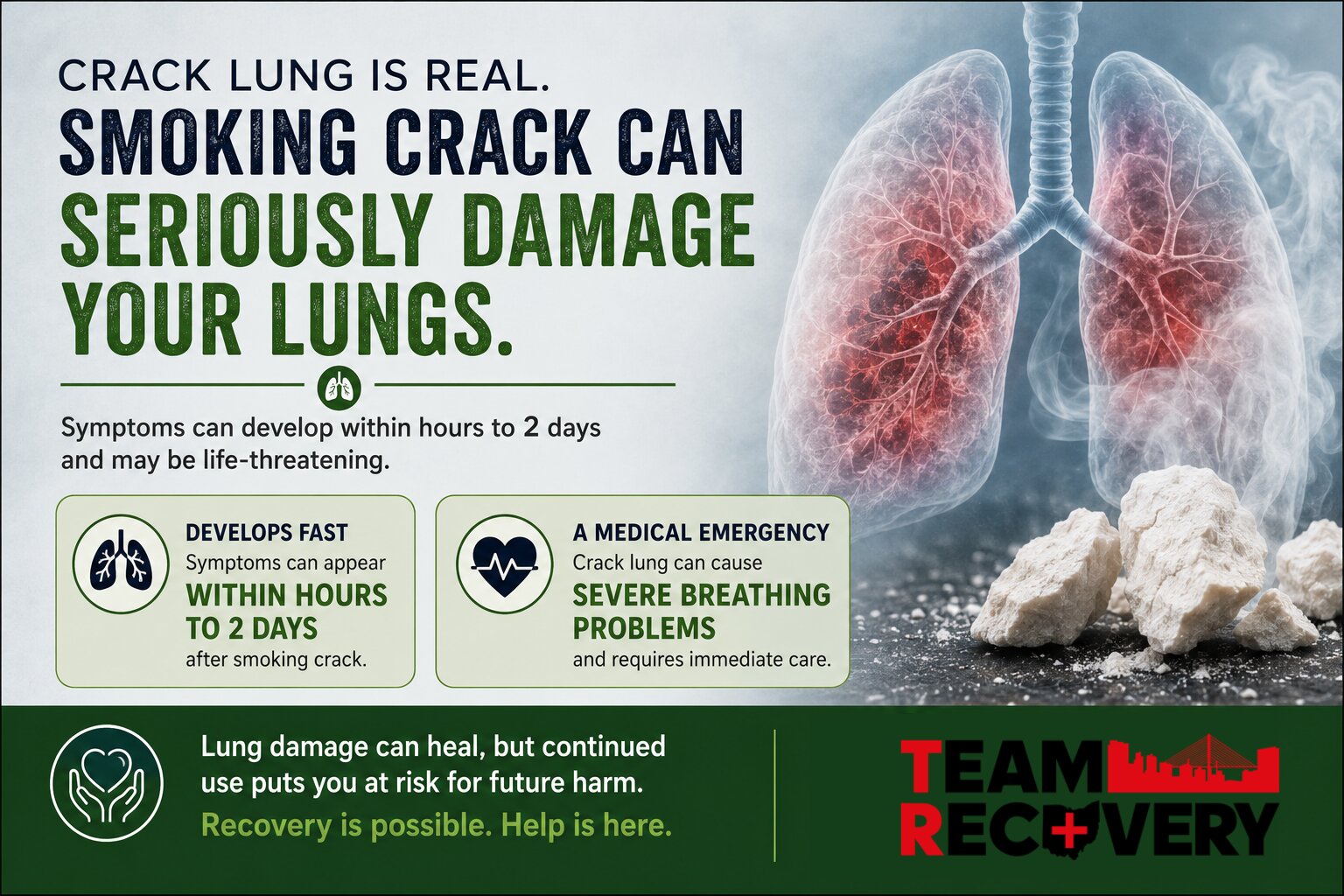
Rather than referring to a single disease, the term describes a syndrome of sudden inflammation and damage affecting the lungs. Symptoms often develop within hours to two days after smoking crack.
The condition may involve:
- Bleeding into the lungs
- Inflammation of lung tissue
- Damage to the tiny air sacs (alveoli)
- Impaired oxygen exchange
Because crack lung can interfere with normal breathing, it is considered a medical emergency that requires prompt evaluation.
Symptoms of Crack Lung
Symptoms can vary from mild to severe, but they often develop suddenly after smoking crack cocaine.
Common symptoms include:
- Chest pain
- Shortness of breath
- Difficulty breathing
- Persistent cough
- Coughing up blood (hemoptysis)
- Fever
- Wheezing
- Rapid breathing
- Low oxygen levels
- Severe fatigue
Some individuals may also experience:
- Bluish lips or fingertips from reduced oxygen
- Confusion
- Increased heart rate
- Sweating
These symptoms overlap with several other serious medical conditions, including pneumonia, pulmonary embolism, and heart attack, making emergency medical evaluation essential.
Why Smoking Crack Causes This
Several factors contribute to the development of crack lung.
Thermal Injury
Crack cocaine is smoked at very high temperatures.
The hot vapor can directly irritate and injure the airways and delicate lung tissue, triggering inflammation and swelling.
Damage to Blood Vessels
Cocaine causes blood vessels to constrict throughout the body, including those that supply the lungs.
Reduced blood flow may contribute to:
- Tissue injury
- Bleeding
- Impaired oxygen delivery
This vascular effect is one of the defining features of cocaine-related lung injury.
Inflammatory Response
Smoking crack can trigger an intense inflammatory reaction within the lungs.
As inflammation increases, fluid and inflammatory cells may accumulate inside the air sacs, making it harder for oxygen to move into the bloodstream.
Contaminants and Additives
Street crack cocaine may contain various contaminants or adulterants.
These substances can further irritate the lungs or trigger additional inflammatory responses, increasing the severity of lung damage.
Is Crack Lung Reversible?
In many cases, yes—especially when treatment begins promptly.
With appropriate medical care and complete avoidance of further crack cocaine use, many people experience significant improvement over days to weeks.
Treatment typically focuses on:
- Supporting breathing
- Providing oxygen if needed
- Monitoring lung function
- Treating complications
- Managing inflammation when clinically appropriate
The exact treatment depends on the severity of the lung injury and the individual’s overall condition.
Factors That Influence Recovery
Recovery varies depending on several factors, including:
- The severity of lung damage
- How quickly treatment begins
- Overall lung health
- Continued cocaine use
- Other medical conditions
People who continue smoking crack after recovering remain at risk of developing additional episodes, which may lead to more permanent lung damage over time.
When Should You Seek Emergency Care?
Crack lung should always be treated as a medical emergency.
Seek immediate medical attention if you experience:
- Severe shortness of breath
- Chest pain
- Coughing up blood
- Blue lips or fingertips
- Difficulty speaking because of breathlessness
- Confusion
- Loss of consciousness
Prompt treatment can significantly improve outcomes and reduce the risk of serious complications.
Addressing the Addiction Underneath
Although treating the lung injury is the immediate priority, recovery doesn’t end once breathing improves.
Because crack lung is directly related to smoking crack cocaine, continued use greatly increases the likelihood of future lung injuries and other serious health complications.
Long-term cocaine use is also associated with:
- Heart attack
- Stroke
- Seizures
- Mental health changes
- Addiction
- Increased overdose risk, particularly when cocaine is mixed with other substances
Addressing the underlying addiction can help reduce the risk of future medical emergencies while supporting long-term physical and emotional recovery.
Treatment plans often include:
- Medical evaluation
- Individual counseling
- Group therapy
- Behavioral therapies
- Relapse prevention planning
- Ongoing recovery support
Every person’s recovery journey is different, and treatment is most effective when tailored to individual needs.
Frequently Asked Questions
What is crack lung?
Crack lung is an acute lung injury that can occur after smoking crack cocaine. It involves inflammation, bleeding, and damage to lung tissue, often causing sudden breathing problems that require emergency medical care.
What are the symptoms of crack lung?
Common symptoms include chest pain, shortness of breath, coughing, coughing up blood, fever, wheezing, rapid breathing, and low oxygen levels. Symptoms usually develop within hours to two days after smoking crack cocaine.
Does crack lung go away?
Many people recover with prompt medical treatment and by stopping crack cocaine use. Recovery depends on the severity of the lung injury, how quickly treatment begins, and whether additional cocaine use is avoided.
Recovery Begins With Treating More Than the Symptoms
Crack lung is a serious medical condition that requires immediate attention. While many people recover with timely treatment, continuing to smoke crack cocaine significantly increases the risk of future lung injuries and other life-threatening complications.
At Team Recovery, we provide compassionate, evidence-based care for individuals throughout Toledo and Northwest Ohio who are ready to address cocaine addiction and begin lasting recovery. Treating the underlying addiction is one of the most important steps toward protecting your long-term health.
Ready to Take the Next Step?
If cocaine use is affecting your health or your life, you don’t have to face it alone. Team Recovery offers personalized, evidence-based care designed to help you safely begin recovery and build a healthier future.
Call Team Recovery today at (419) 314-4909 to speak with a member of our team, or learn more about our cocaine addiction treatment program. We’re proud to serve individuals and families throughout Toledo and Northwest Ohio.

