





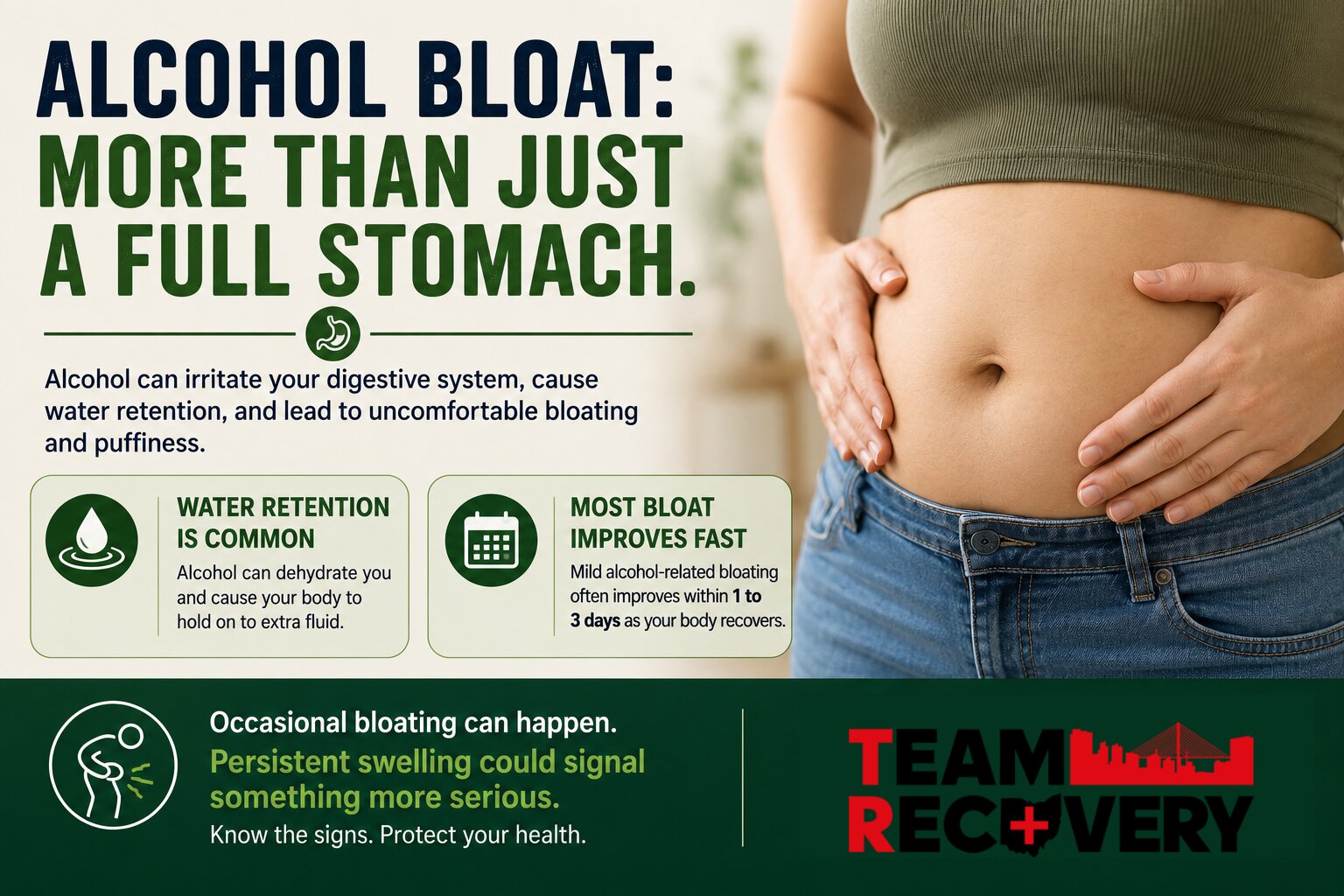
After a night of drinking, many people wake up feeling swollen, uncomfortable, or like their clothes fit a little tighter than usual. A bloated stomach, facial puffiness, and a general feeling of heaviness are common complaints after alcohol use. If you’ve been searching for alcohol bloat, you’re not alone.
In many cases, bloating after drinking is temporary and improves as your body rehydrates and recovers. However, when bloating becomes persistent or is accompanied by other symptoms, it may signal an underlying health concern that deserves medical attention.
If alcohol has become difficult to cut back on or is affecting your health, learning more about alcohol addiction treatment can help you understand your options for recovery. At Team Recovery, we help individuals throughout Toledo and Northwest Ohio address alcohol use disorder with compassionate, evidence-based care.
Understanding why alcohol causes bloating—and when it’s simply temporary versus when it may indicate something more serious—can help you know when to seek medical advice.
What Alcohol Bloat Is
Alcohol bloat refers to the swelling or fullness some people experience after drinking alcohol. It can affect different parts of the body, including:
- The stomach or abdomen
- The face
- The hands
- The feet
Some people notice their abdomen feels tight and uncomfortable after just a few drinks, while others develop noticeable facial puffiness the morning after drinking.
In most healthy individuals, this bloating is temporary and resolves as the body restores its normal fluid balance. However, chronic or severe bloating should not be ignored.
Why Alcohol Causes Bloating
Several different processes contribute to alcohol-related bloating.
Gastritis
Alcohol can irritate the lining of the stomach, leading to inflammation known as gastritis.
This irritation may cause:
- Stomach fullness
- Pain
- Nausea
- Excess gas
- Indigestion
Even occasional heavy drinking can temporarily inflame the stomach, making bloating more noticeable.
Water Retention
Although alcohol initially increases urine production, it can ultimately contribute to dehydration.
When the body becomes dehydrated, it may respond by retaining extra fluid once you begin rehydrating. This temporary fluid retention can cause puffiness in the face, hands, and abdomen.
Inflammation
Alcohol triggers inflammatory responses throughout the body.
Inflammation can increase swelling within tissues, contributing to feelings of fullness and visible puffiness after drinking.
For people who drink frequently, repeated inflammation may make bloating more persistent.
Changes in Gut Bacteria
Alcohol can disrupt the balance of healthy bacteria in the digestive tract.
These changes may lead to:
- Increased gas production
- Slower digestion
- Abdominal discomfort
- Bloating
Over time, heavy alcohol use may also affect the health of the intestinal lining, further contributing to digestive symptoms.
Carbonated Alcoholic Beverages
Beer, hard seltzers, sparkling cocktails, and other carbonated drinks introduce additional gas into the digestive system.
This can increase stomach pressure and make bloating feel worse, especially when large amounts are consumed quickly.
How Long Alcohol Bloat Lasts
The duration depends largely on how much alcohol was consumed and how often someone drinks.
Short-Term Bloating
For many people, mild bloating improves within:
- Several hours
- One to three days
As hydration improves and the digestive system recovers, swelling gradually decreases.
Chronic Bloating
People who drink heavily or regularly may notice bloating that:
- Occurs frequently
- Lasts longer
- Returns after each episode of drinking
Persistent inflammation, digestive irritation, and repeated fluid shifts can make bloating an ongoing problem.
If bloating continues despite reducing or stopping alcohol use, it should be evaluated by a healthcare provider.
How to Reduce It
Most temporary alcohol-related bloating improves with time and supportive self-care.
Helpful strategies include:
- Drink plenty of water
- Eat balanced, nutrient-rich meals
- Limit sodium intake, which can worsen water retention
- Avoid additional alcohol while recovering
- Choose non-carbonated beverages if you decide to drink in the future
- Get adequate sleep
- Engage in light physical activity if you feel well enough
Supporting overall digestive health with fiber-rich foods and staying hydrated may also help the body recover more quickly.
If bloating occurs after nearly every drinking episode, reducing alcohol intake is often the most effective long-term solution.
When Bloating Is a Warning Sign
Most alcohol bloat is temporary.
However, persistent abdominal swelling should not automatically be dismissed as ordinary bloating.
In some cases, ongoing swelling may indicate liver disease or other serious medical conditions.
Ascites
One important complication is ascites, which is the buildup of fluid inside the abdominal cavity.
Unlike temporary bloating, ascites often causes:
- Progressive abdominal enlargement
- Tightness that does not improve
- Rapid weight gain from fluid
- Shortness of breath
- Difficulty bending over comfortably
Ascites is commonly associated with advanced liver disease and requires prompt medical evaluation.
Other Signs of Liver Involvement
Seek medical attention if bloating is accompanied by:
- Yellowing of the skin or eyes (jaundice)
- Severe abdominal pain
- Persistent vomiting
- Dark urine
- Pale stools
- Swelling in the legs or ankles
- Easy bruising or bleeding
- Confusion or unusual drowsiness
These symptoms may indicate significant liver dysfunction or another serious medical condition.
Even without these warning signs, persistent bloating that continues for weeks deserves evaluation by a healthcare professional.
When Alcohol Use Becomes a Bigger Concern
For some people, alcohol bloat is only one of many physical changes related to ongoing alcohol use.
Other warning signs may include:
- Increasing tolerance
- Difficulty limiting alcohol intake
- Frequent hangovers
- Continued drinking despite health problems
- Relationship or work difficulties related to alcohol
- Withdrawal symptoms when not drinking
Recognizing these patterns early can make it easier to seek help before more serious health complications develop.
Frequently Asked Questions
Why does alcohol bloat you?
Alcohol can contribute to bloating by irritating the stomach lining, disrupting gut bacteria, increasing inflammation, causing temporary fluid retention, and introducing excess gas through carbonated beverages. These factors may lead to abdominal fullness, puffiness, and digestive discomfort.
How do you get rid of alcohol bloat?
Most temporary bloating improves by staying hydrated, eating balanced meals, reducing sodium intake, avoiding additional alcohol, getting adequate rest, and allowing the body time to recover. Persistent bloating should be evaluated by a healthcare provider.
How long does alcohol bloat last?
Mild alcohol-related bloating often improves within several hours to a few days. If bloating continues for weeks, worsens over time, or is accompanied by symptoms such as jaundice or significant abdominal swelling, medical evaluation is recommended.
Recovery Starts With Understanding the Signs
For many people, alcohol bloat is a temporary effect of drinking that improves as the body recovers. However, persistent bloating or swelling—especially when accompanied by other concerning symptoms—can signal a more serious health issue that shouldn’t be ignored.
If alcohol is affecting your health, relationships, or daily life, Team Recovery provides compassionate, evidence-based care for individuals throughout Toledo and Northwest Ohio. Our team can help you explore treatment options and take the next step toward lasting recovery.
Ready to Take the Next Step?
If alcohol use is beginning to affect your health or quality of life, you don’t have to face it alone. Team Recovery provides personalized, evidence-based care to help individuals safely begin recovery and build a healthier future.
Call Team Recovery today at (419) 314-4909 to speak with a member of our team, or learn more about our alcohol addiction treatment program. We’re proud to serve individuals and families throughout Toledo and Northwest Ohio.

