





If you’ve been comparing Ativan vs Xanax, you’re probably trying to understand whether one medication works better, lasts longer, or carries a higher risk of dependence. While both medications belong to the same drug class, they are not interchangeable. Differences in how quickly they take effect and how long they remain active can influence how they’re prescribed—and how likely they are to be misused.
If you’re concerned about long-term benzodiazepine use, learning more about benzodiazepine addiction treatment can help you understand when professional support may be appropriate. At Team Recovery, we help individuals throughout Toledo and Northwest Ohio safely address benzodiazepine dependence with compassionate, evidence-based care.
Understanding the similarities and differences between these medications can help you have informed conversations with your healthcare provider while recognizing the risks associated with prolonged use.
Ativan vs. Xanax at a Glance
Feature |
Ativan (Lorazepam) |
Xanax (Alprazolam) |
|---|---|---|
| Generic Name | Lorazepam | Alprazolam |
| Drug Class | Benzodiazepine | Benzodiazepine |
| DEA Schedule | Schedule IV | Schedule IV |
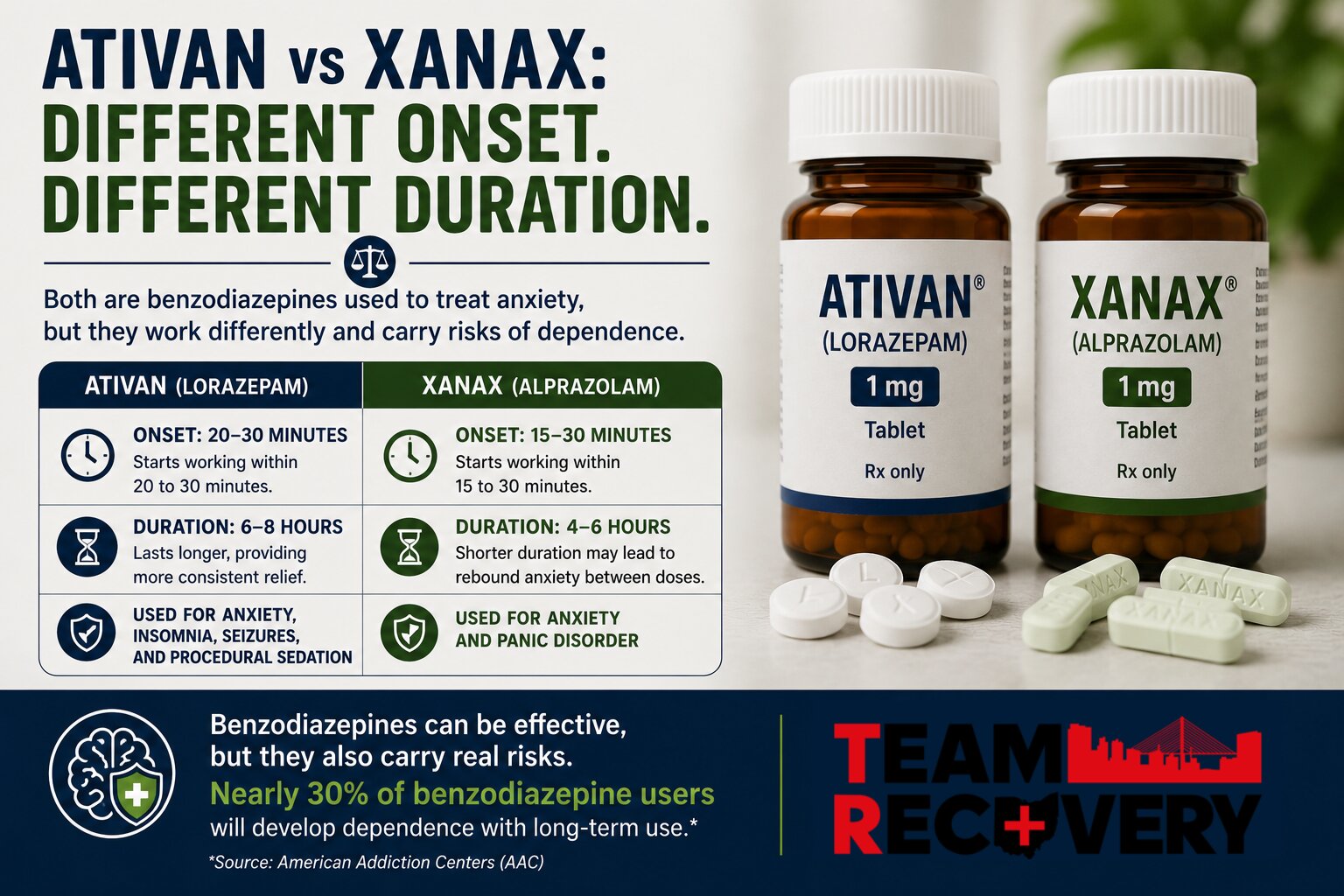
| Typical Onset | 20–30 minutes | 15–30 minutes |
| Duration of Effects | About 6–8 hours | About 4–6 hours |
| Elimination Half-Life | Approximately 10–20 hours | Approximately 11 hours (average) |
| Primary Uses | Anxiety disorders, insomnia, procedural sedation, seizures | Anxiety disorders and panic disorder |
| Available Forms | Tablets, oral solution, injection | Tablets, extended-release tablets, orally disintegrating tablets |
Although they share many characteristics, their differences in onset and duration often influence prescribing decisions.
Onset and Duration: The Key Pharmacological Difference
One of the biggest distinctions between these medications is how quickly they produce noticeable effects and how long those effects last.
Ativan
Ativan generally begins working within 20 to 30 minutes after an oral dose.
Because it remains active somewhat longer than Xanax, it may provide more sustained symptom relief throughout the day. This longer duration can reduce the need for frequent dosing in some patients.
Xanax
Xanax typically begins working within 15 to 30 minutes, making it one of the fastest-acting benzodiazepines available.
However, its effects also wear off relatively quickly. As blood levels decline, some individuals experience a return of anxiety symptoms sooner, sometimes referred to as rebound anxiety.
This combination of rapid onset and shorter duration contributes to its higher misuse potential.
Uses: What Each Is Prescribed For
Both medications are approved to treat anxiety-related conditions, but their primary uses differ slightly.
Ativan May Be Prescribed For
- Generalized anxiety disorder
- Short-term anxiety relief
- Hospital procedures requiring sedation
- Seizure management
- Acute agitation in medical settings
- Short-term treatment of insomnia related to anxiety
Because injectable forms are available, Ativan is frequently used in hospitals and emergency departments.
Xanax May Be Prescribed For
- Generalized anxiety disorder
- Panic disorder
- Panic attacks
- Short-term management of severe anxiety symptoms
Its rapid onset often makes Xanax particularly effective for sudden episodes of intense anxiety or panic.
Both medications are generally intended for short-term use, since long-term treatment increases the likelihood of tolerance, dependence, and withdrawal.
Which Is More Habit-Forming?
Both medications have a significant potential for physical dependence, but their pharmacologic differences influence their misuse potential.
Xanax Often Carries Higher Misuse Potential
Many addiction specialists consider Xanax to have a somewhat greater likelihood of misuse because it:
- Works very quickly
- Produces rapid symptom relief
- Has a shorter duration of action
- May lead to rebound anxiety between doses
- Can encourage repeated dosing in some individuals
The rapid rise and fall in drug levels may reinforce repeated use more strongly than medications with a slower, steadier effect.
Ativan Also Carries Significant Risk
Although Ativan generally remains active longer, it is still a potent benzodiazepine capable of causing:
- Tolerance
- Physical dependence
- Misuse
- Addiction
No benzodiazepine should be considered “safe” simply because it may have a slightly lower misuse potential than another.
Risk depends on many factors, including:
- Dose
- Duration of treatment
- Personal or family history of addiction
- Concurrent alcohol or drug use
- Mental health conditions
Dependence and Withdrawal
Both Ativan and Xanax can produce physical dependence after weeks or months of regular use.
Dependence means the brain has adapted to the medication and now expects it to be present. If the medication is stopped abruptly, withdrawal symptoms may occur.
Common withdrawal symptoms include:
- Anxiety
- Panic attacks
- Insomnia
- Tremors
- Sweating
- Irritability
- Difficulty concentrating
- Muscle tension
- Increased heart rate
More severe withdrawal can include:
- Hallucinations
- Seizures
- Delirium
Because benzodiazepine withdrawal can become medically dangerous, these medications should never be discontinued suddenly without medical supervision.
Healthcare providers typically recommend a gradual taper that slowly reduces the dose over time.
When Benzo Use Becomes a Problem
Many people take benzodiazepines exactly as prescribed without developing addiction.
However, use may become concerning when someone begins:
- Taking larger doses than prescribed
- Taking medication more frequently
- Running out of prescriptions early
- Visiting multiple providers for prescriptions
- Using benzodiazepines to cope with everyday stress
- Combining them with alcohol or opioids
- Feeling unable to function without the medication
Tolerance can also develop over time, meaning the original dose no longer produces the same effects. Some people respond by increasing the dose on their own, which significantly increases the risk of dependence and overdose—especially when benzodiazepines are combined with other sedating substances.
Recognizing these warning signs early allows individuals to seek help before dependence becomes more severe.
Frequently Asked Questions
Which is stronger, Ativan or Xanax?
Neither medication is universally “stronger.” They differ in potency, dosing, onset, and duration. Xanax typically acts more quickly, while Ativan generally lasts somewhat longer. Healthcare providers select the medication based on the individual’s medical needs rather than overall strength.
Which is more addictive?
Both medications carry a significant risk of dependence and addiction. Because Xanax has a faster onset and shorter duration, many experts believe it has a somewhat higher misuse potential. However, either medication can lead to addiction when used improperly or for extended periods.
Can you switch between them?
Sometimes, but only under medical supervision. Ativan and Xanax are not directly interchangeable because they differ in potency, dosing, and duration of action. Any transition should be carefully managed by a qualified healthcare provider to reduce the risk of withdrawal or other complications.
Recovery Starts With the Right Support
Understanding Ativan vs Xanax involves more than comparing how quickly each medication works. Both are effective prescription medications when used appropriately, but both also carry meaningful risks of tolerance, dependence, and withdrawal—particularly with prolonged use.
If benzodiazepine use has become difficult to manage, Team Recovery provides compassionate, evidence-based care for individuals throughout Toledo and Northwest Ohio. Our experienced team can help you explore treatment options and build a personalized plan for long-term recovery.
Ready to Take the Next Step?
Recovery doesn’t have to happen alone. If you or someone you love is struggling with benzodiazepine use, Team Recovery is here to help with personalized, evidence-based care in a supportive environment.
Call Team Recovery today at (419) 314-4909 to speak with a member of our team, or learn more about our benzodiazepine addiction treatment program. We’re proud to serve individuals and families throughout Toledo and Northwest Ohio.

