





Watching someone you care about change can be frightening. Maybe you’ve noticed their eyes seem unusually wide, their pupils look larger than normal, or they struggle to make eye contact because their gaze seems restless and unfocused. If you’ve been searching for meth eyes, you’re likely looking for answers—not only about what you’re seeing, but also about whether it could mean someone you love is using methamphetamine.
While eye changes alone cannot confirm meth use, they can be one of several physical signs that appear during active use or develop after prolonged use. Looking at the bigger picture—including changes in behavior, mood, sleep, and overall health—is often more helpful than focusing on any single symptom.
If you’re concerned that methamphetamine use has become a problem, learning more about meth addiction treatment can help you understand the support available. At Team Recovery, we help individuals throughout Toledo and Northwest Ohio recover from meth addiction with compassionate, evidence-based care.
Understanding why meth affects the eyes can help you recognize potential warning signs while remembering that addiction is a treatable medical condition—not a personal failure.
What Changes in the Eyes Can Occur With Meth Use?
The phrase “meth eyes” is not a medical diagnosis.
Instead, it is an informal term people use to describe eye changes that sometimes occur during active methamphetamine use or after prolonged use.
These changes can include:
- Enlarged (dilated) pupils
- Rapid or darting eye movements
- A wide-eyed appearance
- Glassy or shiny eyes
- Bloodshot eyes
- Difficulty maintaining steady eye contact
Not everyone who uses meth experiences all of these changes, and many other medical conditions can produce similar symptoms.
For that reason, eye changes should always be considered alongside other physical and behavioral signs.
Acute Signs During Active Use
Methamphetamine is a powerful central nervous system stimulant.
As it increases activity in the brain and body, it also affects the eyes.
Dilated Pupils
One of the most recognizable changes is enlarged pupils.
Meth activates the body’s “fight-or-flight” response, causing the pupils to widen.
Dilated pupils may remain noticeable while the drug is active and can make the eyes appear unusually large or intense.
Rapid Eye Movements
Some people experience quick, restless eye movements.
Their gaze may seem:
- Constantly shifting
- Difficult to focus
- Hyper-alert
- Easily distracted
These movements often reflect the heightened stimulation caused by methamphetamine.
Glassy Appearance
Although glassy eyes are often associated with alcohol or cannabis, meth use may also make the eyes appear unusually shiny or unfocused.
Combined with sleep deprivation, this can create an exhausted yet intensely alert appearance.
Bloodshot Eyes
Meth may contribute to redness through:
- Reduced sleep
- Dehydration
- Irritation
- Increased blood pressure
Bloodshot eyes alone are not specific to meth use, but they can occur alongside other signs.
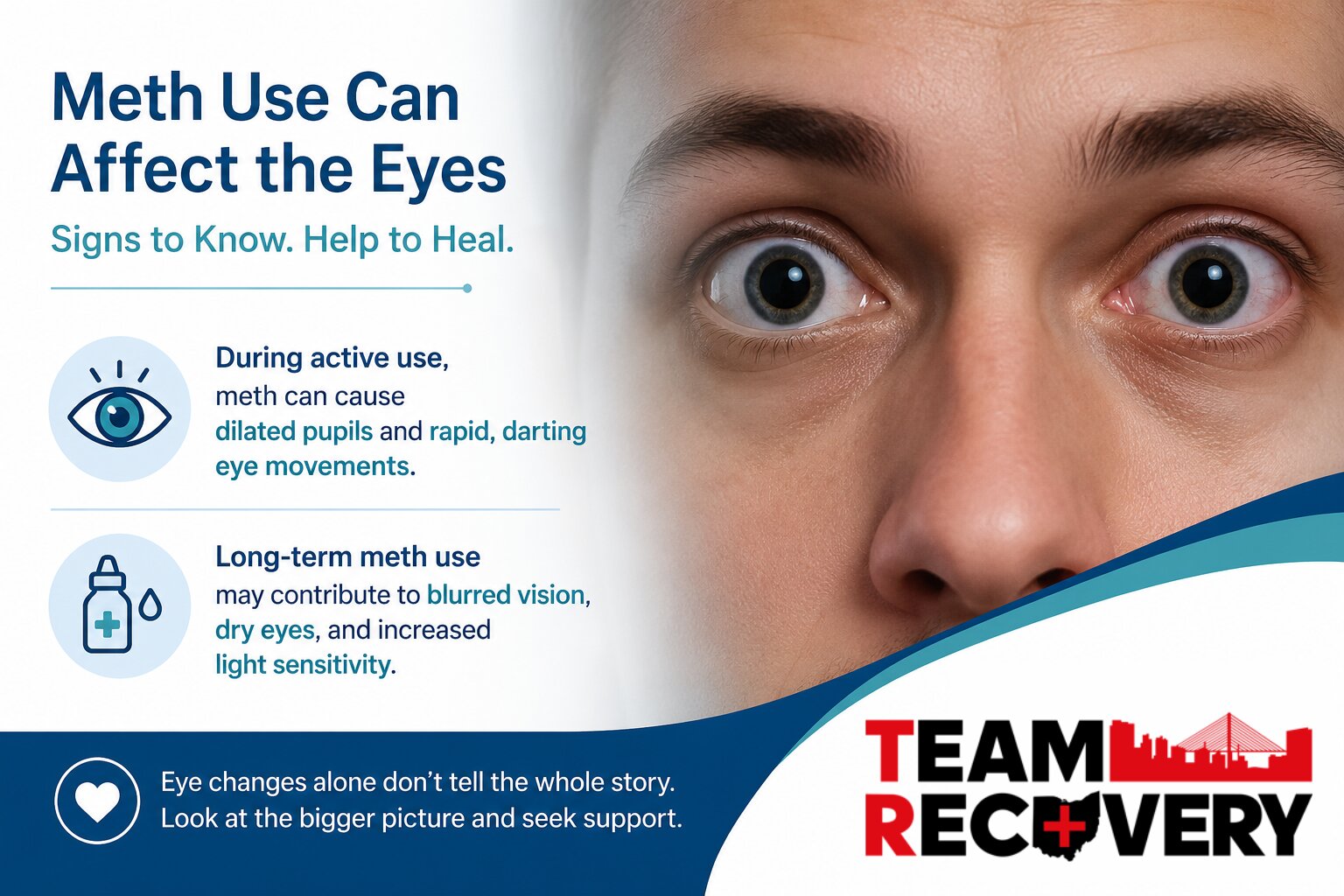
Long-Term Eye Damage From Meth Use
While some eye changes improve after the drug wears off, prolonged methamphetamine use may contribute to more lasting eye problems.
Potential complications include:
- Dry eyes
- Chronic eye irritation
- Blurred vision
- Increased sensitivity to light
- Difficulty focusing
- Eye infections
- Corneal injury from reduced blinking or rubbing the eyes
Long-term meth use may also increase the risk of damage to the tiny blood vessels that supply the eyes, particularly when combined with severe high blood pressure or other health complications.
Poor overall health, dehydration, and nutritional deficiencies may further increase the risk of vision problems over time.
Why Meth Affects the Eyes
Several different factors contribute to the eye changes associated with methamphetamine use.
Dopamine and Nervous System Stimulation
Meth dramatically increases dopamine activity within the brain.
This heightened stimulation activates the sympathetic nervous system, leading to:
- Dilated pupils
- Increased alertness
- Rapid eye movements
- Heightened sensitivity to light
Increased Blood Pressure
Meth can significantly raise blood pressure.
Changes in circulation may contribute to redness, eye discomfort, and, over time, damage to small blood vessels within the eyes.
Sleep Deprivation
Many people using meth remain awake for extended periods.
Lack of sleep commonly causes:
- Bloodshot eyes
- Puffy eyelids
- Dryness
- Difficulty focusing
- Eye fatigue
Poor Nutrition and Dehydration
Long-term meth use often affects appetite and hydration.
Vitamin deficiencies, dehydration, and poor overall health may reduce the body’s ability to maintain healthy eyes and vision.
Recognizing Meth Use in a Loved One
Eye changes are rarely the only sign that someone may be struggling with methamphetamine use.
Other warning signs often include:
- Dramatic weight loss
- Staying awake for long periods
- Sudden bursts of energy
- Increased anxiety or paranoia
- Mood swings
- Skin sores from repeated picking
- Poor personal hygiene
- Financial or relationship problems
- Secretive behavior
If several of these changes occur together, it may be time to have a compassionate conversation or encourage professional evaluation.
Approaching someone with concern rather than judgment often leads to more productive conversations than accusations or confrontation.
Getting Help at Team Recovery
Recognizing possible signs of meth use can feel overwhelming, especially when it’s someone you love.
The important thing to remember is that recovery is possible.
Treatment plans are individualized and may include:
- Comprehensive assessment
- Medical evaluation
- Individual counseling
- Group therapy
- Behavioral therapies
- Relapse prevention planning
- Family support
- Long-term recovery planning
Seeking help early can reduce the risk of serious medical complications while giving individuals the support they need to build lasting recovery.
Frequently Asked Questions
What do meth eyes look like?
People sometimes describe meth eyes as having enlarged pupils, rapid or darting eye movements, a glassy appearance, bloodshot eyes, or an unusually intense stare. These changes can occur during active methamphetamine use but are not unique to meth alone.
Does meth damage your vision?
It can. Long-term methamphetamine use may contribute to dry eyes, blurred vision, increased light sensitivity, eye infections, and other eye problems. Severe complications are more likely with prolonged or heavy use.
Do eyes go back to normal after quitting?
Many temporary changes—such as dilated pupils, redness, and sleep-related eye strain—often improve after meth use stops. However, recovery depends on the extent of any long-term damage, overall health, and whether permanent eye injury has occurred.
Looking Beyond the Eyes
Noticing changes like meth eyes can be frightening, but eye changes alone don’t tell the whole story. They are often one piece of a larger picture that may include changes in behavior, physical health, and emotional well-being. Recognizing these signs early can open the door to meaningful conversations and professional support.
At Team Recovery, we help individuals and families throughout Toledo and Northwest Ohio navigate meth addiction with compassionate, evidence-based care. Recovery is possible, and no one has to face it alone.
Ready to Take the Next Step?
If you’re worried about a loved one’s meth use—or your own—you don’t have to navigate it by yourself. Team Recovery provides personalized, evidence-based care designed to help individuals safely begin recovery and rebuild their lives.
Call Team Recovery today at (419) 314-4909 to speak with a member of our team, or learn more about our meth addiction treatment program. We’re proud to serve individuals and families throughout Toledo and Northwest Ohio.

