





If you’ve been searching how long does kratom stay in your system, you may be preparing for a drug test, thinking about stopping kratom, or wondering how long its effects last. While the answer varies from person to person, kratom can remain detectable for several days—and in some cases much longer, depending on the type of test used.
Although kratom is often marketed as a natural herbal product, it can still affect the brain in ways that lead to physical dependence and withdrawal. That’s one reason many people begin asking about detection times after using it regularly.
If kratom use has become difficult to stop, learning more about kratom addiction treatment can help you understand your options for recovery. At Team Recovery, we help individuals throughout Toledo and Northwest Ohio address kratom dependence with compassionate, evidence-based care.
Understanding how long kratom stays in the body—and what influences that timeline—can help set realistic expectations while highlighting the importance of recognizing dependence when it develops.
What Kratom Is
Kratom is a plant (Mitragyna speciosa) native to Southeast Asia.
Its leaves contain naturally occurring compounds called mitragynine and 7-hydroxymitragynine, which interact with opioid receptors in the brain.
Depending on the dose, kratom may produce effects such as:
- Increased energy
- Pain relief
- Relaxation
- Sedation
While some people use kratom for chronic pain or to self-manage opioid withdrawal, regular use can lead to tolerance, physical dependence, and withdrawal symptoms when use stops.
Half-Life and Detection Windows by Test
Kratom does not remain in the body for the same amount of time in every person. Detection depends on both the body’s metabolism and the type of drug test being performed.
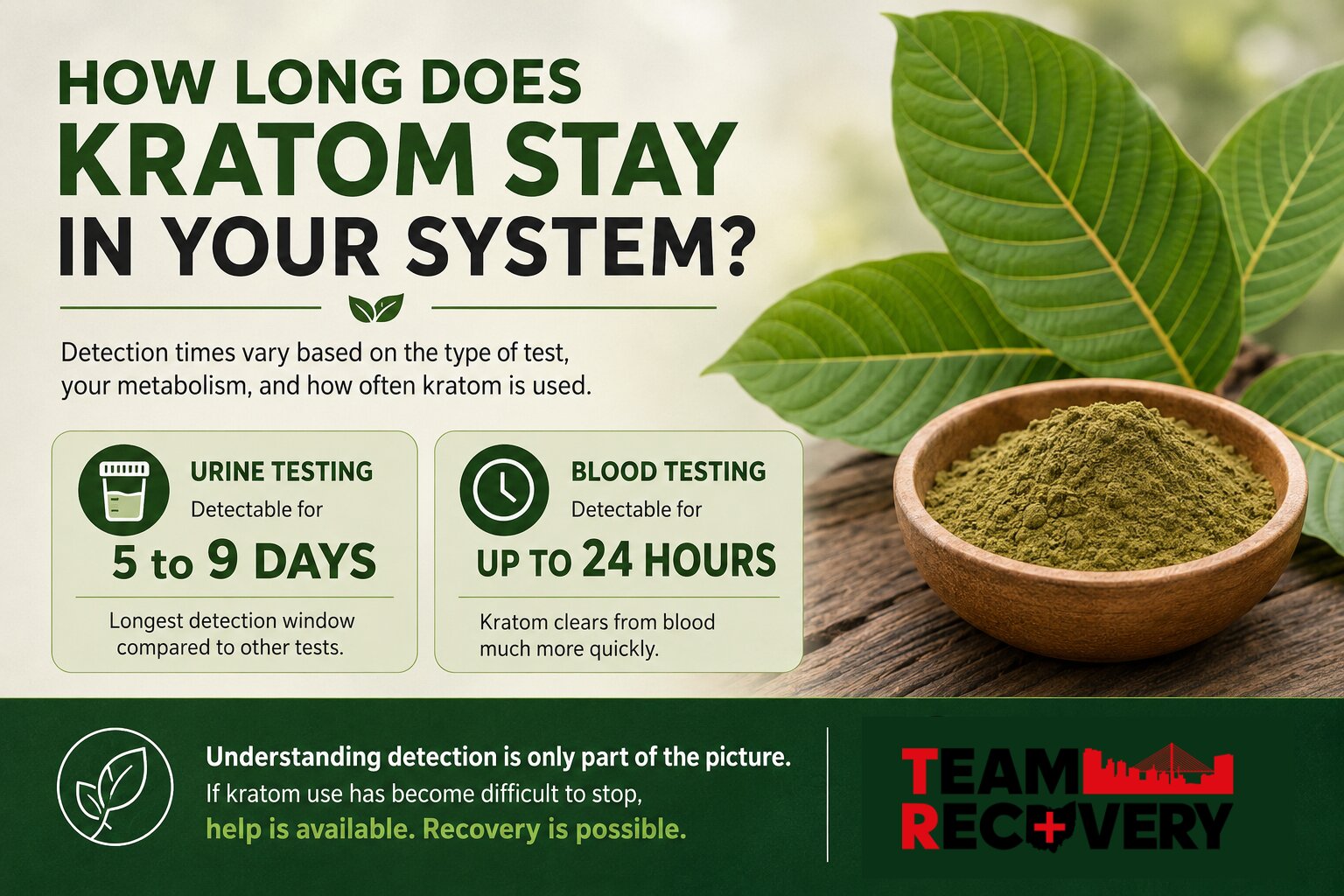
Urine Testing
Urine testing offers the longest practical detection window for kratom.
In many cases, kratom metabolites may be detectable for approximately:
- 5 to 9 days
Detection may be longer for individuals who:
- Use kratom daily
- Take high doses
- Have slower metabolism
- Have reduced kidney or liver function
It’s important to note that standard workplace drug screens generally do not test for kratom unless a specific kratom test has been ordered.
Blood Testing
Kratom typically remains detectable in blood for a much shorter period.
In most situations:
- Up to about 24 hours
Blood testing is used less commonly because of its relatively short detection window.
Saliva Testing
Research on saliva testing for kratom remains limited.
Current evidence suggests:
- Detection is possible for a relatively short period after use
- Reliable detection windows have not been firmly established
Because standardized saliva testing for kratom is uncommon, its clinical use remains limited.
Hair Testing
Like many substances, kratom may become incorporated into hair as it grows.
Potential detection window:
- Up to 90 days
However, hair testing for kratom is uncommon and generally reserved for specialized situations rather than routine screening.
Factors That Affect Clearance
No two people eliminate kratom at exactly the same rate.
Several factors influence how long it remains in the body.
Dose
Higher doses generally take longer to clear than smaller amounts.
Frequency of Use
Someone who uses kratom occasionally will often eliminate it more quickly than someone who uses it every day.
Repeated use allows compounds to accumulate, extending detection times.
Metabolism
People with faster metabolisms often process substances more quickly, while slower metabolism may lengthen clearance.
Liver and Kidney Function
Because the body relies on the liver and kidneys to process and eliminate many substances, reduced organ function may delay elimination.
Kratom Product and Strain
Different kratom products may contain varying concentrations of active compounds.
Because supplements are not standardized, potency can vary significantly between products, making it difficult to predict exact detection times.
Why People Ask This Question (and What It Often Signals)
People search how long does kratom stay in your system for many different reasons.
Some are preparing for:
- Employment drug testing
- Legal or court-related testing
- Medical procedures
Others are asking because they’re beginning to notice that kratom has become harder to stop.
Signs that dependence may be developing include:
- Needing larger amounts to achieve the same effects
- Experiencing cravings
- Feeling unwell when not using kratom
- Continuing to use despite health or relationship problems
- Finding it difficult to cut back
Withdrawal symptoms may include:
- Muscle aches
- Anxiety
- Restlessness
- Insomnia
- Sweating
- Nausea
- Irritability
- Runny nose
- Strong cravings
Many people are surprised to learn that a product marketed as “natural” can still produce real physical dependence.
Getting Help for Kratom Dependence
Kratom dependence can develop gradually, making it easy to overlook until stopping becomes difficult.
Fortunately, recovery is possible.
Treatment may include:
- Medical evaluation
- Withdrawal management when needed
- Individual counseling
- Behavioral therapies
- Relapse prevention planning
- Ongoing recovery support
Because everyone’s experience with kratom is different, treatment plans should be tailored to each individual’s needs and recovery goals.
Seeking help early may reduce the risk of worsening dependence while making the recovery process more manageable.
Frequently Asked Questions
How long does kratom stay in urine?
Kratom may be detectable in urine for approximately 5 to 9 days, although the exact timeline depends on factors such as dose, frequency of use, metabolism, and kidney function.
Does kratom show on a drug test?
Most standard workplace drug tests do not routinely screen for kratom. However, specialized drug tests can specifically detect kratom when ordered.
Is kratom addictive?
Yes. Although kratom is derived from a plant, regular use can lead to tolerance, physical dependence, and withdrawal symptoms. Some individuals also develop addiction, particularly with frequent or high-dose use.
Understanding Detection Is Only Part of the Picture
While knowing how long kratom stays in your system can be helpful for understanding drug testing and elimination, it’s equally important to recognize that kratom is capable of causing real physical dependence. If stopping has become more difficult than expected, you’re not alone—and support is available.
At Team Recovery, we provide compassionate, evidence-based care for individuals throughout Toledo and Northwest Ohio who are ready to overcome kratom dependence and begin lasting recovery.
Ready to Take the Next Step?
If kratom use is affecting your health or daily life, you don’t have to face it alone. Team Recovery offers personalized, evidence-based care to help you safely begin recovery and build a healthier future.
Call Team Recovery today at (419) 314-4909 to speak with a member of our team, or learn more about our kratom addiction treatment program. We’re proud to serve individuals and families throughout Toledo and Northwest Ohio.

