





Waking up shaking after drinking can be alarming.
Maybe your hands are trembling as you reach for a glass of water. Maybe your heart is racing before your feet even hit the floor. You might feel anxious, sweaty, nauseated, or unable to settle down. In moments like that, many people ask themselves the same question:
“Why is this happening? And should I be worried?”
If you’re searching for answers, you’re not alone. Many people experience shaking after drinking and aren’t sure whether it’s a hangover, stress, lack of sleep, or something more serious.
The truth is that shaking can happen for several reasons. In some cases, it’s temporary. In others, it may be one of the body’s earliest warning signs that alcohol is having a deeper physical impact than you realize.
At Team Recovery, we’ve met many people who first started questioning their drinking after experiences like these. What began as a frightening morning eventually became an opportunity to understand what was happening and find support. For individuals who need a safe place to step away from alcohol and focus on healing, our live-in treatment program offers round-the-clock care and support.
Not Every Morning Shake Means the Same Thing
One of the reasons this symptom can be confusing is that several different issues can cause shaking after drinking.
Alcohol affects nearly every system in the body. It can disrupt sleep, lower blood sugar levels, dehydrate you, affect body temperature regulation, and place stress on the nervous system.
After a night of drinking, some people experience:
- Mild trembling
- Weakness
- Dizziness
- Anxiety
- Sweating
- Fatigue
These symptoms can sometimes be linked to a hangover.
However, if the shaking happens frequently, appears after periods of heavy drinking, or seems to worsen over time, there may be something else occurring beneath the surface.
The body is remarkably adaptable. When alcohol is consumed regularly, the brain and nervous system begin adjusting to its presence. Those adjustments can create problems once alcohol leaves the body.
That’s often where alcohol withdrawal symptoms begin to emerge.
Why Alcohol Can Cause Shaking in the First Place
To understand why shaking happens, it helps to understand what alcohol does inside the brain.
Alcohol slows communication between certain brain cells. It acts as a depressant, reducing activity within the central nervous system.
Initially, this slowdown can create feelings of relaxation, calm, or reduced anxiety.
Over time, however, the brain works to compensate.
Think of it like driving with one foot on the brake. Eventually, the engine has to work harder to keep moving forward.
When alcohol suddenly leaves the system, the “brake” is removed while the brain is still operating in overcompensation mode.
The result can be an overstimulated nervous system.
This can lead to:
- Tremors
- Increased heart rate
- Sweating
- Anxiety
- Restlessness
- Difficulty sleeping
- Elevated blood pressure
For some people, waking up shaking is one of the first noticeable signs that this process may be occurring.
When Shaking Becomes a Warning Sign
Many people dismiss shaking because they assume it’s simply part of getting older, drinking too much occasionally, or having a rough night.
But recurring shaking deserves attention.
Signs You Shouldn’t Ignore
- Shaking that happens repeatedly after drinking
- Symptoms that improve after another drink
- Morning anxiety that feels overwhelming
- Sweating despite a cool environment
- Difficulty concentrating
- Feeling physically uncomfortable until alcohol is consumed
- Needing alcohol to feel “normal”
These signs can indicate that your body has become increasingly dependent on alcohol.
Dependence is not a character flaw. It is not a lack of willpower.
It’s a physical adaptation that can happen gradually, often without a person realizing how much their body has changed.
Many people are surprised when they discover they have become physically dependent because they still have jobs, families, responsibilities, and routines.
Dependence doesn’t always look the way people expect.
The Hidden Cycle Many People Don’t Recognize
One of the most common patterns we see follows a predictable cycle.
A person drinks heavily in the evening.
The next morning, they wake up shaky, anxious, nauseated, or exhausted.
By afternoon, they begin feeling better.
That improvement reinforces the belief that everything is under control.
Then the cycle starts again.
Sometimes a person notices that a drink quickly relieves the shaking.
At first, that can feel like a solution.
In reality, it may be a sign that alcohol has shifted from being something the body enjoys to something the body expects.
It’s a little like silencing a smoke alarm without investigating the fire.
The noise stops, but the underlying issue remains.
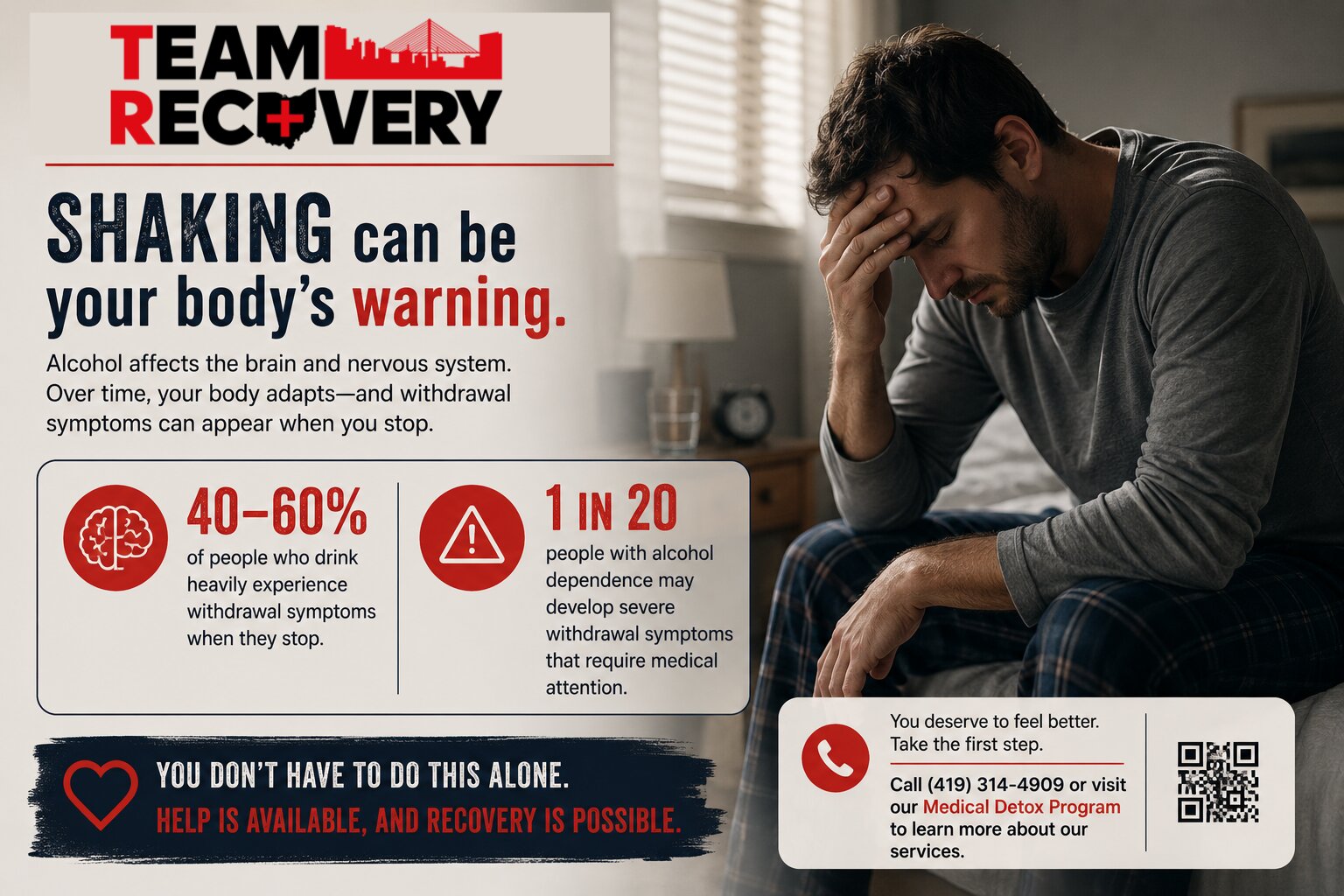
How Dangerous Can Alcohol Withdrawal Be?
This is where many people underestimate the risks.
Unlike some substances, alcohol withdrawal can become medically dangerous.
For some individuals, symptoms remain mild.
Others may develop severe complications.
Potential withdrawal symptoms can include:
- Significant tremors
- Severe anxiety
- Hallucinations
- Confusion
- Seizures
- Delirium tremens (DTs)
Delirium tremens is a serious medical condition that can involve profound confusion, rapid heart rate, fever, and other life-threatening complications.
Not everyone who wakes up shaking will experience severe withdrawal.
The challenge is that there is no reliable way to predict who will develop serious symptoms without proper medical evaluation.
That’s why anyone experiencing repeated withdrawal-related symptoms should speak with a healthcare professional before attempting to stop drinking abruptly.
Why People Often Wait Longer Than They Should
Fear keeps many people stuck.
Some fear being judged.
Others fear treatment itself.
Many simply hope the problem will resolve on its own.
We hear variations of the same concern every day:
“What if I’m making a bigger deal out of this than it really is?”
The reality is that people rarely search for answers about morning tremors because everything feels fine.
Usually, something inside them recognizes that their relationship with alcohol has changed.
That awareness isn’t weakness.
It’s information.
And information gives you options.
The earlier a person understands what’s happening, the more opportunities they have to address it safely.
What You Can Do if You’re Waking Up Shaking
If you’re experiencing shaking after drinking, you don’t have to figure everything out today.
But there are a few practical steps worth taking.
Pay Attention to Patterns
Notice:
- How often shaking occurs
- How severe it becomes
- Whether symptoms are getting worse
- Whether drinking relieves symptoms
Patterns can provide important clues about what’s happening physically.
Be Honest About Consumption
Many people underestimate how much they drink simply because habits develop gradually.
Keeping track for a week can provide useful insight.
Avoid Self-Diagnosing
Internet searches can be helpful, but they can’t replace a medical assessment.
If withdrawal is a possibility, professional guidance matters.
Reach Out Early
You don’t have to wait until things become catastrophic.
Support is often most effective before a crisis occurs.
Recovery Often Starts With a Question
Many people imagine recovery beginning with a dramatic moment.
For some, it does.
For many others, it starts with a quiet question asked during a difficult morning:
“Why am I waking up like this?”
That question can open the door to understanding, support, and change.
The body has a way of communicating when something isn’t working. Shaking may be uncomfortable, but it can also be valuable information.
Listening to it now may change what happens next.
Frequently Asked Questions
Is it normal to wake up shaking after drinking alcohol?
Occasional mild shaking can occur due to dehydration, poor sleep, low blood sugar, or the effects of a hangover. However, repeated shaking after drinking should not be ignored, especially if it occurs regularly or worsens over time.
How long after drinking can withdrawal symptoms start?
For some people, symptoms can begin within several hours after alcohol leaves the system. The timing varies depending on drinking patterns, overall health, and individual factors.
Does shaking always mean alcohol withdrawal?
No. Shaking can have multiple causes, including anxiety, low blood sugar, dehydration, medication interactions, and other medical conditions. However, recurring shaking after drinking may warrant evaluation for withdrawal-related concerns.
Why does another drink seem to stop the shaking?
If alcohol relieves shaking, it may indicate that the nervous system has adapted to alcohol’s presence. While another drink may temporarily reduce symptoms, it does not address the underlying issue.
Can alcohol withdrawal be life-threatening?
Yes. In some cases, alcohol withdrawal can lead to seizures, hallucinations, or delirium tremens, which may require emergency medical treatment.
Should I stop drinking on my own if I’m waking up shaking?
If you drink heavily or suspect physical dependence, it’s important to speak with a healthcare professional before stopping abruptly. Withdrawal can be unpredictable and may require medical supervision.
What kind of treatment helps people struggling with alcohol dependence?
Treatment can include medical support, counseling, therapy, peer support, and structured treatment programs. The right level of care depends on each person’s needs, health history, and drinking patterns.
If waking up shaking after drinking has become part of your routine, you don’t have to keep guessing about what it means. Understanding what’s happening is often the first step toward feeling better.
Call 419-314-4909 or visit our residential treatment program services to learn more about our residential treatment program services in Toledo, Ohio.

