





The hardest part about relapsing after real sober time isn’t always the drinking itself.
It’s the shame.
The kind that settles into your chest the second you realize you crossed a line you swore you’d never cross again.
I remember staring at my phone after three days of drinking, knowing exactly who I should call and feeling physically unable to do it.
Because ninety-seven days sober felt like something.
People trusted me again.
My family sounded relieved again.
I started recognizing myself again.
And suddenly I was hiding bottles, lying about how I was doing, and googling symptoms at 2am trying to convince myself I could fix it privately before anyone noticed.
I didn’t want help.
Not because I wanted to keep drinking.
Because I didn’t want to start over.
But walking back into medical detox support and stabilization the second time probably saved my life.
Not in a dramatic movie scene kind of way.
In a quieter way.
It stopped me from disappearing completely.
Relapse Started Long Before I Picked Up a Drink
This is something I understand differently now.
At the time, I thought relapse happened the night I drank again.
But looking back, it started weeks earlier.
Maybe months.
It started when I stopped being honest about how disconnected I felt.
When I started isolating.
When recovery became performance instead of connection.
When I stopped talking about cravings because I thought having them meant I was “doing sobriety wrong.”
That’s the dangerous part about relapse after sober time.
It rarely begins loudly.
It begins with emotional drift.
Missing meetings.
Pulling away from people.
Convincing yourself you’re fine because life still looks stable externally.
Then eventually your brain starts whispering things like:
“Maybe it wasn’t actually that bad.”
“You’ve learned enough now.”
“You can handle it differently this time.”
Those thoughts sound calm.
Reasonable even.
That’s why they’re dangerous.
By the time alcohol entered my system again physically, I had already relapsed emotionally long before.
I Thought I Could Quietly Fix It Myself
After I relapsed, I told myself I just needed a few days to regain control.
That’s one of the cruelest tricks addiction plays after sober time.
You still remember what recovery felt like, so part of you believes you should be able to “get back on track” alone.
I made rules immediately:
- Only drink at night
- Don’t let anyone notice
- Stop again Monday
- Hydrate more
- Taper down slowly
Within days, those rules collapsed.
The anxiety came back faster this time.
The shaking started sooner.
Sleep disappeared almost immediately.
And honestly, that terrified me.
I remember searching questions online about what happens in alcohol detox because part of me knew I might need medical support again—but I couldn’t emotionally accept it yet.
I kept thinking:
“You already know better.”
“You already had your chance.”
“People are going to think you’re hopeless.”
Shame kept me drinking longer than alcohol itself did.
Walking Back In Felt Worse Than the First Time
The first detox was terrifying because everything felt unknown.
The second detox was terrifying because I knew exactly what it meant.
Or at least, I thought I did.
I remember sitting in the parking lot trying to convince myself to walk inside. I honestly considered driving away multiple times.
Not because I wanted to keep drinking.
Because going back felt like proof I had failed publicly and permanently.
That’s the thing about relapse after meaningful sober time:
It attacks your identity.
Especially when people celebrated your recovery before.
Especially when you started believing your life was finally stabilizing.
Walking back into detox felt like carrying visible proof that I couldn’t hold myself together.
But something surprising happened once I got inside.
Nobody acted shocked.
Nobody treated me like a lost cause.
Honestly, most staff looked at me with a kind of calm understanding that almost made me cry harder.
Like:
“Yeah. We know this hurts.”
“Yeah. You’re still welcome here.”
“Yeah. You’re still worth helping.”
That mattered more than I can explain.
I Expected Judgment—What I Felt Was Relief
The first night back, I slept for almost twelve hours.
Not because everything was suddenly okay.
Because I was exhausted.
Relapse is exhausting in ways people don’t fully talk about:
- The hiding
- The lying
- The bargaining
- The self-hatred
- The fear people know
- The fear they don’t know
- The mental obsession
- The panic around stopping
- The constant monitoring of yourself
By the time I got back into detox, I was emotionally collapsing under the weight of trying to manage everything privately.
And weirdly, the moment I stopped pretending I was okay, I felt relief more than embarrassment.
One counselor said something to me during that stay that I still carry years later:
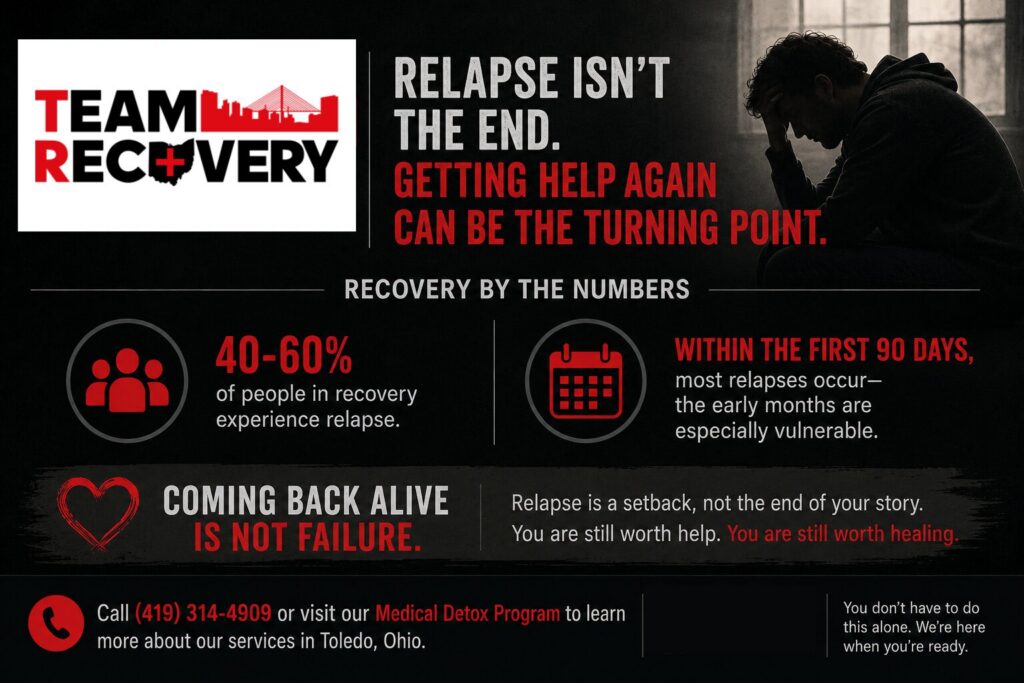
“Coming back alive is not failure.”
At the time, I didn’t fully believe them.
But part of me needed to hear it anyway.
Because relapse had convinced me I erased every good thing sobriety gave me.
The Second Time Forced Me to Get More Honest
The first time I got sober, I mostly focused on stopping drinking.
The second time, I started asking harder questions.
Why did I isolate so quickly?
Why did emotional exhaustion scare me so much?
Why did asking for help feel humiliating?
Why did I only feel worthy when I was “doing well”?
Why was I more comfortable disappearing than being honest?
Those questions changed everything.
Because relapse exposed something painful:
Part of me still believed recovery was about appearing okay instead of actually staying connected.
That second detox stay became less about alcohol and more about honesty.
I stopped pretending I never missed drinking.
Stopped pretending I always felt grateful to be sober.
Stopped pretending recovery automatically erased loneliness, depression, anxiety, or emotional exhaustion.
That honesty actually made me safer.
Secrets grow in isolation.
Truth reconnects people.
Withdrawal Felt Different After Relapse
One thing that genuinely scared me was how quickly my body reacted after returning to alcohol.
The anxiety intensified faster.
The physical symptoms escalated sooner.
Sleep became almost impossible within days.
That experience shocked me because part of me still believed:
“You haven’t been drinking long enough for this to be serious again.”
But alcohol dependence can return faster than people expect after relapse.
That’s one reason people search questions about what happens in alcohol detox after returning to drinking. They’re trying to understand whether their body is reacting dangerously—or whether they’re overreacting.
And honestly, fear around withdrawal is real.
Some people experience:
- Severe shaking
- Panic
- Sweating
- Elevated heart rate
- Hallucinations
- Dangerous withdrawal complications
Not everyone experiences severe symptoms, but unpredictability is part of what makes medical detox important for many people after relapse.
Especially when shame keeps them isolated longer than they should be.
Recovery Didn’t Restart at Zero
This took me a long time to understand.
After relapse, I thought I had lost everything:
The growth.
The healing.
The trust.
The progress.
But recovery is not erased by one painful chapter.
The insight I gained during sober time still existed.
The emotional growth still existed.
The coping skills still existed.
The relationships still mattered.
I wasn’t restarting from zero.
I was returning with more honesty than before.
That distinction changed everything.
Because addiction loves telling people:
“You ruined it, so why bother stopping now?”
That mindset keeps people trapped far longer than the relapse itself sometimes.
Going Back for Help Became an Act of Self-Respect
I used to see detox as punishment.
Now I see it differently.
I see it as stabilization during dangerous moments.
A place where someone stops trying to survive alone for a little while.
A place where the nervous system finally gets a chance to settle.
Especially after relapse.
A lot of people avoid returning because they think needing help again means they’re weak.
But honestly, walking back in while ashamed was one of the strongest things I’ve ever done.
Because pride would’ve kept me drinking.
Isolation would’ve kept me disappearing.
Shame would’ve convinced me I wasn’t worth saving anymore.
Instead, I went back.
Scared.
Embarrassed.
Exhausted.
And alive.
If You’re Afraid to Go Back, Read This Slowly
If you relapsed and part of you thinks you ruined everything, please hear this carefully:
The people helping you would rather see you come back than lose you.
They would rather answer the uncomfortable phone call.
Rather help you detox safely.
Rather sit with your shame than attend your funeral.
Most recovery professionals understand relapse because they’ve seen how human recovery actually is.
Messy.
Emotional.
Nonlinear.
Painful sometimes.
But still possible.
Especially when someone stops hiding long enough to let people help again.
FAQ: Questions People Commonly Ask After Relapse
Does going back to detox mean I failed recovery?
No. Many people experience relapse before achieving stable long-term recovery. Returning for help can actually reflect honesty and self-awareness, not failure.
Is relapse after 90 days sober common?
Yes. Relapse can happen at any stage of recovery, especially during periods of emotional isolation, stress, untreated mental health symptoms, or loss of support systems.
Why did withdrawal feel worse after relapse?
Some people experience intensified withdrawal symptoms after repeated cycles of stopping and restarting alcohol use. This can increase both physical and emotional risks.
What happens in detox after a relapse?
People searching what happens in alcohol detox are often looking for reassurance. Detox typically focuses on stabilization, withdrawal management, monitoring symptoms, emotional support, and helping people regain physical safety.
Why do people wait so long to ask for help after relapsing?
Shame is a major reason. Many people feel embarrassed, hopeless, or afraid they disappointed loved ones or treatment providers.
Will treatment staff judge me for coming back?
Most addiction professionals understand relapse is common in recovery. Their priority is usually helping people stabilize safely—not punishing them.
Does relapse erase sober progress?
No. Emotional growth, insight, healing, coping skills, and recovery experiences still matter even after relapse happens.
What if I’m scared to “start over” again?
You are not starting from nothing. You are returning with lived experience, greater awareness, and knowledge you did not have before.
Can detox actually save someone’s life after relapse?
Absolutely. Detox can reduce withdrawal risks, stabilize dangerous physical symptoms, reconnect people to support systems, and interrupt potentially life-threatening spirals.
If you relapsed after meaningful sober time and you’re ashamed to reach back out, you are not uniquely broken.
And walking back through the door may not mean you failed.
Sometimes it means part of you still wants to live badly enough to ask for help again.
Call (419) 314-4909 or visit our Medical Detox Program services to learn more about our Medical Detox Program services Toledo, Ohio.

