





For people who have developed physical dependence on alcohol, stopping suddenly can be far more dangerous than many realize. While some individuals experience mild symptoms like anxiety or tremors, others can develop life-threatening complications, including seizures and delirium tremens (DTs).
One of the medications healthcare providers commonly use during withdrawal is Librium. Understanding Librium for alcohol withdrawal can help explain why medical professionals often recommend supervised care instead of attempting to quit alcohol alone.
If you’re considering medical detox, it’s important to know that medication is only one part of the process. At Team Recovery in Toledo, Ohio, detox includes continuous medical monitoring, symptom management, and individualized treatment planning to help people withdraw from alcohol as safely and comfortably as possible.
The goal of Librium isn’t simply to make withdrawal easier—it helps reduce the risk of serious complications while allowing the brain and body to gradually adjust to functioning without alcohol.
What Librium (Chlordiazepoxide) Is
Librium is the brand name for chlordiazepoxide, a long-acting benzodiazepine that has been used for decades in the treatment of alcohol withdrawal.
Like other medications in the benzodiazepine family, Librium enhances the effects of gamma-aminobutyric acid (GABA), a neurotransmitter that helps calm activity in the central nervous system.
During heavy or prolonged alcohol use, the brain adapts to alcohol’s depressant effects. When alcohol is suddenly removed, the nervous system can become overactive, leading to withdrawal symptoms that range from uncomfortable to life-threatening.
Librium helps temporarily stabilize this imbalance while the body adjusts.
Why Librium Is Used in Alcohol Withdrawal
Librium is commonly chosen because its long duration of action provides more consistent symptom control than many shorter-acting medications.
It Helps Calm Central Nervous System Rebound
Alcohol suppresses activity within the brain.
When drinking stops abruptly, the nervous system often becomes excessively active, which may cause:
- Tremors
- Anxiety
- Sweating
- Elevated heart rate
- Agitation
- Insomnia
Librium helps reduce this rebound activity, allowing withdrawal symptoms to become more manageable.
It Helps Reduce the Risk of Alcohol Withdrawal Seizures
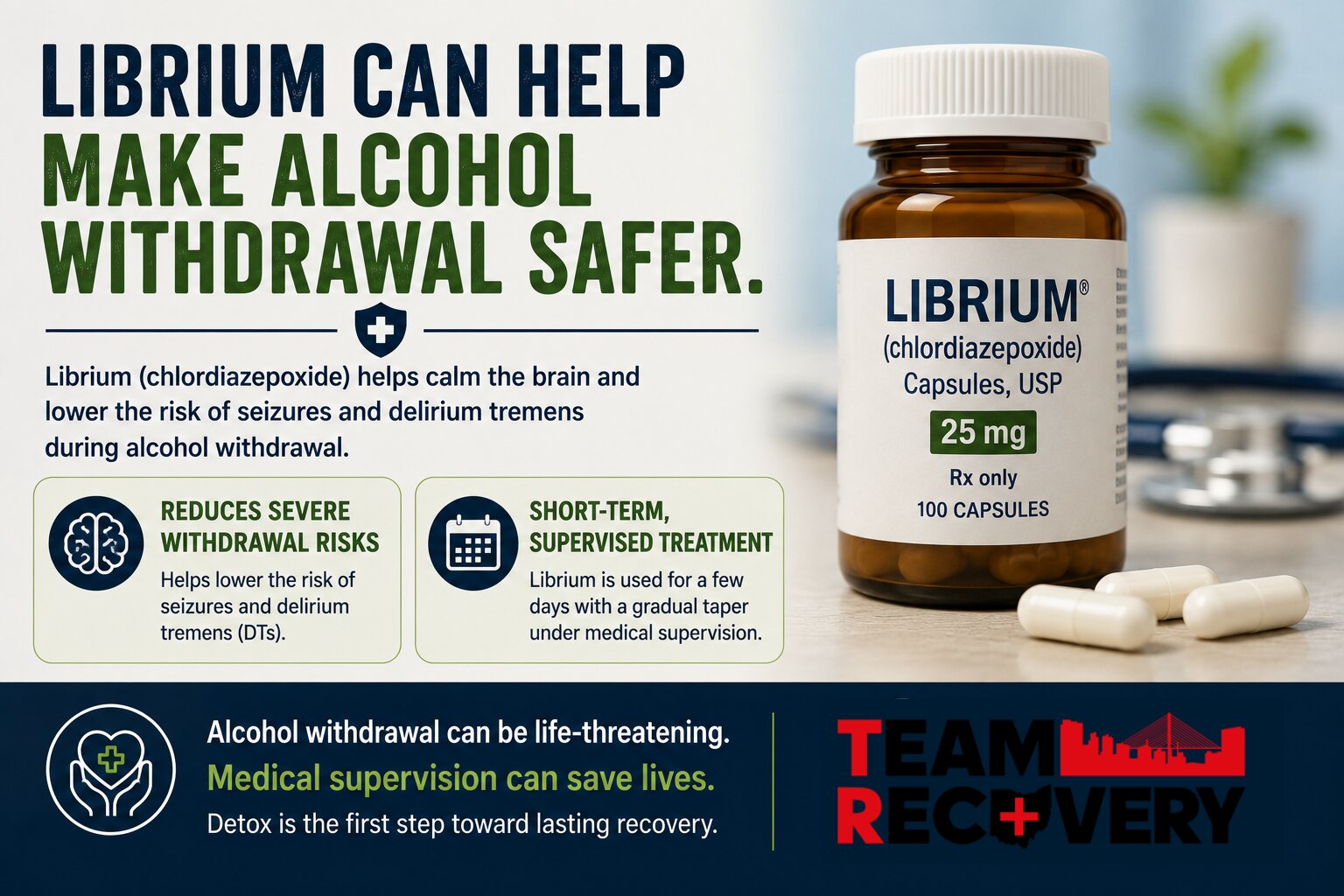
One of the primary reasons Librium is used is to help lower the risk of alcohol withdrawal seizures.
Although not everyone experiences seizures, the risk is highest among individuals who:
- Drink heavily every day
- Have experienced withdrawal before
- Have previously had withdrawal seizures
- Have severe alcohol dependence
Because seizures can occur suddenly and without warning, healthcare providers carefully monitor patients throughout withdrawal.
It Helps Prevent Delirium Tremens (DTs)
Delirium tremens is the most severe form of alcohol withdrawal.
DTs can include:
- Severe confusion
- Hallucinations
- Extreme agitation
- Dangerous blood pressure changes
- Fever
- Seizures
Without prompt medical treatment, DTs can become life-threatening.
Librium is one of the medications frequently used to help reduce the likelihood of these serious complications.
How the Taper Works
Librium is not intended to be taken indefinitely during alcohol withdrawal.
Instead, healthcare providers prescribe it as part of a carefully supervised taper.
A taper generally involves:
- Starting treatment based on the individual’s withdrawal severity
- Frequent reassessment of symptoms
- Gradual dose reductions over several days
- Stopping the medication once withdrawal has stabilized
The exact taper schedule varies from person to person.
Factors influencing treatment include:
- Severity of alcohol dependence
- Medical history
- Age
- Liver function
- Previous withdrawal episodes
- Current withdrawal symptoms
- Other medications
Because every individual responds differently, healthcare providers adjust treatment based on ongoing clinical assessments rather than following a single standard schedule.
Patients should never attempt to create or modify a Librium taper without medical supervision.
Why Medical Supervision Is Essential
Alcohol withdrawal is one of the few forms of drug withdrawal that can become fatal without appropriate medical care.
While mild symptoms may improve on their own, it is impossible to predict who will develop severe complications.
Medical supervision provides several important safety benefits.
Continuous Monitoring
Healthcare providers regularly assess:
- Blood pressure
- Heart rate
- Temperature
- Breathing
- Mental status
- Withdrawal severity
Monitoring allows treatment to be adjusted promptly if symptoms worsen.
Medication Adjustments
Not everyone requires the same amount of medication.
Healthcare professionals carefully titrate treatment based on the individual’s response rather than using a one-size-fits-all approach.
This helps minimize both under-treatment and unnecessary sedation.
Rapid Response to Emergencies
If complications develop, medical staff can respond immediately.
Examples include:
- Alcohol withdrawal seizures
- Delirium tremens
- Severe dehydration
- Cardiac complications
- Electrolyte abnormalities
Attempting to detox at home may delay emergency treatment when minutes matter.
What to Expect During Detox at Team Recovery
Every person’s withdrawal experience is different.
At Team Recovery in Toledo, Ohio, treatment begins with a comprehensive medical evaluation to determine the safest approach based on each individual’s health history, alcohol use, and withdrawal risk.
Depending on clinical needs, care may include:
- Comprehensive medical assessment
- Ongoing physician oversight
- Around-the-clock nursing care
- Withdrawal symptom monitoring
- Medication management when appropriate
- Hydration and nutritional support
- Transition planning for continued addiction treatment
Detox is only the first step in recovery.
Once withdrawal has stabilized, patients are encouraged to continue treatment through counseling, behavioral therapies, peer support, and individualized recovery planning to address the underlying causes of alcohol use disorder.
When Should You Seek Emergency Care?
Anyone experiencing severe alcohol withdrawal symptoms should seek immediate medical attention.
Warning signs include:
- Seizures
- Hallucinations
- Severe confusion
- Loss of consciousness
- High fever
- Extreme agitation
- Difficulty breathing
- Chest pain
These symptoms may indicate a medical emergency requiring immediate treatment.
Frequently Asked Questions
How long do you take Librium for withdrawal?
Librium is typically used only during the acute withdrawal period, which often lasts several days. The exact duration depends on the severity of withdrawal, medical history, and how an individual responds to treatment. Healthcare providers gradually reduce the medication as symptoms improve rather than stopping it abruptly.
Is Librium addictive?
Yes. Librium is a benzodiazepine and has the potential to cause dependence if used for extended periods. During alcohol withdrawal, however, it is generally prescribed for a short time under close medical supervision, which helps reduce this risk.
Librium vs. Ativan for detox?
Both Librium (chlordiazepoxide) and Ativan (lorazepam) are benzodiazepines used to manage alcohol withdrawal. Librium is longer acting, which often provides smoother symptom control, while Ativan may be preferred in certain situations, such as for individuals with significant liver impairment. The most appropriate medication depends on each person’s medical condition and is determined by the treating clinician.
Recovery Begins With Safe Withdrawal
Understanding Librium for alcohol withdrawal helps explain why medical professionals emphasize supervised care rather than attempting to quit alcohol alone. While Librium can help reduce withdrawal symptoms and lower the risk of seizures and delirium tremens, it should only be used under medical supervision as part of a personalized treatment plan.
At Team Recovery in Toledo, Ohio, our experienced medical team provides compassionate, evidence-based care to help individuals withdraw from alcohol safely and prepare for long-term recovery.
Ready to Take the Next Step?
You don’t have to face alcohol withdrawal alone. Team Recovery provides compassionate, medically supervised care to help you withdraw safely and begin your recovery with confidence.
Call Team Recovery today at (419) 314-4909 to speak with a member of our team, or learn more about our medical detox program. We’re proud to serve individuals and families throughout Toledo and Northwest Ohio.

