





It usually starts with a quiet promise: “I’ll handle it on my own this time.”
No drama. No rock bottom. Just a slowly tightening grip around your days. You’ve done this before. You’ve been to rehab. Maybe you had 90 days—or 200. But now, something’s unraveling again, and the shame is louder than the voice asking for help.
As clinicians at Team Recovery’s rehab in Toledo, Ohio, we’ve watched this story unfold in more ways than we can count. Not because people aren’t strong or motivated—but because trying to “push through” relapse alone is exhausting, isolating, and, too often, quietly dangerous.
The Myth of “I Should Be Able to Do This Alone”
We hear it almost daily:
“I already went to treatment. I should know better.”
“I don’t want to start over again.”
“I’m just tired of needing help.”
These aren’t excuses. They’re grief. They’re shame. They’re the weight of trying to stay sober in a world that still misunderstands what relapse actually is.
The truth? Needing help again doesn’t make you weak. It makes you human. Recovery isn’t a straight line—it’s a practice. And just like anyone else practicing something hard, sometimes you drop the ball. That doesn’t mean you’re back at square one. It means it’s time to regroup.
What “Pushing Through” Looks Like—And What It Costs
From the outside, pushing through can look deceptively stable. You’re still working. Still parenting. Still saying “I’m good” when someone asks. But inside? There’s a mental war going on.
You might start skipping meetings but telling yourself it’s temporary. You stop answering recovery friends. You start managing stress alone again—with that old fallback. Not a binge, maybe just “one night.” Then maybe a weekend.
At first, it feels manageable. Until it doesn’t. Until you wake up three weeks later feeling further from yourself than ever, wondering how it slipped so quietly out of control.
This is what we call functional relapse—and it’s one of the most common things we see among people in Northwest Ohio who’ve had some time in recovery.
The Northwest Ohio Pattern: Quiet Relapse, Silent Suffering
We work with hundreds of people each year across Toledo and surrounding counties. And one of the patterns we’ve noticed is this:
Relapse here often doesn’t look like chaos. It looks like withdrawal—from community, from accountability, from hope.
It’s especially true among those who aren’t “new” to recovery. People who’ve already done treatment once. Already got the keychain. Already surprised their families.
And because they know the drill, they try to handle it themselves. They wait too long. And by the time they call us again, they’re drowning in shame, convinced they’ve failed.
Why Rehab Still Matters (Even If It’s Not Your First Time)
Rehab isn’t just a place to get clean. It’s a place to get clear.
Clear about what pulled you back in.
Clear about what support you still need.
Clear about the patterns you’ve outgrown—and the ones that still sneak up on you.
At Team Recovery, we don’t treat people like they’re starting from scratch. We know you have tools. What we offer is space to sharpen them—and people to walk with while you do.
Even more importantly? We treat the shame—not just the symptom. Because relapse isn’t just a chemical process. It’s emotional. It’s social. It’s spiritual.
And sometimes, to heal that, you need to step away from daily life and back into a container that was built for your recovery.
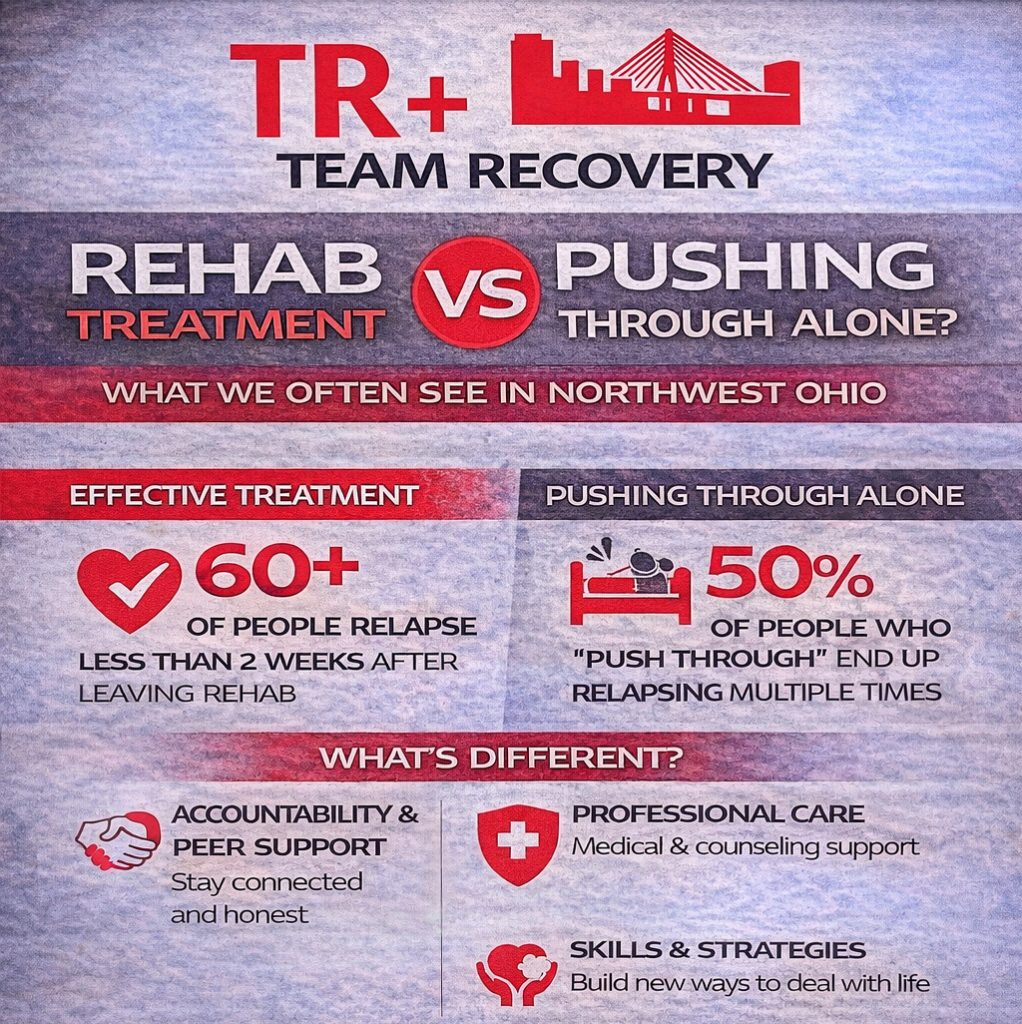
Signs It Might Be Time to Stop “Pushing Through”
You don’t have to wait for a crisis to reach out. Here are some signs we often see in people who almost called us weeks earlier:
- You’re drinking or using again, but not telling anyone
- You’ve stopped going to recovery groups or therapy
- You feel emotionally flat or spiritually disconnected
- You’re hiding behaviors you used to be honest about
- You feel like you’re “pretending” to be okay
- You’re afraid people will judge you for slipping
If you nodded at more than one of those, you’re not alone. These are the signals we see most often right before someone decides to come back to rehab.
What Rehab in Toledo, Ohio Really Offers
Here’s what we offer at Team Recovery—whether it’s your first time, second time, or tenth:
- A reset without shame
- People who understand relapse from the inside out
- A personalized approach that respects what you’ve already learned
- Support rebuilding the daily rhythm of recovery
- Tools to reconnect to purpose—not just sobriety
We know you might be thinking, “What if it doesn’t work again?” But what if it does—because you’re coming at it differently, from a deeper place, with more honesty than ever before?
One More Thing: You’re Not Alone in This
One of our alumni once said:
“I thought needing to come back meant I had failed. But the second time I came, I was finally honest. That’s when it really started working.”
– Alumni, 2023
That kind of bravery? We see it all the time. And if that’s you—if you’re standing at the edge of the decision again—we want you to know: we’ll meet you there with zero judgment and open arms.
FAQ: Common Questions About Returning to Rehab in Northwest Ohio
Is it normal to relapse after 90 days or more?
Yes. Relapse happens for many people—and it doesn’t erase the progress you made. What matters is how you respond now.
Will I have to go through detox again?
It depends on your situation and substance use. Our team will assess your needs safely and privately. Not everyone requires medical detox.
I’m embarrassed to come back. Will people judge me?
No. In fact, many of our staff and alumni have been through multiple rounds of treatment. We treat every return with compassion—not criticism.
Is rehab covered by insurance in Ohio?
In many cases, yes. We can help verify your benefits and walk you through the process. Don’t let paperwork stop you from getting help.
Do I have to stay for 30 days?
Not always. We offer a range of treatment options, including outpatient levels of care, based on your needs and readiness.
You Don’t Have to Prove You’re “Sick Enough” to Ask for Help
If you’ve been trying to push through, we see you. And we want you to know: that voice in your head saying, “Maybe I need more support”—that voice is worth listening to.
📞 Call Team Recovery at (419) 314-4909 or visit our website to learn more about our rehab in Toledo, Ohio. You’re allowed to begin again—without shame, without delay.

