





Most people don’t wake up one morning and suddenly decide they need treatment.
Usually, there’s a long stretch before that moment. Quiet promises. Negotiations. Rules they make with themselves that slowly stop working.
“I’ll only drink on weekends.”
“I just need to get through this stressful month.”
“I can taper down on my own.”
“I’m not as bad as other people.”
Then one night, something changes.
Maybe they try to stop drinking for the first time in a while and realize their body reacts harder than expected. Maybe anxiety hits like a wave. Maybe they wake up shaking at 3am with their heart racing and suddenly the idea of “handling it alone” feels less certain than it did before.
That moment scares people.
Not because they’re weak.
Because deep down, they realize this may have grown into something bigger than willpower.
For many people exploring live-in support and stabilization, that realization becomes the beginning of honesty—not failure.
Most People Don’t Reach Out the First Time They Struggle
This is important to understand if you’re feeling ashamed right now:
Most people who eventually seek treatment already tried to fix things privately first.
Usually more than once.
They tried:
- Cutting back gradually
- Switching from liquor to beer
- Avoiding drinking during the week
- Taking “breaks”
- Hiding symptoms
- Using other substances to manage withdrawal feelings
- Making promises they fully intended to keep
Sometimes those attempts work temporarily.
But many people slowly notice the same pattern returning. The cycle tightens. The mental obsession grows louder. The body reacts differently than it used to.
That’s often the point where fear enters the picture.
Because now it’s not just about wanting to stop. It’s about realizing stopping may not feel simple anymore.
A lot of first-time treatment seekers secretly believe everyone else got help quickly and confidently.
That’s rarely true.
Most people spend a long time trying not to need help first.
The Fear Usually Gets Bigger in Private
One of the hardest things about substance use is how isolating it becomes.
People often keep their struggle hidden for much longer than anyone around them realizes.
They continue going to work.
Showing up for family.
Paying bills.
Answering texts.
Smiling through conversations.
Meanwhile, internally, they’re exhausted.
The isolation creates a strange kind of mental loop where people start believing:
- “Nobody would understand.”
- “I should be able to control this.”
- “I’ll deal with it later.”
- “If I ask for help, it means it’s serious.”
And that last thought can feel terrifying.
Because many people aren’t just afraid of treatment itself.
They’re afraid of what needing treatment says about them.
Especially people who are used to being dependable, capable, or emotionally self-sufficient.
But addiction has a way of slowly convincing people that suffering silently is strength.
It isn’t.
Sometimes silence is just exhaustion wearing a disguise.
Your Body Can Start Asking for Help Before Your Mind Fully Admits It
One thing many people don’t expect is how physical alcohol dependence can become.
At first, drinking may feel social, manageable, or stress-related. Then slowly, over time, the body adapts.
Sleep changes.
Anxiety increases.
Shaking appears.
Tolerance rises.
Mornings feel worse.
Drinking becomes less about enjoyment and more about relief.
That shift can happen so gradually people barely notice it.
Then one day they try to stop and realize their body reacts intensely.
That’s why so many people quietly search questions related to alcohol withdrawal at home. They’re scared and trying to figure out whether stopping suddenly could be dangerous.
Sometimes withdrawal symptoms are mild.
Other times they become medically serious.
Symptoms can include:
- Sweating
- Tremors
- Nausea
- Panic
- High blood pressure
- Severe anxiety
- Hallucinations
- Seizures
- Intense insomnia
Not everyone experiences severe withdrawal, but the unpredictability is part of what makes alcohol dependence dangerous to navigate completely alone.
And honestly, many people wait far too long to ask for help because they’re embarrassed by how physically dependent they’ve become.
But physical dependence is not a moral failure.
It’s a medical reality that can happen gradually over time.
The People Who Need Help Are Often Still Functioning
A lot of first-time treatment seekers believe they haven’t “earned” help yet.
They compare themselves to stereotypes.
To television portrayals.
To people who visibly lost everything.
But many people entering treatment are still functioning outwardly.
They still have jobs.
Families.
Responsibilities.
Daily routines.
Some are high performers professionally while privately struggling every night.
Others spend years appearing stable while quietly building their entire life around alcohol or substances.
From the outside, things may still look manageable.
Internally, though, many people describe:
- Constant mental exhaustion
- Fear around stopping
- Anxiety when alcohol isn’t available
- Hiding drinking habits
- Feeling emotionally trapped
- Losing interest in life outside substance use
- Feeling disconnected from themselves
One client once described it this way:
“I wasn’t drinking because life was fun anymore. I was drinking because not drinking scared me.”
That sentence lands hard for many people.
Because that fear changes everything.
Why Some People End Up Needing More Support Than They Expected
A lot of people initially imagine recovery as something they’ll do quietly at home.
They picture taking a few days off, resting, and then getting back to normal life quickly.
And for some people, outpatient support or community-based recovery works very well.
But others discover they need more structure than they expected.
Not because they failed.
Because their environment became too connected to survival patterns.
Home may now be tied to:
- Drinking routines
- Isolation
- Anxiety
- Relationship conflict
- Emotional avoidance
- Easy access to substances
- Constant stress
Trying to heal while remaining fully inside those patterns can feel overwhelming.
That’s where round-the-clock support sometimes becomes important.
Not as punishment.
As stabilization.
As breathing room.
As a temporary place where someone can stop carrying everything alone long enough for their nervous system to settle.
Many people entering care are surprised by one feeling more than anything else:
Relief.
Relief from hiding.
Relief from pretending.
Relief from negotiating with themselves every day.
Treatment Is Not About Becoming a Different Person
A fear we hear often:
“What if treatment changes who I am?”
People worry they’ll lose their personality somehow. Their humor. Their identity. Their creativity. Their social life.
But recovery is usually less about becoming someone new and more about reconnecting with parts of yourself that got buried under exhaustion, anxiety, shame, depression, or substance use.
Many people entering treatment still have so much of themselves intact underneath the struggle:
- Compassion
- Intelligence
- Sensitivity
- Creativity
- Ambition
- Humor
- Hope
They’re just tired.
Really tired.
And sometimes substances slowly become the only way they know how to cope, rest, sleep, socialize, or emotionally regulate anymore.
That’s not weakness.
That’s a sign someone has been surviving for a long time without enough support.
You Do Not Have to Wait for Everything to Fall Apart
This may be the most important thing we can say:
You do not need to lose everything before asking for help.
You do not need:
- A DUI
- Job loss
- Divorce papers
- Hospitalization
- Public humiliation
- Total isolation
For your pain to matter.
A lot of people seek treatment simply because they’re exhausted from trying to manage things alone.
And honestly, getting support earlier often creates more options—not fewer.
One of the biggest myths about recovery is that people must hit some catastrophic “rock bottom” before they deserve care.
But many people enter treatment because they want their life back before things fully collapse.
That’s not weakness.
That’s wisdom.
Sometimes the Scariest Part Is Admitting You’re Scared
A lot of people entering treatment are not confident.
They’re terrified.
Terrified treatment won’t work.
Terrified they’ll fail.
Terrified they’ll disappoint people.
Terrified they waited too long.
Terrified they’ll have to feel everything they’ve been avoiding.
But underneath all that fear is usually another feeling:
Exhaustion.
And sometimes the first real step toward healing is simply letting someone help carry the weight for a while.
Not forever.
Just long enough to breathe again.
FAQ: Questions First-Time Treatment Seekers Often Ask
Is it dangerous to stop drinking suddenly?
For some people, yes. Heavy or long-term alcohol use can lead to withdrawal symptoms that range from uncomfortable to medically serious. That’s why many people search questions related to alcohol withdrawal at home before deciding whether they need professional support.
How do I know if I’m physically dependent on alcohol?
Signs can include shaking, sweating, anxiety, nausea, insomnia, or feeling sick when alcohol wears off. Many people also notice they need alcohol just to feel “normal” again.
What if I’m still functioning in daily life?
Many people entering treatment still have jobs, families, and responsibilities. Functioning outwardly does not mean you aren’t struggling internally.
Does needing treatment mean I failed?
No. Most people seeking treatment already spent a long time trying to manage things privately first. Asking for help is often an act of honesty, not failure.
What if I’m scared treatment won’t work?
That fear is extremely common. Recovery is not about becoming perfect overnight. It’s about getting enough support, safety, and stability to begin healing.
Why do people wait so long to ask for help?
Usually because of fear, shame, denial, financial concerns, or the belief that they should be able to handle it alone. That experience is very common.
Will treatment take away my freedom?
Many people actually describe treatment as the first time they stopped feeling trapped. Structure and support can create emotional relief instead of restriction.
What if I’m not “bad enough” yet?
You do not need to hit a catastrophic bottom before seeking help. Fear around stopping, emotional exhaustion, physical dependence, and loss of control are all serious enough reasons to reach out.
If you’re quietly wondering whether you can keep doing this alone, you do not have to answer that question by yourself.
Sometimes the bravest thing a person can do is stop pretending they’re okay long enough to let someone help.
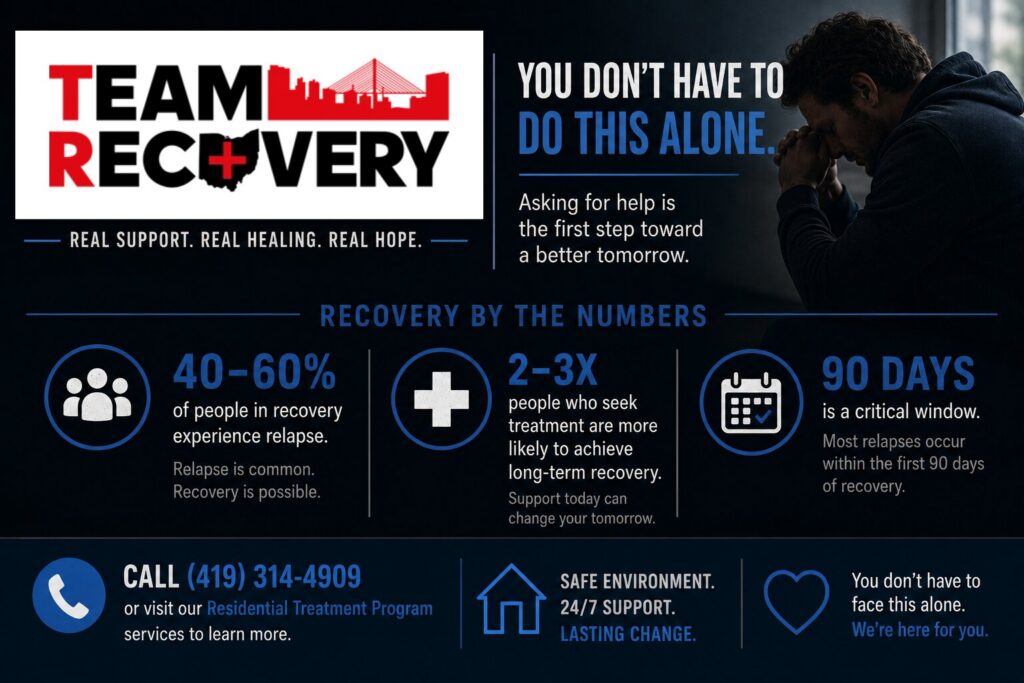
Call (419) 314-4909 or visit our residential treatment program services to learn more about our residential treatment program services Toledo, Ohio.

