





I used to think recovery had a finish line.
Thirty days. Maybe sixty if things were “serious.” Ninety if someone had really lost control.
That’s how I viewed treatment before I actually lived through recovery myself. I thought the goal was to stabilize quickly, get insight, return to normal life, and never look back.
But a lot of long-term alumni eventually realize something uncomfortable:
sobriety and emotional healing don’t move at the same speed.
You can stop drinking. Stop using. Start rebuilding your life. And still feel strangely disconnected months or years later.
That doesn’t mean treatment failed.
It doesn’t mean you failed either.
For many people exploring live-in addiction treatment options, the question about timing is really about hope. People want to know if enough time exists to actually feel different — not just sober, but present again.
Most of Us Entered Treatment Hoping to Get Back to “Normal”
A lot of high-functioning people approach recovery like a temporary interruption.
We think:
“I just need to reset.”
“I need to get my head straight.”
“I’ll take some time away and come back stronger.”
That mindset makes sense. Especially for people who spent years surviving through performance.
Some of us built entire identities around being dependable while quietly struggling underneath everything.
We still worked.
Still showed up.
Still handled responsibilities.
And because life looked functional from the outside, many of us convinced ourselves the problem couldn’t be that serious.
But internally, things were eroding.
Sleep stopped feeling restful.
Relationships became surface-level.
Anxiety became background noise.
Joy became harder to access without substances.
Eventually, surviving your own life starts feeling like a full-time job.
That’s usually when people begin asking questions about treatment length:
- Is 30 days enough?
- Should I stay longer?
- Why do some people need 60 or 90 days?
- How long before life actually feels different?
Those are real questions. But recovery rarely gives neat, identical answers.
Thirty Days Often Helps People Catch Their Breath
For many people, the first month of treatment feels less like transformation and more like decompression.
Your body starts calming down.
You sleep differently.
Your nervous system isn’t constantly reacting.
You stop spending every day managing cravings, hangovers, guilt, or emotional chaos.
And honestly, that alone can feel enormous.
I remember people around me saying things like:
“I forgot what it felt like to wake up without panic.”
“I forgot food could taste normal.”
“I forgot my brain could slow down.”
But the emotional reality underneath the addiction often hasn’t fully surfaced yet.
That surprises many people.
Because once substances are removed, there’s suddenly space for feelings that had been numbed for years:
- grief
- loneliness
- fear
- anger
- shame
- emotional exhaustion
Sometimes the first 30 days simply give people enough stability to realize how tired they actually are.
And that realization can feel heavier than expected.
Sixty Days Gives Recovery More Room to Become Honest
There’s something that often shifts during longer treatment stays.
The performance starts fading.
In early recovery, many people are still trying to “do treatment correctly.” We say the right things. We intellectualize everything. We stay emotionally guarded because vulnerability still feels dangerous.
Then slowly, honesty starts slipping through the cracks.
You stop trying to impress everyone.
You stop pretending you’re handling things better than you are.
You begin talking about the loneliness underneath the addiction instead of only the behavior itself.
That’s where deeper healing often begins.
A lot of alumni later admit they were physically sober long before they became emotionally available.
That gap matters.
Because untreated emotional isolation is one of the quietest relapse risks there is.
Some people don’t relapse because they want to party again.
Some relapse because they still feel emotionally trapped inside themselves and don’t know how to live that way long-term.
Longer treatment can create room to work on:
- emotional regulation
- relationship patterns
- trauma responses
- burnout
- self-worth
- chronic stress
- avoidance
- grief that never had language before
None of that gets fully untangled overnight.
Ninety Days Isn’t About “Severity” as Much as Safety
A lot of people hear “90-day treatment” and assume it only applies to extreme situations.
But some of the people who benefit most from extended care are the people who spent years looking completely fine from the outside.
They weren’t always visibly falling apart.
They were emotionally disappearing slowly.
There’s a difference.
Long-term substance use often becomes less about getting high and more about emotional survival. Substances become a way to soften pressure, silence anxiety, avoid pain, or create relief from relentless internal noise.
When that coping mechanism disappears, people sometimes realize how fragile they actually feel underneath everything.
That’s why longer stays can matter.
Not because people are weak.
Not because they “failed” shorter treatment.
But because healing often requires enough time for the nervous system to stop living in emergency mode.
One alumni friend described it perfectly:
“The first month I stopped using. The second month I started feeling things. The third month I stopped being terrified of myself.”
That’s the kind of progress no one sees from the outside.
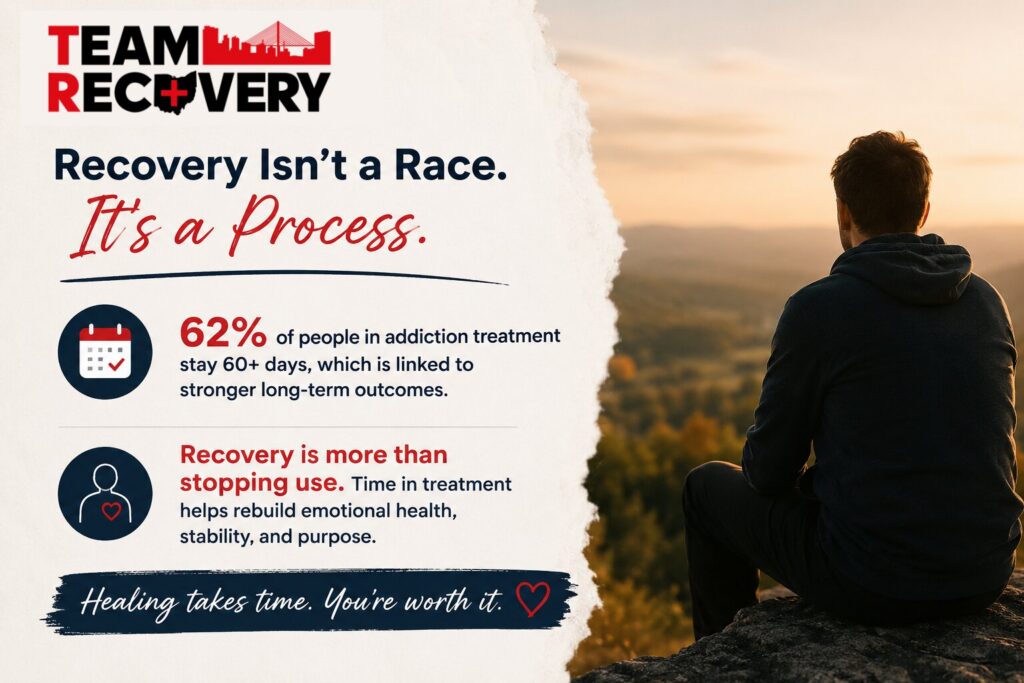
Recovery Doesn’t Always Feel Rewarding Right Away
This part deserves more honesty.
A lot of long-term alumni hit periods where sobriety feels emotionally flat.
You’re no longer in crisis.
You’re functioning better.
People around you think you’re doing great.
But internally, you might feel disconnected, restless, or strangely numb.
That experience is more common than people admit.
Sometimes people expect recovery to feel constantly inspiring once the substances are gone. Instead, what many discover is quieter:
you still have to build a life you actually want to live inside.
And that can take time.
Especially for people who spent years using achievement, work, caretaking, or substances to avoid themselves emotionally.
Recovery eventually stops being about avoiding relapse and starts becoming about learning how to stay connected:
to people,
to purpose,
to yourself.
That transition can feel slow and uncomfortable.
But it’s real growth.
The Better Question Usually Isn’t “How Long Is Treatment?”
People understandably want a timeline.
They want certainty.
A plan.
A measurable answer.
But recovery doesn’t move according to clean deadlines because people don’t arrive with the same history, nervous systems, trauma, or support systems.
Some people need stabilization.
Some need protection from destructive environments.
Some need extended emotional support because they’ve spent decades surviving in silence.
Some simply need enough time away from chaos to remember who they are underneath it.
That’s why the question how long is inpatient rehab doesn’t always have one universal answer. Different people heal at different speeds, and different levels of care exist for different reasons.
What matters more is whether the support level matches what your life actually needs.
Because leaving too early sometimes looks less like immediate relapse and more like emotional disconnection slowly returning.
You stop talking honestly.
You isolate quietly.
You lose structure.
You begin surviving instead of participating in your own life again.
Long-term alumni know this feeling well.
Some People Need More Time. Others Need More Depth.
This distinction matters.
More treatment time alone doesn’t automatically create recovery.
Some people spend months emotionally guarded.
Others become radically honest within weeks and experience enormous internal shifts.
What changes recovery most is usually not perfection.
It’s willingness.
Willingness to stop performing.
Willingness to admit you’re exhausted.
Willingness to let other people see the parts of you that feel scared, ashamed, lonely, or uncertain.
That kind of honesty can feel terrifying for people who survived by appearing strong for years.
But it’s also where connection finally begins.
Long-Term Alumni Sometimes Forget They’re Allowed to Need Help Again
There’s another layer to this conversation that doesn’t get discussed enough.
People with long-term sobriety sometimes feel guilty struggling emotionally later.
You think:
“I should be grateful.”
“I should have this figured out by now.”
“I already got sober.”
But emotional disconnection can still happen years into recovery.
Burnout happens.
Isolation happens.
Depression happens.
Life changes people.
And sometimes alumni need deeper support again — not because recovery failed, but because healing continues evolving throughout life.
There’s no shame in needing structure again.
No shame in reconnecting.
No shame in realizing survival mode lasted longer than you thought.
FAQ
Is 30 days enough for inpatient rehab?
For some people, 30 days provides a strong foundation and safe starting point. For others, longer treatment allows more time for emotional healing, relapse prevention, and rebuilding routines.
Why do some people stay 60 or 90 days?
Longer stays can help people address deeper emotional patterns, trauma, chronic relapse cycles, mental health struggles, or unstable home environments. More time can also help recovery feel less rushed and more sustainable.
Does staying longer improve recovery outcomes?
For many people, extended support increases stability and lowers relapse risk, especially when combined with ongoing recovery planning and community support afterward.
Is longer treatment only for severe addiction?
No. Some people choose longer treatment because they want more structure, emotional support, or time away from stressful environments — not necessarily because their addiction appears severe externally.
What happens after inpatient rehab ends?
Most people continue recovery through outpatient care, therapy, support groups, sober living, or ongoing community support. Recovery is usually a continuing process, not a one-time event.
Can someone return to treatment after years sober?
Yes. Many long-term alumni seek additional support during difficult periods of life or emotional disconnection. Returning for help is not failure.
How do I know if I need more support?
If you feel emotionally disconnected, exhausted, isolated, or afraid your recovery is becoming fragile, it may help to talk honestly with a trusted professional or recovery support system.
Call (419) 314-4909 or explore our residential treatment program services to learn more about what deeper recovery support can look like.

