





From the outside, nothing looks broken.
You’re working. Showing up. Answering messages. Keeping commitments. Maybe even outperforming people around you.
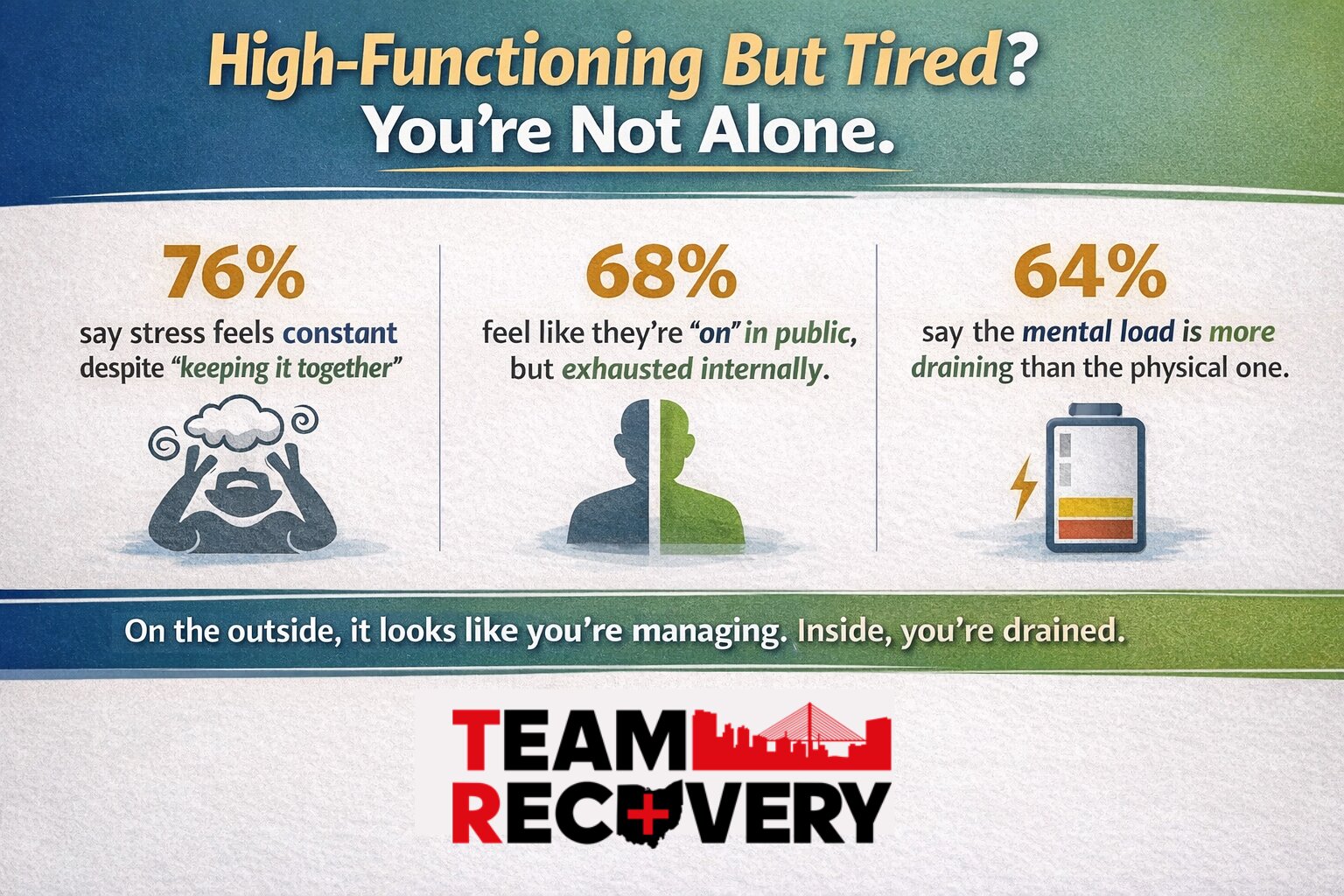
But internally, something is slipping.
As clinicians, we see this pattern all the time—especially in people who are used to being the reliable one. The one who handles things. The one who doesn’t fall apart.
If you’re here, considering something like live-in treatment support, there’s a good chance you’re not in crisis.
You’re just… tired in a way that doesn’t go away.
Let’s talk about that pattern—clearly, honestly, without sugarcoating it.
It starts with control—and the illusion that it’s working
At the beginning, nothing feels out of control.
In fact, it feels the opposite.
You’re managing it:
- You set rules
- You adjust timing
- You keep it away from your responsibilities
And for a while, it works.
That’s what makes this stage so deceptive.
Because you’re not spiraling—you’re adapting.
And when you’re high-functioning, adaptation is your strength.
Until it quietly becomes your trap.
The rules get tighter—but the relief gets shorter
Over time, something subtle changes.
You start adding more rules:
- “Only after work” becomes “only after 8”
- “Only weekends” becomes “just this one weekday”
- “Just one” becomes something harder to define
And even when you follow your own rules… the relief doesn’t last as long.
So you adjust again.
Not dramatically. Just slightly.
But those slight adjustments start stacking.
And eventually, you realize:
You’re not controlling it anymore—you’re negotiating with it.
The mental space it takes up becomes exhausting
This is where high-functioning people start to feel it the most.
Not externally.
Internally.
Because it’s not just about using anymore—it’s about thinking about using.
It’s the background noise:
- Planning
- Justifying
- Minimizing
- Recovering
- Replaying
One client said it like this:
“It’s like having a second job that no one knows about.”
And the thing about invisible work?
It drains you in ways no one else can see.
You split into two versions of yourself—and both are tired
There’s the version of you that performs.
You show up. You get things done. You meet expectations.
Then there’s the version of you that exists underneath all of that.
The one that:
- Feels stretched thin
- Needs more just to feel normal
- Is constantly calculating how to keep everything balanced
And the gap between those two versions starts to widen.
This is where people say:
“I don’t feel like myself anymore.”
Not because they’ve stopped functioning—but because they’re functioning at a cost.
You’re still succeeding—but it doesn’t feel like it used to
This part confuses people.
Because technically, things are still working.
You haven’t lost everything. You haven’t hit a visible breaking point.
But internally?
The reward is gone.
Things that used to feel satisfying now feel like obligations.
Wins don’t land the same.
Rest doesn’t actually restore you.
It’s like running on a system that’s still operational—but no longer sustainable.
And you can feel it.
Even if no one else can.
The thought shows up quietly: “I can’t keep doing this forever”
This is the moment that matters.
Not a crisis. Not a collapse.
A thought.
And it doesn’t come with urgency—it comes with clarity.
“I can keep this going… but I don’t think I want to.”
That’s different from fear.
That’s awareness.
And for high-functioning people, awareness is often the first real turning point.
You start looking for options—but hesitate to act
This is where many people get stuck.
You start researching. Reading. Thinking about what it would mean to step away from your current pace.
But then the pushback comes:
- “It’s not that bad”
- “Other people have it worse”
- “I can fix this on my own”
And because you have handled everything on your own before… it’s hard to argue with that voice.
But there’s another voice now too.
Quieter. More honest.
“If I could fix this alone, I probably would have already.”
The cost becomes internal—and harder to ignore
For a long time, the consequences aren’t external.
They’re internal.
And that makes them easier to dismiss—but harder to live with.
It shows up as:
- Constant low-level anxiety
- Mental fatigue that sleep doesn’t fix
- Disconnection from people or things you care about
- A sense that you’re just getting through days, not living them
It’s like carrying weight that no one else can see.
And eventually, your body and mind stop pretending it’s manageable.
The decision isn’t dramatic—it’s honest
When high-functioning clients finally choose a higher level of care, it’s rarely because everything fell apart.
It’s because something became clear.
Not loud. Not urgent.
Clear.
“I don’t want to keep living like this.”
That’s it.
No rock bottom. No big moment.
Just a decision to stop negotiating with something that keeps taking more than it gives.
What we want you to recognize in yourself
If this feels familiar, here’s what matters:
You are not behind.
You are not overreacting.
And you don’t need to wait until it’s obvious to everyone else.
High-functioning doesn’t mean unaffected.
It means you’ve been carrying more than people realize—for longer than they see.
And there’s a different way to live that doesn’t require constant management.
A line we hear often—right before things change
“I’m tired of holding everything together.”
Not collapsing.
Not failing.
Just… tired.
And that kind of honesty?
That’s not weakness.
That’s the beginning of something real.
FAQs High-Functioning People Often Ask
Do I really need this level of care if I’m still functioning?
Functioning and feeling okay are not the same thing. Many people who seek this level of support are still working, maintaining relationships, and meeting responsibilities—but they’re exhausted internally.
What if I’m overreacting?
That question itself is part of the pattern. High-functioning individuals often minimize their own experience because things “look fine.” If it feels unsustainable, it matters.
Will stepping away ruin everything I’ve built?
This is one of the biggest fears. In reality, many people find that stepping away briefly helps them return stronger, clearer, and more stable—not less capable.
Can I just cut back instead?
Some people try that for a long time. If you’ve already set rules, adjusted, and renegotiated repeatedly, that’s important information. It may not be about control anymore.
What will people think?
Most people won’t know the full story—and those who matter will care more about your well-being than your image. The pressure to maintain appearances is often heavier than the reality.
What if I lose my edge or drive?
This fear is common. But what many people discover is that what they thought was “drive” was actually pressure. When that lifts, focus and clarity often improve—not disappear.
How do I know I’m ready?
You don’t need full readiness. You need honesty. If part of you knows something has to change, that’s enough to start exploring your options.
There’s a version of you that isn’t constantly calculating, adjusting, or holding things together behind the scenes.
A version of you that feels steady—not just capable.
And getting there doesn’t start with everything falling apart.
It starts with telling the truth about what this is costing you.
Call 419-314-4909 or visit our live-in treatment support to learn more about our residential treatment program services in Toledo, Ohio.

