





If you’re considering Vivitrol®, one of your first questions is probably about possible side effects. Understanding Vivitrol side effects can help you feel more prepared and have informed conversations with your healthcare provider before starting treatment.
Vivitrol is an extended-release injectable medication used to help treat both opioid use disorder and alcohol use disorder. Unlike medications such as buprenorphine or methadone, Vivitrol contains naltrexone, an opioid antagonist that completely blocks opioid receptors rather than activating them. Because of the way it works, there is one critical safety requirement: you must be completely opioid-free before receiving your first injection.
If you’re exploring medication-assisted treatment, it’s important to understand that medication is only one part of a comprehensive recovery plan. At Team Recovery in Toledo, Ohio, treatment also includes counseling, behavioral therapies, relapse prevention, and ongoing medical support to help individuals build lasting recovery.
Understanding both the common and uncommon side effects—and why timing matters before the first injection—can help you know what to expect.
What Vivitrol (Naltrexone Injection) Is
Vivitrol is the brand name for an extended-release injectable form of naltrexone. It is administered once every four weeks by a healthcare professional.
Unlike opioid medications used in treatment, Vivitrol:
- Contains no opioids
- Is not habit-forming
- Does not produce euphoria
- Blocks the effects of opioid medications
- Helps reduce cravings for alcohol and opioids in many patients
Because it blocks opioid receptors, taking opioids while Vivitrol is active generally will not produce their usual effects. This can help reduce the risk of relapse for many people, but it also creates important safety considerations that patients should understand before beginning treatment.
Common Side Effects
Most people tolerate Vivitrol well, although mild to moderate side effects are relatively common, especially after the first injection.
Common side effects may include:
- Nausea
- Headache
- Fatigue
- Dizziness
- Sleepiness
- Difficulty sleeping
- Decreased appetite
- Muscle aches
- Joint pain
- Anxiety
- Mild abdominal discomfort
Many of these symptoms improve as the body adjusts during the first several days after treatment.
Injection-Site Reactions
Because Vivitrol is given as an intramuscular injection into the buttock, some soreness afterward is expected.
Common injection-site reactions include:
- Pain
- Tenderness
- Swelling
- Redness
- Bruising
- Firmness under the skin
These reactions are usually temporary and gradually improve over several days.
Applying a cold pack, avoiding strenuous exercise involving the affected muscles immediately afterward, and following your healthcare provider’s instructions may help reduce discomfort.
Serious Risks to Know
Although serious complications are uncommon, they require prompt medical attention.
Severe Injection-Site Reactions
Most injection-site discomfort is mild.
Rarely, however, patients may develop severe tissue injury, including:
- Large areas of swelling
- Skin breakdown
- Open wounds
- Infection
- Tissue death (necrosis)
Injection-site necrosis is uncommon but represents one of the most serious known complications of Vivitrol.
Contact your healthcare provider immediately if you experience:
- Increasing pain instead of improvement
- Significant swelling
- Darkening skin
- Drainage
- Fever
- An open wound at the injection site
Some severe cases have required surgical treatment.
Precipitated Withdrawal
Perhaps the most important risk is precipitated opioid withdrawal.
If someone still has opioids attached to opioid receptors when Vivitrol is administered, naltrexone rapidly displaces those opioids. This sudden removal of opioid activity can trigger an abrupt, intense withdrawal syndrome.
Symptoms may include:
- Severe nausea and vomiting
- Diarrhea
- Muscle aches
- Sweating
- Anxiety
- Restlessness
- Chills
- Elevated heart rate
- Intense opioid cravings
Precipitated withdrawal can be extremely distressing and may require medical management.
This is why healthcare providers carefully confirm that patients have completed detoxification before administering the first injection.
Liver Concerns
Naltrexone is processed through the liver.
Although serious liver injury is uncommon when used as prescribed, healthcare providers may recommend liver function testing before or during treatment, particularly for individuals with existing liver disease.
Seek medical attention if you notice:
- Yellowing of the skin or eyes
- Dark urine
- Persistent abdominal pain
- Severe fatigue
- Unusual nausea lasting several days
Depression or Mood Changes
Some individuals report:
- Low mood
- Increased anxiety
- Irritability
Any worsening depression or thoughts of self-harm should be reported to a healthcare provider immediately.
Increased Overdose Risk After Treatment
One important safety issue is reduced opioid tolerance.
After stopping Vivitrol, a person’s tolerance to opioids is often much lower than before treatment. If they return to previous opioid doses, the risk of overdose may be significantly increased.
This is one reason why ongoing recovery support remains important even after medication is discontinued.
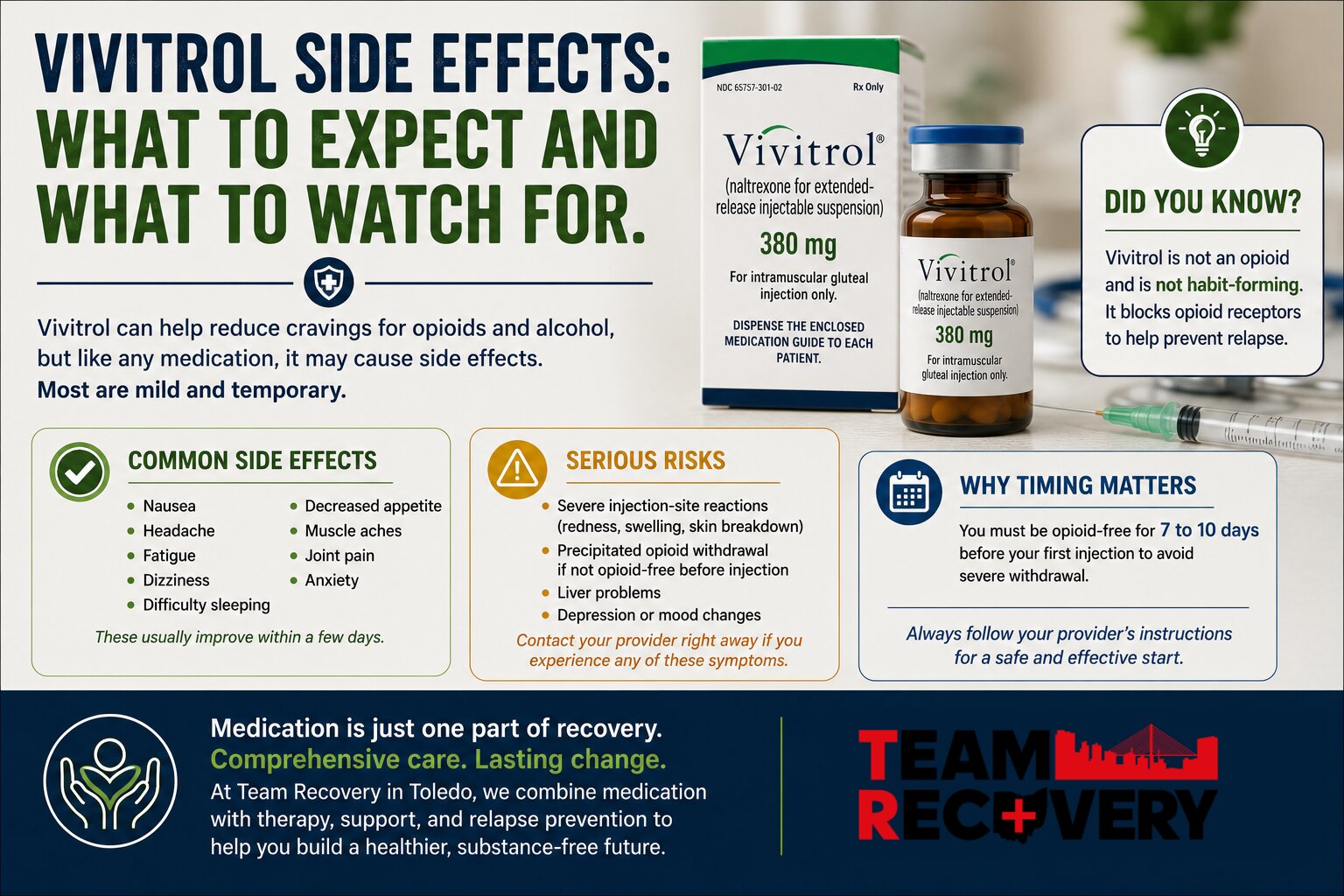
Why You Must Be Opioid-Free Before Starting Vivitrol
This is the single most important safety requirement before beginning treatment.
Because Vivitrol completely blocks opioid receptors, starting treatment too early can trigger severe precipitated withdrawal.
Most patients must remain opioid-free for 7 to 10 days, although the exact timing depends on factors such as:
- Which opioid was used
- How long it was used
- Whether long-acting opioids were involved
- Individual metabolism
- Clinical evaluation by the prescribing provider
Healthcare providers may perform:
- Medical history review
- Physical examination
- Urine drug screening
- Additional assessments when needed
The goal is to ensure opioids have cleared sufficiently before the first injection.
People should never attempt to shorten this waiting period on their own. Careful medical supervision greatly reduces the risk of precipitated withdrawal and helps ensure treatment begins safely.
How Vivitrol Fits Into Recovery at Team Recovery
Medication alone is rarely enough to address opioid or alcohol addiction.
Instead, Vivitrol is most effective when combined with comprehensive recovery services that address the emotional, behavioral, and social aspects of addiction.
At Team Recovery in Toledo, Ohio, treatment plans are individualized and may include:
- Comprehensive medical assessment
- Individual counseling
- Group therapy
- Family involvement when appropriate
- Relapse prevention planning
- Mental health support
- Recovery education
- Ongoing monitoring throughout treatment
Not every patient is the best candidate for Vivitrol. Some individuals may benefit from other medications depending on their medical history, treatment goals, and stage of recovery.
Healthcare providers work closely with each patient to determine which medication, if any, is the safest and most appropriate option within a comprehensive recovery plan.
When to Contact Your Healthcare Provider
Most side effects are temporary and manageable, but certain symptoms should never be ignored.
Contact your provider promptly if you experience:
- Severe or worsening injection-site pain
- Fever after the injection
- Signs of infection
- Yellowing skin or eyes
- Persistent severe nausea
- Difficulty breathing
- Allergic reactions
- Depression that worsens
- Thoughts of self-harm
- Symptoms suggesting opioid withdrawal after treatment
Seeking medical advice early can help prevent more serious complications.
Frequently Asked Questions
What are the side effects of Vivitrol?
Common side effects include nausea, headache, fatigue, dizziness, decreased appetite, muscle aches, and injection-site soreness. Less commonly, serious complications such as severe injection-site reactions, liver problems, or precipitated withdrawal can occur if treatment is started before opioids have fully cleared from the body.
How long do Vivitrol side effects last?
Many common side effects improve within a few days after the injection, although injection-site soreness may last up to a week. The medication itself remains active for approximately one month, but most mild side effects lessen as the body adjusts. Persistent or worsening symptoms should be evaluated by a healthcare provider.
Is Vivitrol safe?
For appropriately selected patients under medical supervision, Vivitrol is considered a safe and effective treatment. The most important safety requirement is being completely opioid-free before the first injection to avoid precipitated withdrawal. Careful screening and ongoing medical monitoring help reduce risks.
Recovery Starts With the Right Support
Understanding Vivitrol side effects is an important part of making informed treatment decisions. While most side effects are temporary and manageable, knowing about serious risks—particularly precipitated withdrawal and severe injection-site reactions—helps ensure treatment begins safely.
At Team Recovery in Toledo, Ohio, medication is integrated into a personalized recovery plan that includes counseling, behavioral therapies, medical oversight, and ongoing support. If you have questions about whether Vivitrol or another treatment option is right for you, our team can help you understand your choices and develop a plan tailored to your needs.
Call Team Recovery today at (419) 314-4909 to speak with a member of our team, or learn more about our medication-assisted treatment program and how comprehensive recovery support can help you build a healthier future. Serving individuals and families throughout Toledo and Northwest Ohio.

