





It’s not the chaos you expected to miss.
It’s the quiet.
You leave something like round-the-clock support thinking the hardest part is behind you. You showed up. You did the work. You changed things that once felt impossible to change.
And then life opens up.
Not in a dramatic way. Not in a way that feels freeing.
In a way that feels… flat.
And if you’ve been sitting in that feeling, wondering why it doesn’t feel like the relief you imagined—you’re not alone.
You’re Functioning, But Something Feels Off
From the outside, things look okay.
You’re getting through your days.
You’re not in the same place you were before.
You’re making better choices.
But inside, there’s this quiet question that keeps showing up:
Why doesn’t this feel better than it does?
You expected some kind of shift. Not constant happiness, maybe—but something noticeable.
Instead, you get this steady, neutral feeling that’s hard to explain to anyone else.
And because it’s not dramatic, it’s easy to dismiss.
But it matters.
The Silence Feels Louder Than the Chaos Ever Did
Before, everything had intensity.
Even the hard moments had energy—highs, lows, reactions, movement.
Now, things are quieter.
And that quiet can feel uncomfortable in a way that’s hard to name.
Because you’re not reacting anymore.
You’re not constantly managing a crisis.
You’re not living on edge.
But you’re also not feeling much of anything at all.
And that absence of intensity can feel like something’s missing.
You Keep Waiting to Feel Like Yourself Again
There’s this expectation that eventually, something will click.
That you’ll wake up one day and feel fully present, fully connected, fully you.
But days pass.
Then weeks.
And you still feel like you’re slightly outside your own life.
You go through routines, conversations, responsibilities—and part of you is there.
But part of you feels distant.
Like you’re watching instead of fully living.
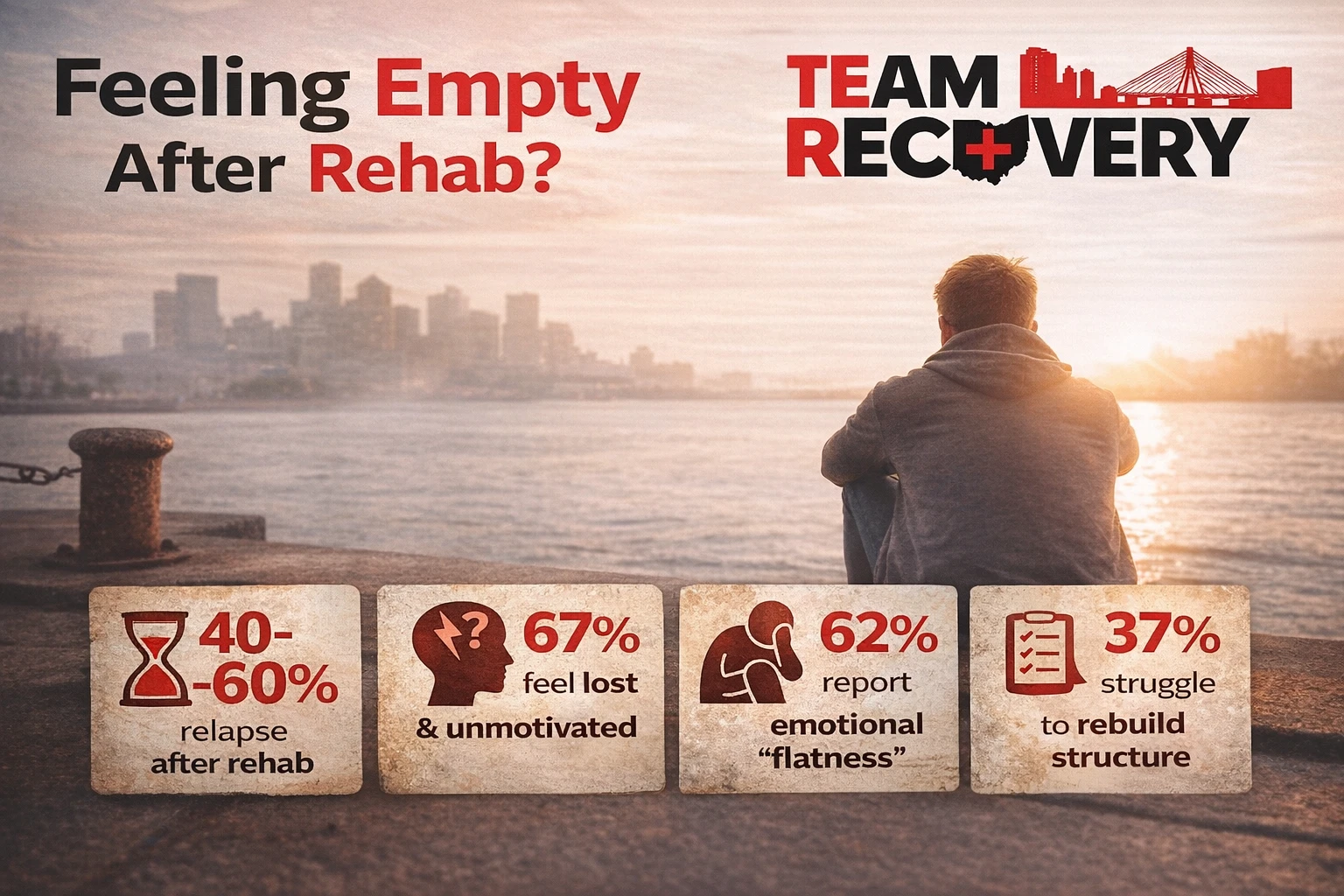
The Structure That Held You Is Gone
Inside a structured environment, there’s a rhythm that carries you.
You don’t have to decide everything.
You don’t have to motivate yourself constantly.
You don’t have to figure it all out alone.
There’s accountability built in.
There’s connection built in.
There’s purpose built in.
And then one day, that’s gone.
Not because something is wrong—but because it’s time.
And suddenly, everything depends on you.
That shift is bigger than most people expect.
You’re Not Failing—You’re Transitioning
This is where a lot of people turn on themselves.
They start thinking:
- Maybe I didn’t actually change
- Maybe I’m slipping
- Maybe I need to go back to how things were
But that’s not what’s happening.
You’re in the space between structure and self-direction.
And that space is uncomfortable.
Because it requires something new:
Consistency without supervision.
Motivation without urgency.
Connection without proximity.
That’s not easy.
And it’s not supposed to feel smooth.
You Miss the Intensity More Than You Expected
This is the part people don’t always admit.
You don’t miss the pain.
But you might miss how alive everything felt.
The emotional spikes.
The urgency.
The sense that every moment mattered in a heightened way.
There was a strange clarity in that.
Now, life feels slower.
Less dramatic.
More steady.
And steady can feel… dull at first.
That doesn’t mean something is wrong.
It means you’re adjusting to a different pace of living.
You Start Questioning the Progress You Made
Because the feeling isn’t what you expected, doubt creeps in.
You might think:
- If this is better, why doesn’t it feel better?
- Did I lose something important along the way?
- Is this just how life is now?
These questions are heavy.
And they can make you second-guess everything you’ve worked for.
But here’s what often gets missed:
Progress doesn’t always feel like progress.
Sometimes it feels like quiet.
Sometimes it feels like boredom.
Sometimes it feels like nothing.
But underneath that, something is stabilizing.
The Middle Is Where Most People Get Stuck
You’re no longer where you were.
But you’re not fully grounded in where you’re going.
This middle space is where a lot of people feel lost.
Not because they are.
But because there’s no clear marker for what “good” is supposed to feel like anymore.
There’s no constant feedback.
No immediate reinforcement.
Just you… and the life you’re building.
That’s a big shift.
What Helped Me (That Didn’t Feel Like It Would at First)
I didn’t wake up one day and feel better.
I had to build something—slowly.
And honestly, I didn’t want to at first.
What helped wasn’t dramatic. It was repetitive.
- Creating structure even when I didn’t feel like I needed it
- Staying connected when isolating felt easier
- Letting things feel boring without trying to escape it
That last one mattered more than I expected.
Because boredom isn’t emptiness.
It’s space.
And space is where something new can actually grow.
You’re Not Numb—You’re Learning a New Way to Feel
This is the shift that takes time to understand.
You’re not broken.
You’re not incapable of feeling.
You’re recalibrating.
When you’ve lived in extremes, your baseline gets distorted.
So when things level out, it can feel like nothing is there.
But that “nothing” is actually stability.
And stability doesn’t shout.
It doesn’t demand attention.
It just… holds.
Learning to recognize that takes time.
The Version of You That’s Emerging Feels Unfamiliar
Part of the discomfort is identity.
You’re not who you were.
But you’re also not fully settled into who you’re becoming.
So there’s this in-between version of you that feels unfamiliar.
And unfamiliar can feel wrong—even when it’s growth.
You might notice:
- You react differently
- You think differently
- You need different things
That can feel disorienting.
But it’s also evidence that something real has shifted.
This Isn’t the End of the Work—It’s a Different Kind of Work
There’s a misconception that once you leave structured support, the work is done.
But this phase?
This is where the work becomes internal.
Less visible. Less guided.
More personal.
You’re building a life now—not just stabilizing one.
And that requires patience in a way nothing else does.
Frequently Asked Questions
Is it normal to feel disconnected after leaving structured care?
Yes. Many people experience a period of emotional flatness or disconnection. It’s part of adjusting to a less structured, more self-directed life.
Why does everything feel boring now?
Because your system is no longer operating in extremes. What feels like boredom is often stability—and it can take time to appreciate that shift.
Does this mean I’m at risk of going backwards?
Not necessarily. Feeling stuck or disconnected is common during transition phases. It doesn’t mean you’re failing—it means you’re adjusting.
How do I rebuild structure on my own?
Start small. Set consistent routines around sleep, meals, movement, and connection. Structure doesn’t have to be rigid—it just has to be intentional.
What if I don’t feel motivated?
Motivation often follows action, not the other way around. Focus on showing up in small ways, even without the feeling.
Should I seek additional support again?
Sometimes, yes. Support isn’t a step backward—it can be a way to strengthen what you’ve already built.
How long does this phase last?
It varies. For some, it’s a few weeks. For others, longer. The key is staying engaged instead of withdrawing during this time.
You’re Not Broken—You’re in the Part No One Talks About
This phase doesn’t get celebrated.
It doesn’t make for a clean story.
But it’s real.
And if you’re in it, it means you didn’t stop.
You kept going past the obvious changes into the quieter ones.
That matters more than it feels like right now.
If you feel like you need support again—or just something to help you rebuild structure in a way that actually fits your life now—Call 419-314-4909 to learn more about our Residential Treatment Program in Toledo, Ohio.

