





There’s a quiet fear that doesn’t usually get said out loud.
It doesn’t sound like “I don’t want help.”
It sounds more like:
What if I stop… and I don’t recognize myself anymore?
If you’ve been circling the idea of something like round-the-clock support, this is often what sits underneath the hesitation.
Not fear of getting better.
Fear of becoming someone you don’t recognize.
And if you’ve built parts of your identity around how you feel, how you connect, how you create—this isn’t a small fear.
It’s personal.
The Version of You That Made Sense at the Time
Most people don’t arrive here by accident.
There was a point where whatever you were using felt like it gave you something.
Maybe it helped you:
- Speak more freely
- Feel less guarded
- Access emotions you couldn’t otherwise reach
- Turn the volume up on your creativity or connection
And over time, that version of you started to feel like the real you.
Even if parts of it were messy.
Even if parts of it were unsustainable.
It still felt like yours.
So of course the idea of letting it go feels complicated.
You’re not just letting go of a habit.
You’re letting go of something that became part of how you experience yourself.
Why This Feels Different for People Who Feel Deeply
If you’re someone who:
- Thinks deeply
- Feels intensely
- Creates, performs, connects, or expresses yourself in meaningful ways
This fear hits harder.
Because it’s not just about behavior.
It’s about identity.
There’s often a belief that forms quietly over time:
This is where my depth comes from.
This is why I connect the way I do.
This is what makes me… me.
And without it?
The fear is that everything flattens.
That you become less expressive.
Less interesting.
Less alive.
That fear isn’t irrational.
But it’s also not the full picture.
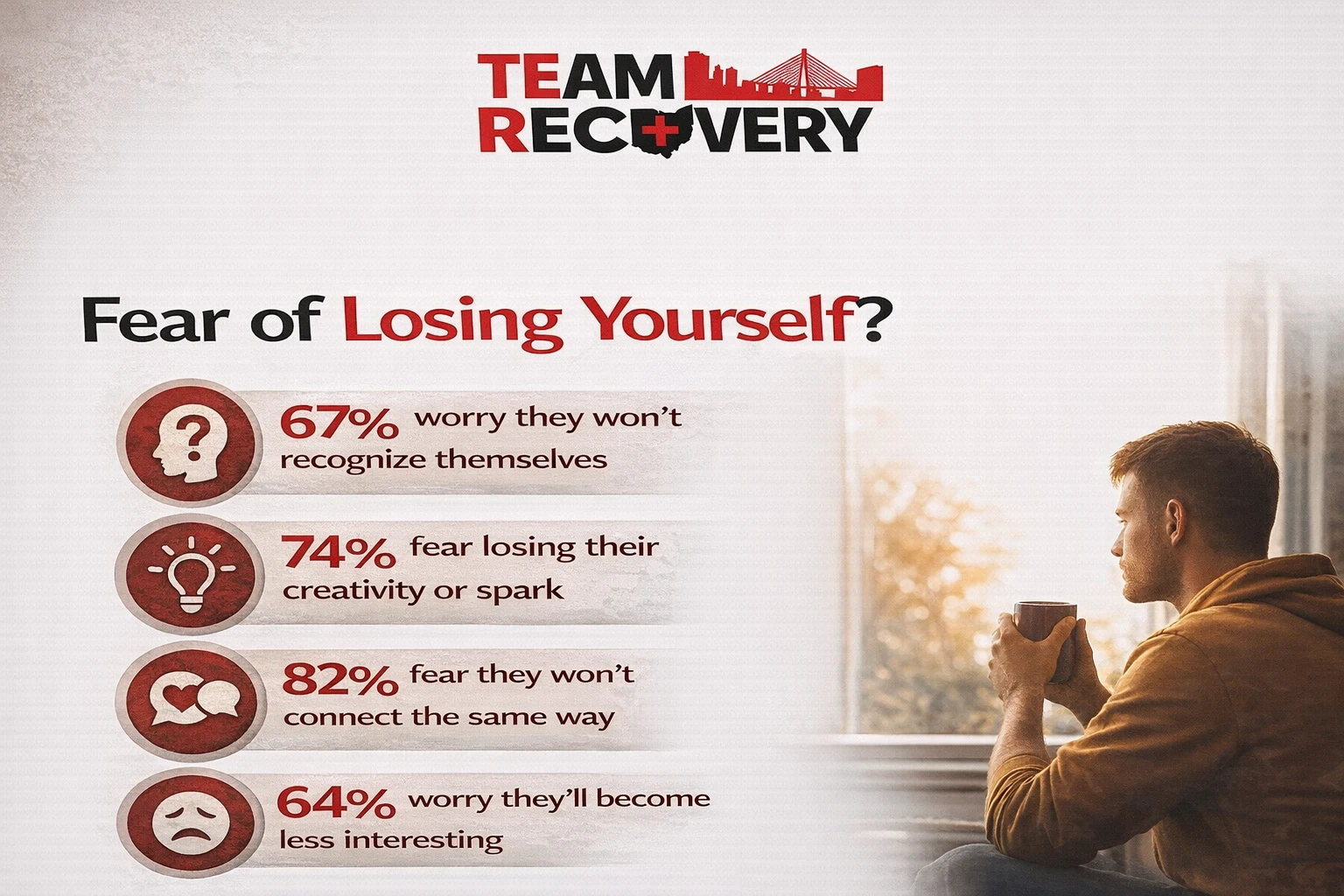
What Actually Happens When Things Get Quiet
One of the first shifts in a structured, live-in environment isn’t dramatic.
It’s subtle.
Things get quieter.
Not empty.
Not lifeless.
Just… less chaotic.
And for many people, that quiet feels uncomfortable at first.
Because if you’ve been used to intensity—emotionally or mentally—quiet can feel like absence.
Like something is missing.
But what’s actually happening is something else.
The noise is settling.
And underneath it, something steadier starts to show up.
The Parts of You That Were Always There
Here’s what often surprises people:
The things you’re afraid of losing?
They weren’t created by substances.
They were already part of you.
Your humor.
Your insight.
Your creativity.
Your ability to connect.
Those don’t disappear.
But they’ve likely been mixed with:
- Anxiety
- Overstimulation
- Emotional highs and lows
- Pressure to maintain a certain version of yourself
When those layers begin to quiet down, what’s left can feel unfamiliar.
Not because it’s gone.
Because it’s clearer.
The In-Between Phase No One Talks About
There’s a stretch where things don’t feel defined.
You’re not who you were before.
But you don’t fully recognize who you’re becoming yet.
This is where people often feel the most uncertain.
You might think:
I feel different… but I don’t know if I like it.
I don’t feel as intense… is that a good thing?
I don’t know who I am without this.
This phase can feel like loss.
But it’s not.
It’s transition.
You’re not losing your identity.
You’re separating it from something it got tangled up with.
The Fear of Becoming “Less”
Let’s name it directly.
A lot of people are afraid they’ll become:
- Less interesting
- Less creative
- Less expressive
- Less connected
In one word: less.
And at first, it can feel that way.
Because the extremes are gone.
The highs aren’t as high.
The emotional spikes aren’t as sharp.
But something else begins to replace that.
Not immediately.
But steadily.
Consistency.
Clarity.
Presence.
And those things don’t feel as exciting at first.
But they’re more sustainable.
A Story That Stays With Me
I once heard someone say:
“I thought I needed chaos to feel alive. Turns out, I just needed space to actually feel things clearly.”
That shift is subtle—but powerful.
Because it’s the difference between:
- Feeling everything all at once
- And actually understanding what you’re feeling
That kind of awareness doesn’t take anything away from you.
It gives you more control over how you show up.
You Don’t Become Someone Else—You Become More You
This is the part that takes time to believe.
You’re not becoming a different person.
You’re becoming a more stable version of yourself.
You still:
- Think deeply
- Feel deeply
- Create
- Connect
But those things aren’t tied to something external.
They’re not dependent.
They come from you.
And that’s a different kind of confidence.
Quieter.
But stronger.
The Work Isn’t Just Stopping—It’s Rediscovering
This process isn’t just about removing something.
It’s about rebuilding your relationship with yourself.
Learning:
- What you actually enjoy
- What your emotions feel like without amplification
- How you connect without relying on something else
That takes time.
And it doesn’t always feel comfortable.
But it’s where identity becomes real—not reactive.
If This Fear Is What’s Holding You Back
You’re not alone in that.
A lot of people hesitate not because they don’t want change…
But because they’re afraid of what they might lose.
If that’s where you are, it’s okay to admit:
I’m not just scared of stopping. I’m scared of who I’ll be after.
That kind of honesty matters.
Because it means you’re not avoiding this.
You’re thinking about it deeply.
You’re Not Giving Yourself Up
It can feel like that.
Like you’re trading one version of yourself for another.
But what’s actually happening is different.
You’re creating space.
Space to see what’s yours—and what isn’t.
And in that space, something more stable can take shape.
Not a different identity.
A clearer one.
You Don’t Have to Rush This Understanding
You don’t have to fully believe this right now.
You don’t have to feel ready.
You don’t have to be certain.
You just have to be open to the possibility that:
You’re not losing yourself.
You’re rediscovering yourself—without the noise.
Frequently Asked Questions
Will I lose my personality if I stop using?
No. Your personality doesn’t disappear. What often changes is how stable and consistent it feels. You may experience it in a clearer, more grounded way.
Why does sobriety feel like it might make me “boring”?
Because you’re used to intensity. When that shifts, it can feel like something is missing—but over time, many people find more depth, not less.
What if I don’t recognize myself at first?
That’s normal. There’s often a transition period where things feel unfamiliar. It doesn’t mean something is wrong—it means you’re adjusting.
Can I still be creative without substances?
Yes. In many cases, creativity becomes more sustainable and focused. It may feel different, but it often becomes more consistent.
How long does it take to feel like myself again?
There’s no exact timeline. It’s a gradual process of rediscovery, not a quick return to a previous version of yourself.
What if I miss who I used to be?
That’s a real and valid feeling. But over time, many people realize they don’t miss who they were—they miss how things felt. And those feelings can return in healthier ways.
You’re Allowed to Be Curious About Who You Are Without It
You don’t have to frame this as loss.
You can frame it as curiosity.
Who am I when things are quieter?
What do I feel when I’m not trying to manage everything?
What parts of me have been there all along?
Those questions don’t take anything away.
They open something.
You Might Not Be Losing Yourself—You Might Be Meeting Yourself
If this is the first hopeful thing you’ve read in a while, hold onto that.
You don’t have to decide everything today.
You don’t have to have it all figured out.
You just have to be willing to explore what’s possible.
If you’re ready to take that next step, Call 419-314-4909 to learn more about our Residential Treatment Program in Toledo.

