





There’s a moment most parents don’t say out loud.
It doesn’t happen during the worst day.
It doesn’t even happen during the argument or the crisis.
It happens later—quietly.
When you realize that loving them, supporting them, trying harder… isn’t changing what’s happening.
And that realization can feel like failure, even though it isn’t.
If you’re here, considering something like round-the-clock support, you’re likely carrying more than just questions.
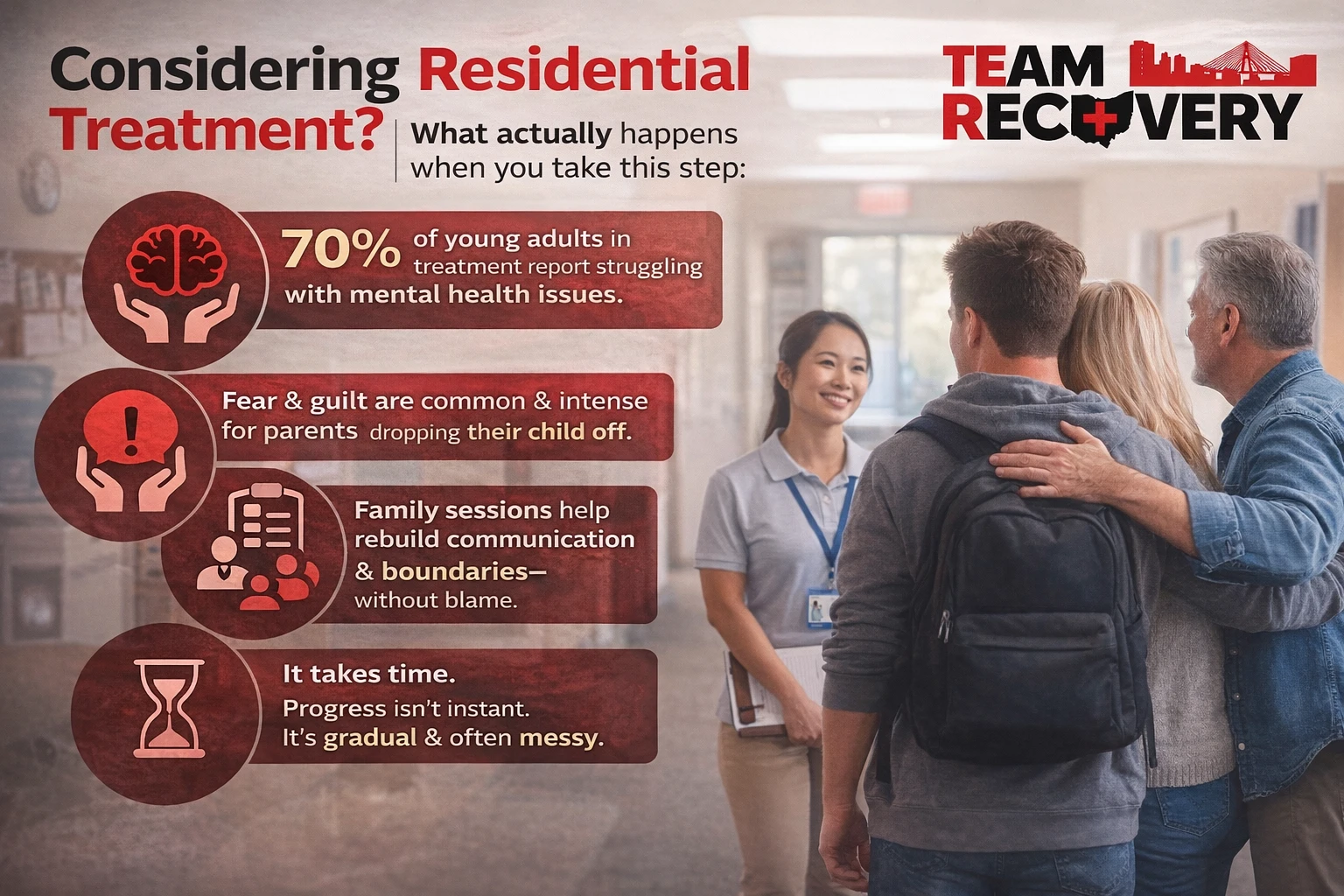
You’re carrying fear.
Guilt.
Hope you’re almost afraid to trust.
Let’s talk about what actually happens—so you’re not making this decision in the dark.
The Drop-Off No One Prepares You For
Parents often imagine the logistics.
Paperwork. Intake. Packing bags.
What they don’t expect is the emotional weight of leaving.
You may hug them and feel them pull away—or hold on tighter than usual.
You may walk out and immediately question if you’re doing the right thing.
You may sit in your car and not start it for a few minutes.
This is one of the hardest parts.
Not because it’s wrong—but because it matters so much.
Inside, your child is likely experiencing their own storm:
- Anger
- Fear
- Relief they don’t want to admit
- Exhaustion from holding everything together
They don’t have to arrive ready.
They just have to arrive.
The First Shift: Predictability
Many young adults in crisis have been living in emotional unpredictability.
Some days are okay. Others spiral quickly. Sleep is inconsistent. Communication breaks down.
So one of the first changes is deceptively simple:
Structure.
Meals happen at regular times.
Sleep is protected.
Conversations are intentional, not reactive.
At first, this can feel rigid to them.
They may resist it. Push against it. Question it.
But something important begins to happen underneath that resistance.
Their body starts to feel safer.
And when the body feels safer, the mind can begin to open.
They Don’t Get “Talked At”—They Get Met Where They Are
A common fear parents carry is this:
Will someone just tell them what’s wrong with them?
That’s not how meaningful change happens.
Instead, what unfolds is slower and more human.
Your child begins to talk—not always right away.
Sometimes it starts with silence. Or frustration. Or surface-level answers.
But over time, something shifts.
They begin to say things they haven’t said before.
Not because they’re forced—but because it feels possible.
Things like:
- “I didn’t know how to tell you how bad it got.”
- “I thought I had to handle everything alone.”
- “I didn’t think anyone would understand.”
These moments aren’t dramatic.
But they’re powerful.
Because they’re honest.
You’re Not Being Pushed Out—You’re Being Brought In Differently
It can feel like you’re being separated from your child.
In reality, you’re being invited into a different kind of relationship.
You may be included through:
- Family sessions
- Guided conversations
- Support around communication patterns
And sometimes, this part is unexpectedly emotional.
Because it’s not just about your child changing.
It’s about understanding the patterns that formed between you—without blame.
You may realize:
- How much you’ve been carrying
- How much you’ve been trying to protect
- How exhausted you actually are
And for many parents, there’s a quiet relief in finally not having to hold it all alone.
The Middle Phase: Progress That Doesn’t Look Like Progress
There’s a point where things stop feeling new.
And this is where doubt often creeps in.
You might think:
- “They sound frustrated—does that mean it’s not working?”
- “They seem distant—are we losing them?”
But here’s the truth most people don’t say clearly enough:
Real change is often messy.
Your child may:
- Push back more
- Express anger more directly
- Question things they used to avoid
This isn’t regression.
This is engagement.
They’re no longer shutting down or escaping.
They’re starting to face things.
And that process rarely looks calm.
The Small Moments That Matter Most
Many parents wait for a big breakthrough.
A clear sign. A dramatic shift.
But what we often see are smaller moments—easy to miss if you’re not looking for them.
Like:
- A pause before reacting
- A moment of honesty instead of deflection
- A willingness to stay in a difficult conversation
These are the building blocks of lasting change.
They don’t feel big in the moment.
But they add up to something steady.
The Question That Stays in the Background
Almost every parent carries this question:
Will my child be the same when they come home?
The honest answer is: not exactly.
But different doesn’t mean lost.
It may look like:
- More boundaries
- More emotional awareness
- More independence
At first, that can feel unfamiliar—even uncomfortable.
You may miss how things used to be.
But over time, many families realize:
They didn’t lose their child.
They’re meeting a version of them that’s more grounded.
The Hidden Work Parents Are Doing Too
Even if you’re not physically there, you’re part of this process.
You’re:
- Learning to step out of constant crisis mode
- Rebuilding trust—on both sides
- Letting go of patterns that once felt necessary
This is hard.
Because those patterns often came from love.
From trying to protect. To help. To hold things together.
But healing asks something different.
Not perfection.
Just willingness.
What Happens After They Come Home
This is another part parents worry about.
What if everything goes back to how it was?
The goal isn’t to return to the old normal.
It’s to build something new.
That might mean:
- Different communication patterns
- Clearer boundaries
- Slower, more intentional connection
There may still be difficult moments.
That’s part of growth.
But those moments won’t feel the same as before—because the foundation is different.
A Truth That Might Be Hard to Hear
You didn’t cause this.
And you can’t fix it alone.
That’s not failure.
That’s reality.
And accepting that reality is often the beginning of something more sustainable.
Because it allows support to step in—not instead of you, but alongside you.
What If You’re Still Not Sure?
Hesitation doesn’t mean you’re making the wrong choice.
It means you understand the weight of it.
You’re not choosing between easy and hard.
You’re choosing between:
- Staying in what’s happening now
- Or stepping into something unknown, with support
That’s a brave place to stand.
Even if it doesn’t feel like it.
Frequently Asked Questions
Will my child feel abandoned?
This is one of the most common fears. While it may feel that way at first, most young adults begin to understand this decision as care—not rejection—over time.
How do I know if this is the right step?
If what you’ve been trying isn’t creating change, it may be time to consider a higher level of support. You don’t have to be certain—just open.
Can I stay in contact with my child?
Yes. Communication is usually structured to support progress while still maintaining connection.
What if my child is angry at me for this?
That’s a very real possibility. But anger doesn’t mean you made the wrong decision. It often means they’re overwhelmed.
Will they come back completely “better”?
Healing isn’t instant or perfect. But this level of care can create real momentum—something many families haven’t been able to access on their own.
What support is available for parents during this time?
Many programs offer family involvement, education, and guidance. You don’t have to navigate this alone.
How do I handle my own guilt?
Guilt is incredibly common. But choosing support isn’t giving up—it’s stepping toward something your child may not be able to reach on their own yet.
You’re Not Alone in This Decision
There’s no perfect way to navigate this.
No script. No guaranteed outcome.
Just a series of decisions made from care, even when they’re hard.
If you’re here, it means you’re trying to find a way forward.
And that matters.
If you’re considering next steps, Call 419-314-4909 to learn more about our Residential Treatment Program in Toledo, Ohio.

