





There’s a moment many families don’t talk about. Not the crisis. Not the intervention. Not even the decision to get help.
It’s what happens after.
The house is quieter. The tension shifts. And instead of relief feeling clean and obvious, it feels… complicated.
If you’re exploring support like sober living options, you might already sense this truth: recovery doesn’t just change one person. It reshapes the emotional rhythm of everyone connected to them.
And sometimes, that shift feels like losing something—even when you know it’s the right path.
The Roles That Quietly Take Over
Most families don’t sit down and assign roles. They happen naturally.
One person becomes the caretaker.
Another becomes the peacemaker.
Someone else learns to stay quiet to avoid conflict.
Over time, these roles harden—not because anyone chooses them, but because they work, in a way. They help the family survive instability.
Substance use often reinforces these patterns. It creates a kind of emotional gravity that pulls everyone into predictable positions.
So when sobriety begins, it doesn’t just remove the substance.
It disrupts the system.
And suddenly, people don’t know where to stand.
Why Stability Can Feel Unsettling
There’s a quiet paradox in recovery:
The chaos may be gone—but so is the structure built around it.
Families sometimes say things like:
- “Things are better, but I feel on edge.”
- “I thought I’d feel relief, but I feel… off.”
- “I don’t know how to act around them anymore.”
This doesn’t mean something is wrong.
It means your nervous system is adjusting to a new reality.
For a long time, your responses were shaped by unpredictability. Now, with more stability, there’s space. And space can feel unfamiliar—sometimes even uncomfortable.
Especially for those who found identity in being needed.
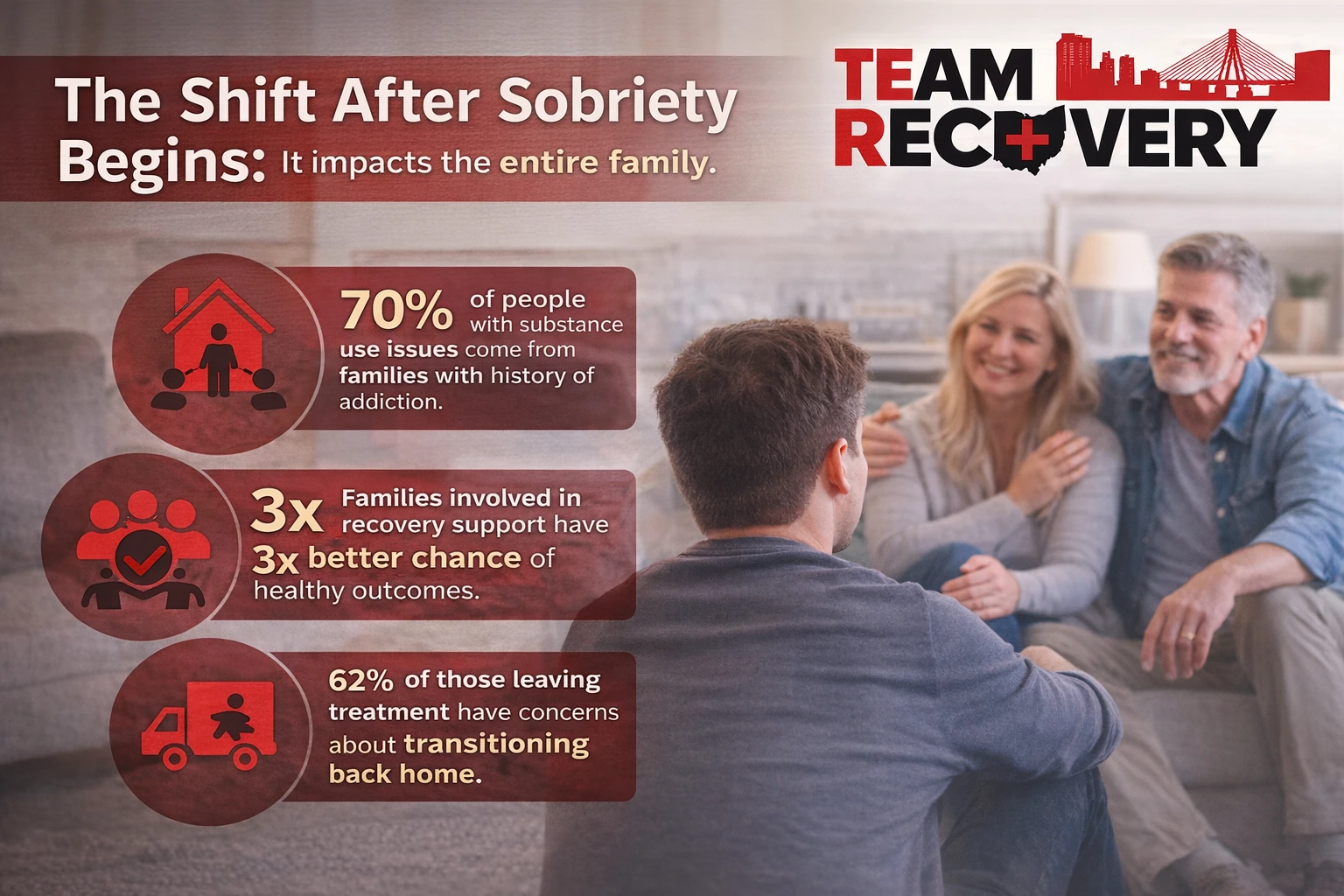
The Identity Shift No One Prepares You For
For the person getting sober, there’s often a deep, unspoken fear:
“If I’m not that version of me anymore… who am I?”
But families carry a parallel question:
“If they change… where does that leave me?”
Maybe you were the one who kept everything together.
Maybe you were the one who understood them best.
Maybe your relationship—even if painful—had a certain intensity that felt meaningful.
Recovery softens those extremes.
And while that’s healthy, it can also feel like something important is fading.
Not because it was good—but because it was familiar.
The Fear of Losing What Made Them “Them”
This is especially true for creative, expressive, or emotionally intense people.
Substances often became tied to:
- Humor
- Connection
- Spontaneity
- Confidence
So when sobriety begins, there’s a fear—on both sides—that something essential will disappear.
Families might wonder:
- Will they still be fun?
- Will we still connect the same way?
- Will they become distant… or different?
And the person in recovery may be thinking:
- What if I become boring?
- What if I can’t access the same emotions?
- What if people don’t recognize me anymore?
These fears are real. They deserve to be acknowledged—not dismissed.
But here’s what unfolds over time:
What feels like “less” at first often becomes something deeper.
Not louder. Not more intense.
But more real.
A Story That Repeats in Different Ways
I once worked with a family where a son described his mother’s presence before and after recovery.
Before, she was unpredictable—but magnetic. Her energy filled every room. Conversations were intense, emotional, sometimes chaotic.
After sobriety, everything changed.
“She’s quieter now,” he said. “At first, I thought I lost something.”
But months later, he told me:
“It’s different—but I feel safer around her. I don’t have to read the room anymore. I can just be there.”
This is the part many people don’t expect.
Recovery doesn’t erase personality. It reveals what was underneath the noise.
And that version may feel unfamiliar before it feels meaningful.
The Quiet Work of Relearning Each Other
One of the hardest parts of this process is that there’s no clear roadmap.
You’re not just supporting recovery—you’re rebuilding connection.
That might look like:
- Conversations that feel slower or less charged
- Moments of silence that aren’t filled immediately
- Learning to ask instead of assume
It can feel awkward.
You might miss the intensity, even if it came with pain.
But this phase matters.
Because it’s where relationships shift from reactive to intentional.
From survival to presence.
Letting Go of the Old “Normal”
Many families unknowingly try to return to how things used to be—just without the substance.
But that version of “normal” was built on instability.
Healing asks something different.
It asks you to let go of roles that once felt necessary.
To stop managing, fixing, anticipating.
And to allow relationships to become more mutual, more honest—even if that feels unfamiliar at first.
This isn’t about losing connection.
It’s about rebuilding it on steadier ground.
What Growth Looks Like (Even If It’s Subtle)
Families who move through this stage don’t do it perfectly.
They do it gradually.
You might notice:
- Less urgency in conversations
- Fewer emotional extremes
- More pauses—and more honesty inside those pauses
It doesn’t always feel exciting.
In fact, it can feel… quiet.
But quiet doesn’t mean empty.
It means there’s room for something new to take shape.
The Part That Often Gets Missed
There’s a hidden cost to not acknowledging these changes.
When families ignore the emotional shift, they may:
- Misinterpret calm as distance
- Confuse stability with disconnection
- Try to recreate old dynamics without realizing it
This can lead to frustration on both sides.
Because the person in recovery is trying to move forward… while the family may still be relating to who they used to be.
Naming the shift helps everyone adjust.
Without blame. Without pressure.
Just awareness.
You’re Not Losing Them—You’re Meeting Them Again
If you’re in this space, it might feel like something important is slipping away.
But more often, what’s happening is this:
The version of your loved one shaped by survival is softening.
And the version shaped by truth is beginning to emerge.
That version may laugh differently.
Speak differently.
Show up differently.
But they’re not disappearing.
They’re becoming more present.
And yes—that can feel unfamiliar before it feels meaningful.
Where Structured Support Fits In
This phase of recovery isn’t just about staying sober.
It’s about learning how to live—and relate—without old patterns.
That’s where structured environments can help.
Spaces that offer stability, routine, and community give people room to rediscover themselves without pressure to perform or “be who they used to be.”
For families, this can also create breathing room.
A chance to step out of old roles and begin adjusting at a sustainable pace.
If you’re exploring options like sober living Toledo Ohio programs, it’s not just about housing.
It’s about giving both the individual and the family space to recalibrate.
Frequently Asked Questions
Why does sobriety sometimes feel harder for families than expected?
Because it changes the entire dynamic—not just the behavior. Families often need time to adjust to new roles, communication styles, and emotional rhythms.
Is it normal to miss how things used to be?
Yes. Missing aspects of the past doesn’t mean you want the pain back. It often means you’re grieving familiarity, even if it wasn’t healthy.
How long does it take for family dynamics to stabilize?
There’s no fixed timeline. For many families, it’s a gradual process over months or longer. Consistency, communication, and patience all play a role.
What if I feel disconnected from my loved one in recovery?
That feeling is more common than people admit. Connection often needs to be rebuilt intentionally, rather than relying on old patterns.
Should families get support too?
Yes. Family support—whether through counseling, groups, or education—can make a meaningful difference in how everyone adjusts and heals together.
Will my loved one lose their personality in sobriety?
No. Personality doesn’t disappear—it becomes clearer. Some traits may soften, but what emerges is often more grounded and authentic.
A Different Kind of Hope
Recovery doesn’t always look like a dramatic transformation.
Sometimes, it looks like quieter conversations.
More honest pauses.
A slower, steadier kind of connection.
That may not feel exciting at first.
But it’s real.
And real is what lasts.
If you or your loved one are considering next steps, Call 419-314-4909 or visit our sober living toledo ohio services to learn more.

