





There’s a specific kind of fear that doesn’t get talked about enough.
It’s not the fear of withdrawal.
Not even the fear of failing.
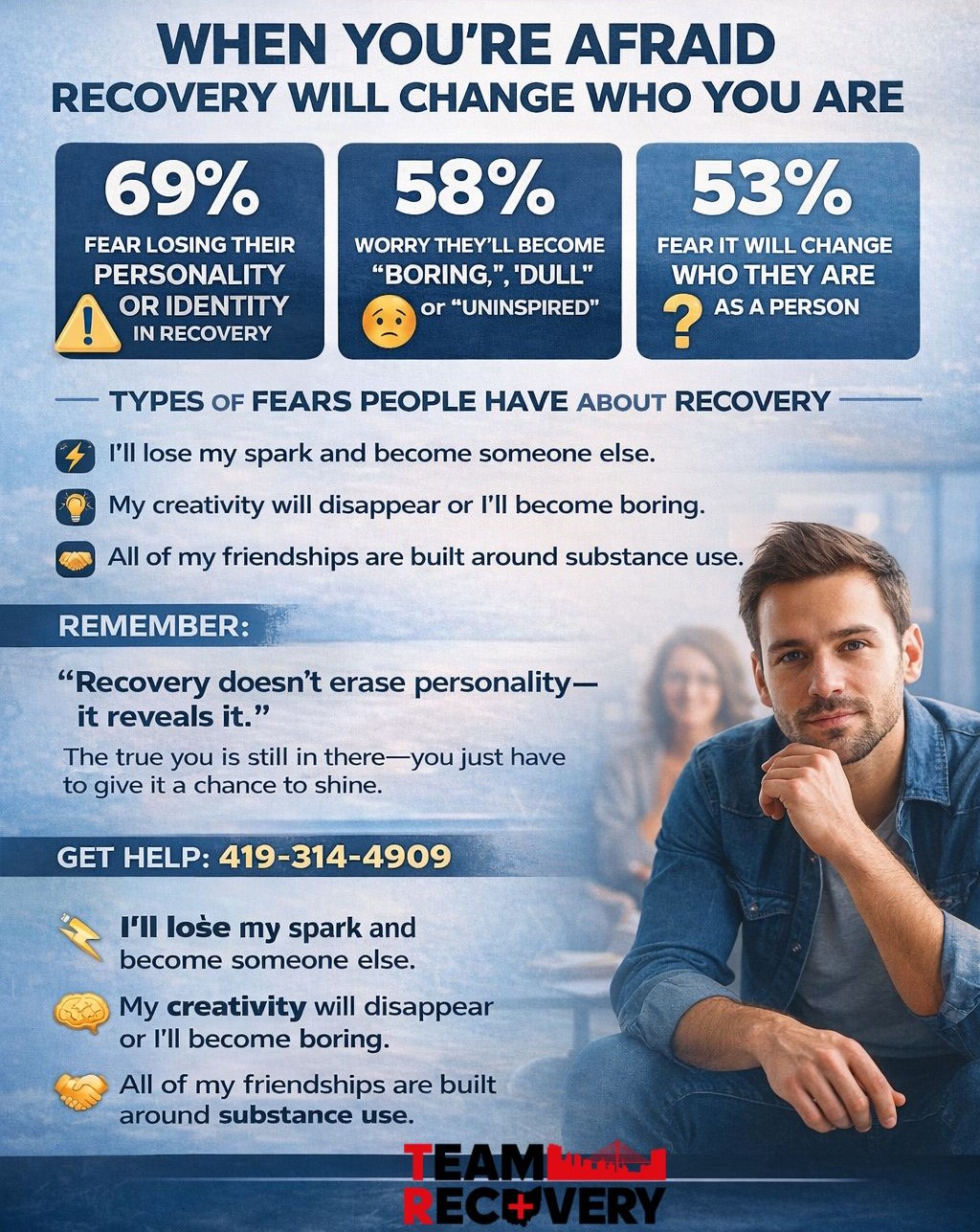
It’s the fear of becoming… someone else.
I’ve sat across from musicians, writers, sales executives, comedians, parents—the life of the party and the quiet creative alike—who whisper the same thing:
“What if I get sober and lose my spark?”
If you’re considering a higher level of support—something immersive and structured like our live-in treatment options—that fear can grow louder. The idea of stepping into a residential setting can feel like stepping away from your identity.
So let’s slow this down.
Because that fear deserves to be understood, not dismissed.
The Fear Isn’t Silly — It’s Protective
When substances have been part of your life for years, they rarely feel random.
They’ve likely served a purpose.
Maybe they helped you:
- Feel less socially anxious
- Access big emotions
- Quiet your inner critic
- Stay energized and creative
- Cope with trauma or pressure
From a clinical standpoint, substances often function as regulation tools. They change how your nervous system feels. They shift perception, mood, inhibition.
If you’ve built friendships, creative rituals, or even professional success around those altered states, of course it feels risky to imagine life without them.
Your brain is trying to protect what it believes keeps you safe, connected, or interesting.
That’s not weakness. That’s attachment.
You Are Not the Chemical Reaction
Here’s something I say gently but clearly:
A substance can amplify parts of you.
It can mute parts of you.
But it cannot create you.
Alcohol doesn’t manufacture humor.
Cocaine doesn’t invent confidence.
Marijuana doesn’t generate insight.
They may lower inhibition. They may heighten sensation. But the raw material—the personality, the creativity, the charisma—was already there.
If anything, long-term use often narrows identity.
People begin organizing their lives around access. Around hiding. Around managing consequences.
That’s not expansion. That’s contraction.
And contraction can feel intense, which is sometimes mistaken for depth.
What Actually Changes in a Residential Setting
When someone enters a residential treatment program, they aren’t being stripped of identity.
They’re being given stability.
Here’s what truly shifts in a structured, round-the-clock environment:
- Sleep normalizes
- Nutrition improves
- Emotional swings soften
- The nervous system begins to regulate
- Shame loses some of its grip
Early on, this can feel strange.
If you’re used to emotional highs and lows, steady can feel flat. If you’re used to stimulation, quiet can feel empty.
I often tell clients:
Calm can feel boring at first because chaos has been familiar.
But calm is not the absence of personality.
It’s the absence of constant survival mode.
And survival mode, while intense, is not the same thing as authenticity.
The Myth of the “Beige Sober Life”
There’s a cultural stereotype that sober equals dull.
Serious. Restrained. Uninspired.
I understand where that comes from. Early sobriety can feel awkward. Social muscles are being relearned. Creative routines are shifting. Emotions come back online.
But that early adjustment phase is temporary.
What I consistently see after stabilization is something different:
- Humor becomes sharper, not sloppier.
- Creativity becomes sustainable, not erratic.
- Social connection becomes genuine, not chemically assisted.
- Confidence becomes embodied, not borrowed.
When someone no longer spends mental energy planning use, hiding use, or recovering from use, that energy becomes available for living.
That’s not beige. That’s spacious.
Identity vs. Coping
This is where the myth gets tangled.
If you’ve used substances to:
- Perform on stage
- Write late into the night
- Network effortlessly
- Manage pressure
- Feel bold in social spaces
It can feel like those abilities came from the substance.
In reality, the substance was functioning as a coping strategy.
Coping strategies are learned behaviors. They are not personality traits.
When we gently remove a coping strategy that is causing harm, the goal is not to erase what worked.
The goal is to build new tools that access the same strengths without the long-term cost.
You don’t lose the part of you that connects deeply.
You learn to connect without self-destruction.
What People Actually Say After Stabilizing
I hear some version of this often:
“I thought I’d be boring. I feel more like myself.”
“I didn’t realize how anxious I actually was.”
“My creativity didn’t disappear—it got clearer.”
“I’m still intense. I’m just not spiraling.”
The person doesn’t become smaller.
They become less overwhelmed.
It’s a subtle but powerful shift.
Instead of swinging between extremes, they begin operating from a steadier center.
And steadiness allows identity to unfold instead of explode.
You Are Not a Before-and-After Photo
Another myth is that treatment creates a “new you.”
Recovery is not a personality transplant.
It’s more like clearing static from a radio signal. The station was always there. It was just distorted.
You are not a “before” version that needs replacing.
You are a human nervous system that has been under strain.
A residential level of care simply provides enough containment and support for your system to reset.
It’s not about reinvention.
It’s about relief.
FAQ: Honest Questions About Identity and Treatment
Will I lose my creativity if I get sober?
Creativity is not chemically manufactured. Substances may change access to emotion or inhibition, but they don’t create imagination or insight. Many people find their creativity becomes more consistent and sustainable once their sleep, mood, and focus stabilize.
What if I feel flat or numb at first?
Early sobriety can feel emotionally unfamiliar. Your brain is recalibrating. Temporary flatness does not mean permanent dullness. It often precedes deeper, more regulated emotional access.
Will people say I’ve changed?
Possibly. But change is not the same as disappearance.
Often what others notice is reduced chaos, improved reliability, and emotional steadiness. You may feel different—not because you’re less you, but because you’re less reactive.
Is it normal to be afraid of residential care?
Yes. Stepping into a structured, live-in setting means stepping away from familiar patterns. Even harmful routines can feel safe simply because they’re known.
Fear doesn’t mean you shouldn’t go. It means the decision matters to you.
What actually happens in a live-in environment?
Without getting overly technical, the focus is on stabilization, therapy, community support, and developing healthier coping tools in a contained space. It’s designed to give your nervous system a break from outside stressors so real healing work can happen.
What if I try it and feel like it’s not for me?
Treatment is not about forcing identity shifts. It’s about providing support and clarity. If questions or concerns come up, they’re meant to be discussed—not buried.
This process is collaborative, not corrective.
A Gentle Reframe
If you’re afraid that stepping into a residential treatment program means trading your personality for blandness, I want you to consider something different:
What if what you’re really afraid of is losing intensity?
And what if intensity isn’t the same thing as aliveness?
Aliveness can be steady.
Creative.
Connected.
Grounded.
It doesn’t require self-harm.
You are not a chemical reaction.
You are not a performance.
You are not only interesting when altered.
You are already someone worth knowing—fully present.
If you’d like to explore what that might look like in a safe, structured setting, you can learn more about our live-in treatment options and see whether that level of care feels aligned for you.
Call 419-314-4909 or visit our residential treatment program services in to learn more about our residential treatment program services in Toledo, Ohio.

