





A lot of people searching questions about detox are not fully convinced they need help.
They’re usually somewhere in the middle.
Not fully ready to call it addiction.
Not fully sure things are “bad enough.”
Not sure whether they’re overreacting or underreacting.
Mostly, they’re scared.
Scared of what happens if they stop drinking.
Scared of what happens if they don’t.
Scared of asking for help.
Scared they should be able to handle this on their own.
That’s why so many people quietly search things late at night like:
- “Can I detox at home safely?”
- “How dangerous is alcohol withdrawal?”
- “Do I really need medical detox?”
- “Can I stop drinking without rehab?”
If that’s where you are right now, you are not alone.
For many people, exploring safe detox support and stabilization starts long before they feel emotionally ready to make a huge life decision. Sometimes they simply want honest answers about what’s happening to their body—and whether they can safely get through it alone.
“How Do People Know They Need Medical Detox?”
Honestly, many people don’t know at first.
That uncertainty is part of what makes the situation so overwhelming.
Some people assume withdrawal only happens to individuals with severe addiction or obvious life collapse. But physical dependence can develop gradually over time, especially with daily or heavy alcohol use.
Many people first notice it through small warning signs:
- Feeling shaky in the morning
- Anxiety improving after drinking
- Trouble sleeping without alcohol
- Sweating or nausea when trying to stop
- Panic or racing heartbeat after cutting back
- Drinking earlier in the day than before
- Needing more alcohol to feel the same effect
At first, people often explain these symptoms away:
“It’s just stress.”
“I’m just exhausted.”
“I need to sleep better.”
“I’ve been anxious lately.”
But eventually, some people realize their body has become more dependent than they thought.
That realization can feel deeply frightening.
Especially because many people searching terms related to alcohol detox near me are not looking for drama. They’re looking for safety.
“Can Alcohol Withdrawal Actually Be Dangerous?”
Yes.
And this is one reason people are encouraged not to self-diagnose withdrawal severity based on internet stories or comparison.
Some people experience mild symptoms.
Others develop serious medical complications.
Alcohol withdrawal can sometimes include:
- Severe anxiety
- Tremors
- Vomiting
- Elevated blood pressure
- Hallucinations
- Confusion
- Seizures
- Dangerous heart complications
Not everyone experiences severe withdrawal, but the unpredictability is part of the risk.
One difficult reality is that people often underestimate how physically dependent they’ve become because they still appear “functional” outwardly.
They may still:
- Go to work
- Care for children
- Socialize
- Pay bills
- Maintain relationships
Meanwhile, their body may already be signaling significant dependence underneath the surface.
That disconnect confuses a lot of people.
“Why Do So Many People Try to Detox Alone First?”
Because most people genuinely want to avoid needing help.
That’s not weakness. It’s human.
A lot of sober curious individuals spend months—or years—trying to privately regain control first. They make rules. Cut back temporarily. Switch types of alcohol. Promise themselves they’ll only drink socially.
Sometimes they succeed for short periods.
But many people eventually notice the same cycle returning.
The body starts reacting differently.
The cravings become harder to ignore.
The anxiety around stopping gets louder.
And eventually, many people realize they are no longer drinking purely for enjoyment.
They’re drinking to avoid feeling awful.
That shift matters.
One client described it this way:
“I stopped looking forward to drinking. I just became scared not to.”
That sentence hits home for many people because dependence often develops quietly—not dramatically.
“What Makes Medical Detox Different?”
A lot of people imagine detox as cold, sterile, or emotionally harsh.
But many people entering detox are surprised by what they feel first:
Relief.
Relief from hiding symptoms.
Relief from pretending they’re okay.
Relief from trying to monitor themselves constantly.
Relief from fearing what might happen overnight.
Medical detox programs are designed to help stabilize people physically and emotionally during withdrawal. Depending on the situation, support may include:
- Medical monitoring
- Symptom management
- Hydration and nutrition support
- Medication when appropriate
- Emotional support
- Sleep stabilization
- Safer withdrawal management
And honestly, one of the biggest benefits is simply not being alone during a vulnerable moment.
Withdrawal can make time feel distorted. Anxiety becomes louder. Small symptoms suddenly feel terrifying at 2am.
Having experienced support nearby can help people feel safer while their body stabilizes.
“What If I’m Still Not Sure My Drinking Is Serious Enough?”
This question comes up constantly.
A lot of people compare themselves to stereotypes before allowing themselves to ask for help.
They think:
- “I still have my job.”
- “I’m not drinking in the morning.”
- “Other people have it worse.”
- “I’m not homeless.”
- “I haven’t lost everything.”
But severity is not measured only by visible collapse.
Sometimes the real signs are quieter:
- Thinking about alcohol constantly
- Feeling panic at the idea of stopping
- Drinking secretly
- Needing alcohol to sleep
- Repeatedly trying to cut back unsuccessfully
- Structuring life around drinking
- Feeling emotionally trapped
You do not have to wait for catastrophic consequences before your concerns matter.
And honestly, many people who search phrases like alcohol detox near me are still functioning outwardly while privately struggling every day.
“Can Detox Help With Anxiety Too?”
Sometimes people are surprised by how emotionally intense withdrawal feels.
Alcohol often affects anxiety more than people realize. In the beginning, drinking may temporarily numb stress or create relief. But over time, alcohol can worsen anxiety cycles significantly.
Many people notice:
- Increased panic
- Racing thoughts
- Emotional instability
- Fearfulness
- Irritability
- Difficulty regulating emotions
Once alcohol leaves the system, those feelings can temporarily intensify before things stabilize.
That’s part of why detox can feel emotionally overwhelming to navigate alone.
And it’s also why support matters.
Not just medically.
Emotionally too.
“What Happens After Detox?”
Detox is often the beginning—not the entire process.
For some people, stabilization is enough to begin rebuilding with outpatient support, therapy, or recovery groups.
Others realize they need more structure afterward, especially if:
- Home environments feel triggering
- Mental health symptoms are intense
- Relapse history exists
- Emotional exhaustion runs deep
- Isolation is severe
Some people transition into round-the-clock care. Others move into structured daytime care or multi-day weekly treatment.
There is no single “correct” recovery path.
The important thing is that detox creates enough physical and emotional stability for people to start making clearer decisions about what they need next.
“What If I’m Afraid Treatment Will Change Me?”
This fear is incredibly common among sober curious people.
Some worry they’ll lose their personality, social life, confidence, or ability to relax. Others fear treatment means becoming a completely different person overnight.
But recovery is usually less about erasing who you are and more about reconnecting with parts of yourself that have become buried under stress, anxiety, exhaustion, shame, or dependence.
Many people entering detox still have so much of themselves intact:
- Humor
- Creativity
- Intelligence
- Compassion
- Sensitivity
- Ambition
- Hope
They’re just overwhelmed.
And often, very tired.
“Do I Have to Be Completely Ready Before Reaching Out?”
No.
This might be the most important thing to understand.
You do not need to feel perfectly certain before asking questions.
A lot of people think reaching out means they’re immediately committing to some huge irreversible decision.
Usually, it starts much smaller than that.
One conversation.
One evaluation.
One honest moment where you stop pretending everything feels manageable.
That’s it.
You are allowed to ask questions before you feel fully ready.
You are allowed to be scared.
You are allowed to not know exactly what comes next.
FAQ: Questions People Commonly Ask About Detox
Can I detox from alcohol safely at home?
Some people can, but others face serious medical risks during withdrawal. The difficulty is that withdrawal severity can be unpredictable, especially for long-term or heavy drinkers.
How do I know if I need medical detox?
Warning signs can include shaking, sweating, panic, insomnia, nausea, rapid heartbeat, hallucinations, or feeling physically sick when alcohol wears off.
Why do people search for alcohol detox near me instead of quitting alone?
Many people realize withdrawal symptoms feel more physically or emotionally intense than expected. Others fear complications after previous failed attempts to stop.
Is detox only for “serious alcoholics”?
No. Many people seeking detox are still functioning outwardly in work, family, or social settings while privately struggling with dependence.
Can withdrawal increase anxiety?
Yes. Anxiety often becomes more intense during withdrawal because alcohol affects the nervous system significantly over time.
What if I feel embarrassed asking for help?
That feeling is extremely common. Most people reaching out are scared, unsure, and worried about being judged. Treatment professionals understand that.
Does detox automatically mean long-term rehab?
Not necessarily. Detox focuses on stabilization and safety first. What comes next depends on your needs and goals.
What if I’m sober curious but not sure I need treatment?
You do not need to fully identify as “an addict” to ask questions or seek support. Many people simply realize their relationship with alcohol no longer feels safe or sustainable.
Can detox actually feel relieving?
For many people, yes. Especially after months or years of hiding symptoms, fearing withdrawal, or trying to manage things privately.
If part of you keeps wondering whether you can safely keep doing this alone, that question matters.
And you do not have to figure it out by yourself.
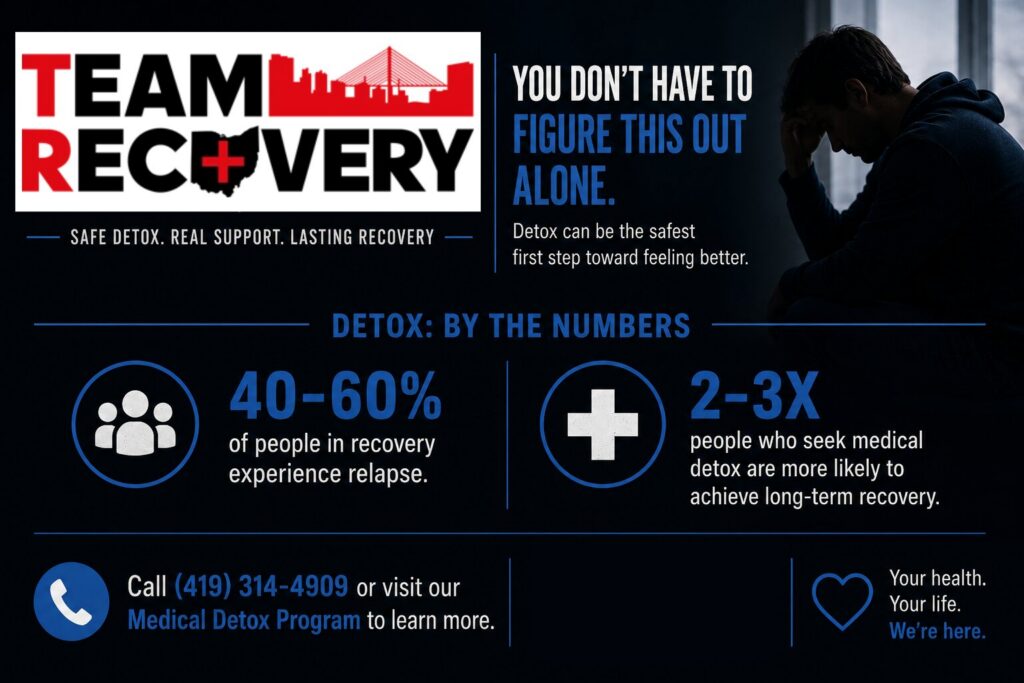
Call (419) 314-4909 or visit our Medical Detox Program services to learn more about our Medical Detox Program services Toledo, Ohio.

