





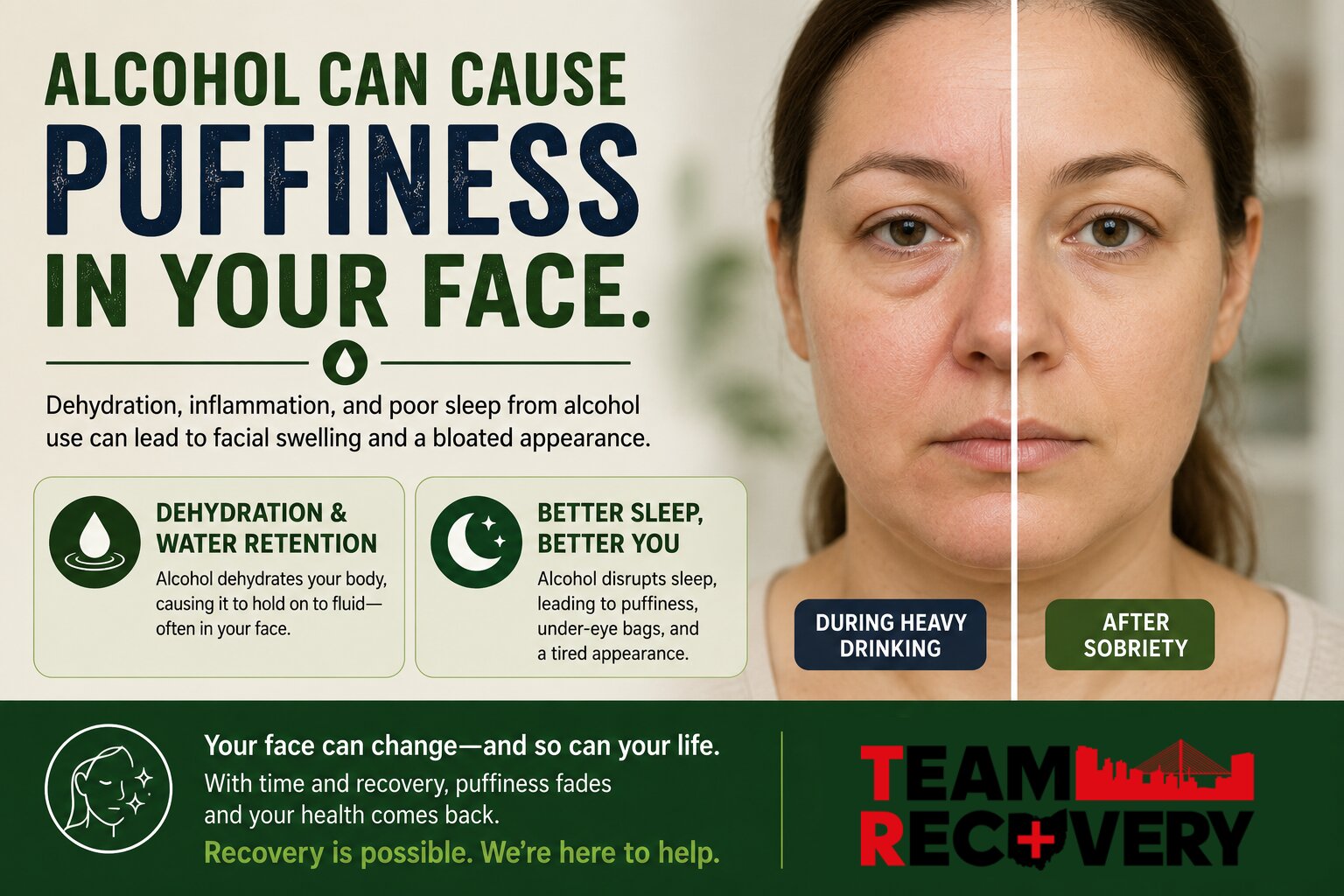
You look in the mirror after a night of drinking and barely recognize your reflection. Your cheeks seem fuller, your eyes look swollen, and your face appears puffy or bloated. If you’ve been searching for alcohol puffy face, you’re not alone.
Facial puffiness is one of the most noticeable physical effects of alcohol use. While it can happen after a single night of drinking, it often becomes more persistent with frequent or heavy alcohol use. The encouraging news is that, for many people, these changes are not permanent. As the body heals and alcohol use stops, facial swelling often improves significantly.
If alcohol has become difficult to cut back on, learning more about alcohol addiction treatment can help you understand your options for recovery. At Team Recovery, we help individuals throughout Toledo and Northwest Ohio build healthier lives through compassionate, evidence-based care.
Understanding why alcohol changes your appearance—and what recovery may look like—can provide both reassurance and motivation to make positive changes.
What “Alcohol Face” or Facial Puffiness Is
There is no medical diagnosis called “alcohol face,” but many people use the phrase to describe the facial changes that can occur with drinking.
Common changes include:
- Puffy cheeks
- Swollen eyelids
- Bags under the eyes
- A bloated appearance
- Facial redness
- A less defined jawline
- Overall facial swelling
Some people notice these changes only after drinking, while others who consume alcohol heavily over long periods may find the puffiness becomes more persistent.
Fortunately, in many cases, these changes improve once alcohol use decreases or stops.
Why Alcohol Causes It
Several different processes contribute to facial puffiness after drinking.
Dehydration
Although alcohol initially increases urine production, it can leave the body dehydrated.
As the body works to restore its fluid balance, it may temporarily retain water. This fluid retention often becomes most noticeable in the face because the tissues around the eyes and cheeks are especially prone to swelling.
Inflammation
Alcohol triggers inflammatory responses throughout the body.
Repeated alcohol use may increase inflammation, making facial tissues appear swollen or puffy.
The more frequently someone drinks, the more persistent this inflammation may become.
Dilated Blood Vessels
Alcohol causes blood vessels near the skin’s surface to widen.
This increased blood flow can contribute to:
- Facial flushing
- Warmth
- Redness
- Swelling
For some people, especially those who drink regularly, facial redness may become more noticeable over time.
Poor Sleep
Alcohol often disrupts normal sleep quality, even if it initially makes someone feel sleepy.
Poor sleep can contribute to:
- Under-eye bags
- Puffiness
- A tired appearance
- Fluid accumulation around the eyes
Other Facial Signs of Heavy Drinking
Facial puffiness is only one possible change associated with ongoing heavy alcohol use.
Other noticeable signs may include:
- Persistent facial redness
- Dry or dull skin
- Enlarged pores
- Broken or visible blood vessels
- Dark circles under the eyes
- Premature fine lines
- Uneven skin tone
These changes do not necessarily mean someone has alcohol use disorder, but they can reflect the effects alcohol has on hydration, circulation, sleep, and overall skin health.
Does It Reverse With Sobriety?
For many people, yes.
One of the most encouraging aspects of alcohol-related facial puffiness is that it often improves after drinking stops.
The First Few Days
Within several days of reducing or stopping alcohol, many people begin noticing:
- Less swelling
- Better hydration
- Reduced facial puffiness
- Improved skin tone
Within Several Weeks
As recovery continues, additional improvements often become noticeable:
- More defined facial features
- Reduced redness
- Healthier-looking skin
- Brighter eyes
- Better overall complexion
Over Several Months
For individuals who previously drank heavily, continued sobriety may allow the body to heal further.
Many people report:
- Continued reduction in facial swelling
- Improved skin texture
- Better collagen support
- A healthier overall appearance
The exact timeline varies depending on factors such as age, overall health, nutrition, sleep, hydration, and how much alcohol was previously consumed.
When Changes May Not Fully Reverse
Some alcohol-related facial changes may persist if long-term heavy drinking has contributed to permanent damage, such as chronic skin changes or advanced liver disease.
However, for the majority of people experiencing temporary puffiness from alcohol, significant improvement is possible after reducing or stopping alcohol use.
Every day without alcohol gives the body another opportunity to recover.
Getting Support for Alcohol Use
Sometimes facial changes become the first visible sign that alcohol is affecting overall health.
If you’ve noticed that puffiness is becoming more frequent—or you’ve begun worrying about how alcohol is affecting your appearance, energy, relationships, or daily life—it may be worth taking a closer look at your drinking habits.
Other signs that alcohol may be becoming a problem include:
- Difficulty limiting alcohol intake
- Needing more alcohol to feel the same effects
- Frequent hangovers
- Drinking despite health concerns
- Cravings for alcohol
- Withdrawal symptoms when not drinking
Seeking support isn’t about judgment. It’s about improving your health, protecting your future, and feeling like yourself again.
Frequently Asked Questions
Does alcohol make your face puffy?
Yes. Alcohol can cause facial puffiness through dehydration, temporary water retention, inflammation, dilated blood vessels, and poor sleep quality. These effects may become more noticeable with frequent or heavy drinking.
How long does it take for alcohol-related facial puffiness to go away?
Many people notice improvement within a few days of stopping alcohol as hydration returns to normal. Continued improvements often occur over several weeks and months, depending on overall health and previous drinking patterns.
Is alcohol puffy face permanent?
Usually not. For many people, facial puffiness caused by alcohol improves significantly after reducing or stopping alcohol use. However, some long-term changes related to chronic heavy drinking or underlying liver disease may not fully reverse and should be evaluated by a healthcare provider.
Recovery Can Change More Than Your Reflection
For many people, alcohol puffy face is more than a cosmetic concern—it’s an early sign that alcohol may be affecting overall health. The good news is that facial puffiness often improves as the body heals, making recovery beneficial for both your appearance and your well-being.
At Team Recovery, we provide compassionate, evidence-based care for individuals throughout Toledo and Northwest Ohio who are ready to make a change. Whether you’re just beginning to question your relationship with alcohol or are ready to seek help, our team is here to support you every step of the way.
Ready to Take the Next Step?
If alcohol is affecting your health, confidence, or daily life, you don’t have to face it alone. Team Recovery provides personalized, evidence-based care to help you begin your recovery with support and hope.
Call Team Recovery today at (419) 314-4909 to speak with a member of our team, or learn more about our alcohol addiction treatment program. We’re proud to serve individuals and families throughout Toledo and Northwest Ohio.

